
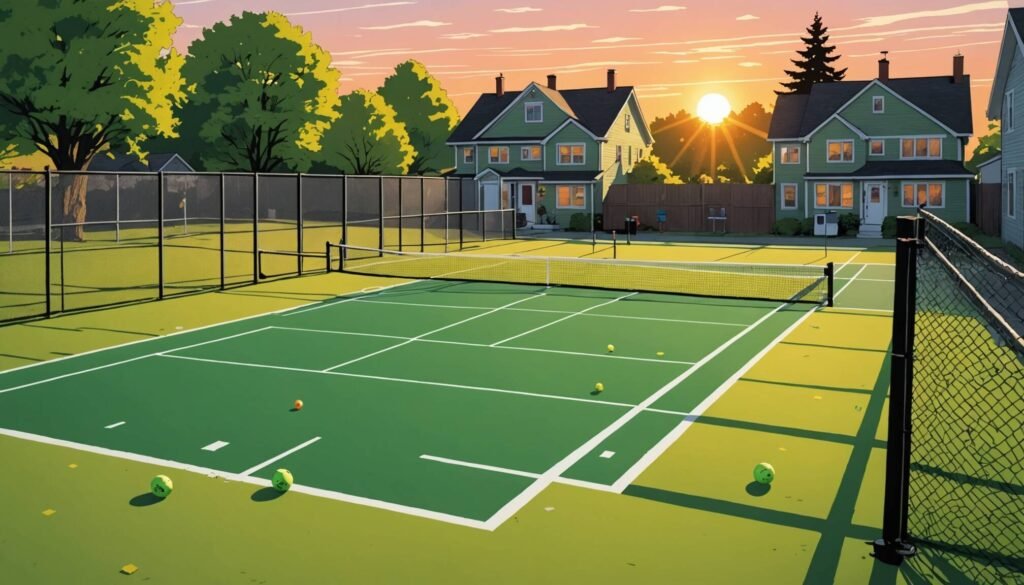
Martinez, California’s $1.5 Million Pickleball Courts Permanently Closed Due to Noise Complaints
In a decision that has sent ripples through the pickleball community, the city council of Martinez, California has voted to permanently shut down pickleball operations at Hidden Valley Sports Courts. This closure comes just over a year after the facility opened its doors to enthusiastic players in February 2025, representing a significant setback for the sport’s growth in the Bay Area and raising important questions about municipal planning when it comes to pickleball infrastructure.
The Hidden Valley Sports Courts project involved converting eight tennis courts into dedicated pickleball facilities, an investment that reportedly cost the city approximately $1.5 million to complete. The substantial financial commitment reflected the city’s initial optimism about meeting the growing demand for pickleball facilities in the region. However, what should have been a celebrated addition to the community’s recreational offerings quickly became a source of division and frustration for residents living near the facility.
The Noise Problem That Wouldn’t Go Away
From the moment the courts opened to the public, noise complaints began flooding into city hall. The distinctive sound of plastic balls striking paddles, combined with the social nature of the game and the enthusiasm of players, created an acoustic environment that neighboring residents found intolerable. What makes pickleball particularly challenging from a noise perspective is not necessarily the volume alone, but the frequency and distinctive character of the sound, which many describe as a sharp, repetitive popping that can carry considerable distances.
The city didn’t simply ignore these concerns. Municipal officials implemented a series of measures designed to address the noise issues while still preserving access to the courts for the pickleball community. They established designated playing hours to limit disruption during early morning and evening hours. They posted onsite signage encouraging players to use quieter equipment, including paddles and balls specifically designed to reduce noise output. They worked with the pickleball community to promote awareness about being considerate neighbors. Despite these good-faith efforts, the complaints persisted throughout the year of operations.
In what appears to have been a final attempt to find a solution, the city took the unusual step of hiring an independent acoustical engineer who specializes specifically in pickleball noise issues. This expert conducted a thorough assessment of the situation, analyzing sound levels, examining the topography and urban layout surrounding the courts, and evaluating potential mitigation strategies. The engineer’s conclusion was definitive and discouraging: no feasible mitigation measures could adequately address the noise impacts given the courts’ specific location. This professional opinion ultimately sealed the fate of the facility.
The Permanent Closure Decision
Following what city officials described as a year of “operational challenges,” the Martinez city council made the difficult decision to permanently end pickleball play at Hidden Valley Sports Courts. The closure became effective immediately following the council vote, leaving players who had come to rely on the facility scrambling to find alternative locations.
Mayor Brianne Zorn acknowledged the emotional weight of the decision in her public statement: “We understand that this has been a difficult and emotional issue for many in our community.” Her words reflect the reality that this situation created genuine pain on both sides of the issue. Pickleball players who had celebrated the opening of dedicated courts now faced the loss of a significant recreational resource. Meanwhile, residents who had complained about noise felt vindicated but also likely frustrated that it took a full year and $1.5 million in public funds before their concerns were fully addressed.
What Went Wrong in the Planning Phase?
Perhaps the most troubling aspect of this entire situation is that it appears to have been entirely preventable with more thorough planning and community input before construction began. The question that hangs over this failed project is straightforward: how did city officials not anticipate these problems? There are really only a few possible explanations, and none of them reflect well on the decision-making process.
The first possibility is that town officials simply didn’t understand the noise associated with outdoor pickleball. This seems unlikely given that pickleball noise has been a documented issue in communities across the country for several years now. Numerous articles, studies, and municipal proceedings have addressed this exact challenge. A basic level of due diligence should have uncovered this information.
The second possibility is that officials underestimated how popular the courts would become once opened. Perhaps they assumed limited usage that would minimize the cumulative noise impact. If this was the case, it represents a failure to understand the explosive growth trajectory of pickleball as a sport and the pent-up demand for quality facilities in many communities.
The third and perhaps most likely explanation is that both factors played a role. City officials may have had a theoretical awareness of pickleball noise but failed to truly appreciate how it would manifest in the specific context of Hidden Valley’s location relative to residential areas. They may have also failed to model how consistent, high-volume usage throughout daylight hours would compound the problem beyond what occasional tennis play had previously generated on those same courts.
What makes this planning failure particularly frustrating is that there are established best practices for pickleball court placement and design that specifically address noise concerns. Courts can be oriented to direct sound away from residential areas. Natural and artificial sound barriers can be incorporated into the design. Site selection can prioritize locations with sufficient buffer distance from homes. The fact that an acoustical engineer ultimately concluded no feasible mitigation was possible suggests the fundamental site selection was flawed from the beginning.
A Pattern Emerging in California
Martinez is not an isolated case. The city joins a growing list of California municipalities grappling with pickleball noise issues, sometimes with dramatic results. Most notably, Carmel-by-the-Sea made national headlines when it became California’s first town to permanently ban outdoor pickleball entirely. That decision came after similar complaints from residents and failed attempts at mitigation.
This pattern raises important questions about whether there’s something specific about California’s urban geography, housing density patterns, or community expectations that makes pickleball noise particularly problematic in the state. It may also reflect California’s generally progressive approach to noise pollution regulations and residents’ expectations about quality of life in residential neighborhoods.
What’s clear is that California municipalities need to learn from these expensive mistakes. The Martinez situation, in particular, should serve as a cautionary tale for any city considering pickleball court development. The $1.5 million investment that will now generate zero community benefit represents not just wasted money but a missed opportunity to create recreational infrastructure that could have served residents for decades if properly planned and sited.
Understanding the Issue: A Primer for the Unfamiliar
For those who haven’t followed the pickleball phenomenon closely, it might seem puzzling that a recreational sport could generate this level of controversy and municipal hand-wringing. To understand what happened in Martinez, it helps to understand both what pickleball is and why noise has become such a central issue in its growth story.
Pickleball is a paddle sport that combines elements of tennis, badminton, and table tennis. Players use solid paddles to hit a perforated plastic ball, similar to a wiffle ball, over a net on a court that’s roughly one-third the size of a tennis court. The game has exploded in popularity over the past five years, particularly among older adults who appreciate that it’s easier on the joints than tennis while still providing excellent exercise and social interaction.
The noise issue stems from several factors working in combination. First, the plastic ball striking the solid paddle creates a distinctive popping sound that’s quite different from the sound of a tennis ball hitting strings. This sound is higher in frequency and more percussive, making it more noticeable and, for many people, more irritating. Second, because pickleball courts are smaller than tennis courts, players are closer together and the ball is hit more frequently, creating a more constant stream of noise. Third, pickleball is an inherently social game, with players often calling out scores, encouraging each other, and generally being vocal in ways that add to the ambient noise level.
When you have multiple courts operating simultaneously, which is common at dedicated pickleball facilities, these sounds compound. What might be mildly noticeable from a single court becomes a persistent soundscape when four or eight courts are in use. And because pickleball has become so popular, these facilities often operate at capacity from morning until evening during good weather.
The challenge for municipalities is that demand for pickleball facilities is genuine and growing. People want places to play this sport that has brought them community, exercise, and joy. At the same time, residents who live near potential court locations have a legitimate interest in enjoying their homes without persistent noise disruption. Finding the balance between these two valid interests requires careful planning, something that clearly didn’t happen in Martinez.
The Financial and Community Cost
Beyond the obvious waste of $1.5 million in public funds, this situation carries other significant costs that are harder to quantify but no less real. The pickleball community in Martinez has been dealt a significant blow, losing access to facilities that many had come to depend on for their physical and social well-being. For older adults in particular, who make up a large portion of the pickleball playing population, having accessible local courts isn’t just a convenience—it can be central to their quality of life and health maintenance.
There’s also the cost to community cohesion and trust in local government. Players who celebrated the opening of the courts feel betrayed by their closure. Residents who complained about noise may feel frustrated that their concerns weren’t considered before construction began. The contentious year of operation likely created divisions within the community that will take time to heal. And taxpayers across the board have reason to question the competence of officials who approved such a significant expenditure without adequately assessing its viability.
The closure also represents a missed opportunity for Martinez to be part of the solution to the pickleball noise challenge. Had the city taken a more thoughtful approach from the beginning—consulting with acoustical experts during the planning phase, engaging in robust community dialogue about site selection, incorporating noise mitigation into the design—they might have created a model facility that other cities could emulate. Instead, they’ve become a cautionary example of what not to do.
Lessons for Other Communities
The Martinez situation offers several clear lessons for other municipalities considering pickleball facility development. First and most obvious is the critical importance of site selection. Courts need to be located with adequate buffer distance from residential areas, or in locations where topography and existing structures provide natural sound barriers. Converting existing tennis courts in established parks near homes, as Martinez did, is a high-risk approach that requires extraordinary caution.
Second, expert consultation during the planning phase, not after problems emerge, is essential. The acoustical engineer who eventually concluded that no mitigation was feasible should have been consulted before the first dollar was spent on construction. Their expertise could have either identified deal-breaker issues with the proposed location or recommended design modifications that might have made the project viable.
Third, meaningful community engagement matters. Residents living near proposed facilities should be consulted early and their concerns taken seriously. While not every objection can or should prevent a project from moving forward, having genuine dialogue helps ensure that significant issues are identified and addressed before they become insurmountable problems.
Fourth, cities should consider indoor facilities or locations in commercial or industrial areas where noise concerns are minimal. While outdoor courts are less expensive to build and maintain, the hidden costs of conflicts with neighbors can ultimately make them more expensive in the long run, as Martinez discovered.
The Broader Context of Pickleball Growth
The Martinez closure needs to be understood within the broader context of pickleball’s explosive growth. The sport has added millions of players in recent years, creating demand that has far outpaced the development of appropriate infrastructure. This mismatch between supply and demand has led to conflicts over converting tennis courts, overcrowding at existing facilities, and pressure on municipalities to quickly add pickleball courts to meet constituent demands.
In this environment, it’s perhaps understandable that some cities have moved too quickly or without adequate planning. The pressure to provide facilities is real, and elected officials naturally want to respond to their constituents’ requests. However, the Martinez experience demonstrates that rushing to meet demand without proper planning can backfire spectacularly, ultimately leaving everyone worse off than if the city had taken more time to get it right.
The sport’s governing bodies and advocacy organizations also bear some responsibility for ensuring that growth happens sustainably. While promoting the sport’s expansion is important, providing clear guidance to municipalities about proper facility planning, site selection, and noise mitigation is equally crucial. The pickleball community’s long-term interests are not served by facilities that generate immediate backlash and eventual closure.
Moving Forward
For Martinez specifically, the question now becomes what to do with the Hidden Valley facility. The courts exist, representing a significant investment, but cannot be used for their intended purpose. Will they sit empty as a monument to poor planning? Will they be converted back to tennis courts? Could they be repurposed for another use entirely? And will the city make another attempt to provide pickleball facilities in a more appropriate location, or will this expensive failure sour officials on trying again?
For the pickleball community in Martinez, the immediate challenge is finding alternative places to play. Some players will likely travel to neighboring communities with facilities. Others may reduce their playing frequency or stop playing altogether. The social connections and health benefits that pickleball provided to many residents have been disrupted, a real loss even if it doesn’t appear in any budget document.
For other California communities and municipalities nationwide, Martinez offers a clear lesson: take pickleball noise seriously from the very beginning of any facility planning process. Consult experts, engage communities, choose locations carefully, and incorporate mitigation measures into the design. The upfront investment in proper planning is far less costly than building facilities that must be closed shortly after opening.
The permanent closure of Martinez’s pickleball courts represents a failure of municipal planning that resulted in wasted resources, disappointed residents on multiple sides of the issue, and a setback for pickleball’s growth in the region. While the sport’s popularity continues to grow nationwide, this case illustrates that growth must be thoughtful and sustainable to avoid creating the very conflicts that threaten the sport’s long-term acceptance in communities across the country.


