The Complete List of 2025 120/Life Dink Awards Winners
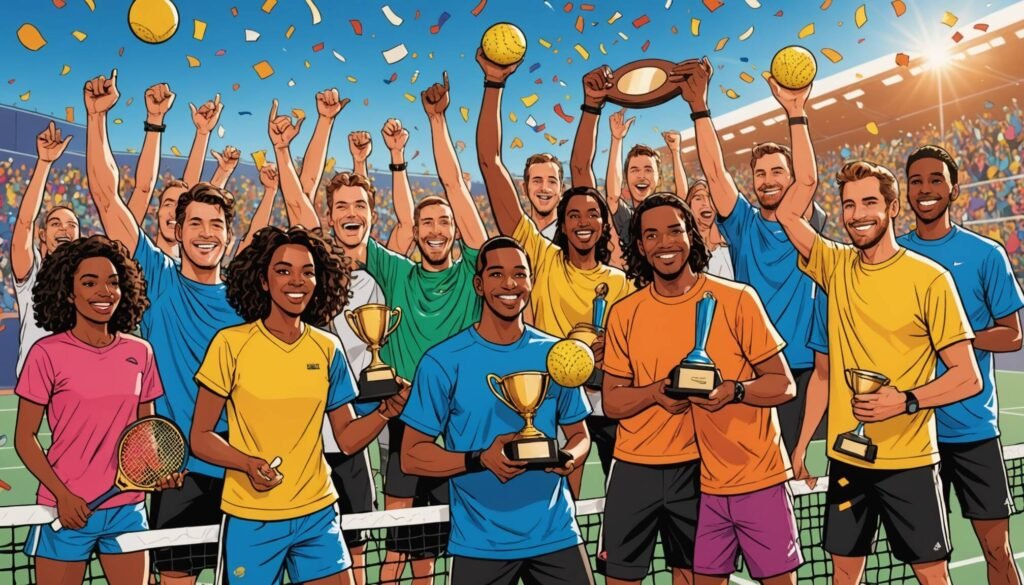
The pickleball community has spoken, and the results are in. After a month-long celebration of the sport’s best players, personalities, content creators, and innovations, we’ve compiled the complete list of Dink Awards winners for 2025. This comprehensive roundup brings together all the categories and winners from what has become pickleball’s most anticipated fan-choice recognition program.
What started as a grassroots effort to celebrate excellence in pickleball has evolved into a massive community event. More than 10,000 fans cast their ballots across dozens of categories, making these awards a true reflection of what the pickleball community values most. From elite professional players to the facilities where recreational players spend their weekends, from innovative paddle designs to the content creators who educate and entertain millions, the Dink Awards recognize the full spectrum of what makes pickleball special.
The awards were presented by 120/Life, marking another milestone in the sport’s growth and professionalization. This partnership represents the increasing commercial interest in pickleball while maintaining the community-driven spirit that defines the awards. The presenting sponsor’s involvement enabled a broader reach and more robust voting process, ensuring that the results truly represented the voice of the pickleball community.
Player Categories: Celebrating On-Court Excellence
The player categories represent the heart of competitive pickleball, recognizing those who have demonstrated exceptional skill, determination, and sportsmanship throughout the year. These awards go beyond simple win-loss records to capture the full picture of what makes a player truly outstanding in the eyes of fans.
Ben Johns claimed Men’s Player of the Year, continuing his dominance of the professional circuit. Johns has become synonymous with pickleball excellence, and his recognition by fans confirms what tournament results have consistently shown. His technical precision, strategic thinking, and ability to perform under pressure have set a standard that others aspire to reach. What makes Johns particularly remarkable is not just his winning percentage, but the way he’s elevated the entire sport through his play and professionalism.
Anna Leigh Waters took home Women’s Player of the Year, a testament to her extraordinary achievements at such a young age. Waters has redefined what’s possible in professional pickleball, combining power, finesse, and court awareness in ways that have fundamentally changed how the women’s game is played. Her ability to compete at the highest levels while maintaining the joy and passion that drew her to the sport makes her a deserving winner of this prestigious recognition.
The Breakout Player categories highlighted rising stars who made significant impacts. Chris Haworth earned Men’s Breakout Player of the Year, marking his emergence as a force in professional pickleball. Haworth’s journey from relative unknown to competitive threat demonstrates the depth of talent entering the professional ranks. His success story inspires countless players who dream of making their mark on the sport.
Alix Truong captured Women’s Breakout Player of the Year, showcasing the rapid development and competitive depth in women’s professional pickleball. Truong’s rise represents the new generation of players who grew up with pickleball and are now reaching their competitive prime. Her technical skills and competitive fire have made her one of the most exciting players to watch on tour.
The Upset of the Year went to the Kawamoto Sisters for their victory over Anna Leigh Waters and Anna Bright, a result that sent shockwaves through the pickleball world. This category captures those magical moments when underdogs rise to the occasion and prove that anything is possible in competitive pickleball. The Kawamoto Sisters’ victory wasn’t just about one match—it represented the increasing parity in professional pickleball and the danger of underestimating any opponent.
Hurricane Tyra Black earned Best Dressed, bringing attention to the style and personality that players bring to the court. While pickleball is ultimately about performance, the visual presentation and personal expression of players adds another dimension to the sport’s appeal. Black’s fashion choices reflect her vibrant personality and remind us that sports and style can complement each other beautifully.
Texas claimed College Team of the Year, highlighting the explosive growth of collegiate pickleball. The emergence of organized college programs represents a crucial development in the sport’s infrastructure, providing structured pathways for young players to develop their skills while pursuing education. Texas’s success demonstrates the level of commitment and organization that top college programs are bringing to pickleball.
Anna Bright swept multiple categories, winning Fan Favorite Pro and Best On-Court Personality. This dual recognition speaks to Bright’s unique ability to connect with audiences both through her play and her engaging personality. She represents the modern professional athlete who understands that connecting with fans is as important as performance on the court. Her authenticity and accessibility have made her one of pickleball’s most beloved figures.
Dallas Flash won Fan Favorite Major League Pickleball Team, showing how team-based competition is capturing the imagination of pickleball fans. Major League Pickleball has added a new dimension to professional pickleball, creating team loyalties and rivalries that enhance fan engagement. The Flash’s popularity demonstrates successful team building and community connection.
Steve Deakin took Senior Men’s Player of the Year, while Julie Johnson earned Senior Women’s Player of the Year. These categories celebrate the fact that pickleball excellence knows no age limits. The senior categories recognize players who continue to compete at high levels and inspire others in their age groups. Their achievements demonstrate that pickleball truly is a lifetime sport where experience and skill can triumph over youth.
Media Categories: Voices That Shape the Sport
The media categories recognize the creators, journalists, and personalities who inform, educate, and entertain the pickleball community. These individuals play a crucial role in the sport’s growth by making pickleball more accessible and understandable to audiences ranging from curious beginners to devoted fans.
Zane Navratil won Most Influential Voice, acknowledging his impact on how pickleball is discussed and understood. Navratil has leveraged his platform as both a professional player and media personality to shape conversations about the sport. His insights carry weight because they come from someone actively competing at the highest levels while also engaging deeply with the broader community.
Dave Fleming earned Best On-Air Personality, recognizing his contribution to pickleball broadcasting. Fleming brings professional broadcasting experience to pickleball coverage, helping legitimize the sport in the eyes of mainstream sports fans. His ability to explain the game while capturing its excitement has made professional pickleball more accessible to new audiences.
PicklePod won Best Pickleball Podcast, cementing its position as the go-to audio source for pickleball content. Podcasts have become an essential medium for sports content, allowing for in-depth discussions that other formats can’t accommodate. PicklePod’s success lies in its ability to balance entertainment with information, creating content that appeals to both casual players and serious fans.
Tanner Tomassi dominated the content creator categories, winning Best Pickleball Content Creator, Pickleball YouTuber of the Year, and Best Pickleball Instructor. This triple recognition reflects Tomassi’s comprehensive approach to pickleball content. He’s not just creating videos—he’s building an educational ecosystem that helps players improve their game. His success demonstrates the hunger for quality instructional content and the impact that dedicated content creators can have on the sport’s development.
The Viral Moment of the Year went to “Guy Gets Kicked in the Face,” a reminder that pickleball’s appeal extends beyond technical excellence to include those unexpected, shareable moments that capture internet attention. While this particular moment was unfortunate for the person involved, it reflects how pickleball content can break through to mainstream social media audiences.
Erik Tice won Best Pickleball Journalist, recognizing his work in covering pickleball news and developments. Quality journalism is essential for any sport’s growth, providing accountability, context, and storytelling that enhances fan engagement. Tice’s recognition highlights the increasing professionalization of pickleball media coverage.
Facilities and Organizations: Where Pickleball Happens
The facilities categories recognize the venues that provide homes for pickleball communities across the country. These awards acknowledge that the sport needs more than just talented players—it requires dedicated spaces where people can play, learn, and connect.
The regional facility awards went to venues that have become destinations for pickleball enthusiasts. PickleBOS in Boston won Best Facility in the Northeast, establishing itself as the premier pickleball destination in a region known for traditional sports. The Fort in Fort Lauderdale took Best Facility in the Southeast, capitalizing on Florida’s position as a pickleball hotbed.
Match-Point in Columbus earned Best Facility in the Midwest, showing that pickleball facility development isn’t limited to coastal regions. The Picklr in Austin won Best Facility in the Southwest, while Life Time San Clemente claimed Best Facility on the West Coast. The Picklr in Lehi took Best Facility in the Rocky Mountains, demonstrating the franchise’s successful expansion strategy.
These facility winners represent different models of pickleball venue development, from dedicated pickleball-only facilities to multi-sport complexes that have embraced the sport. Their success provides templates for future facility development and demonstrates the viability of investing in permanent pickleball infrastructure.
PPA Asia won Best International Tournament, highlighting pickleball’s global expansion. While pickleball remains predominantly North American, international tournaments are crucial for building the sport’s worldwide presence. The recognition of PPA Asia reflects the strategic importance of growing pickleball in markets with large populations and potential for rapid sport adoption.
Paddle Categories: Innovation and Expertise
The paddle categories celebrate both the equipment that enables high-level play and the experts who help players navigate the overwhelming array of paddle choices. These awards recognize that equipment matters in pickleball, and that expertise in evaluating equipment provides genuine value to the community.
John Kew won Paddle Reviewer of the Year, acknowledging his systematic and thorough approach to paddle testing and evaluation. In a market flooded with new paddle releases, Kew’s reviews provide guidance that helps players make informed decisions. His recognition reflects the community’s appreciation for rigorous, honest equipment analysis.
The Bread and Butter Loco won Paddle of the Year, representing the culmination of paddle design innovation. This award carries particular significance because it reflects player experience rather than just marketing hype. The Loco’s victory suggests it successfully balances the various characteristics players seek in a paddle—power, control, feel, and durability.
Understanding the Dink Awards: What They Mean for Pickleball
For those new to pickleball or unfamiliar with how awards function in emerging sports, the Dink Awards represent something unique in the sporting world. Unlike awards determined solely by win-loss records or expert panels, these awards directly reflect fan preferences and community values.
Think of the Dink Awards as similar to fan-choice awards in other entertainment industries, but specifically focused on pickleball. They’re not trying to be the Oscars or the Nobel Prize—they’re trying to capture what the pickleball community actually cares about. That’s why you see categories ranging from serious competitive achievements to lighter recognitions like Best Dressed.
The awards matter because they help define what excellence looks like in pickleball during this crucial growth phase. In established sports, excellence is often narrowly defined by traditional metrics. But pickleball is still young enough that the community can shape what gets valued and celebrated. Should we only care about who wins tournaments? Or should we also celebrate those who make the sport more accessible, entertaining, and enjoyable?
The diversity of categories in the Dink Awards suggests that the pickleball community has answered with a resounding “both.” They want to celebrate elite athletic achievement while also recognizing that content creators, journalists, facility operators, and even fashion-forward players all contribute to making pickleball what it is.
The voting process itself serves an important community function. By asking fans to nominate and vote, the awards create conversation and debate. People discuss who deserves recognition and why, which helps build shared understanding of the sport’s values and direction. This communal reflection is particularly valuable in a sport experiencing exponential growth, where new players are constantly joining and the community’s identity is still being formed.
The involvement of more than 10,000 voters demonstrates meaningful engagement. These aren’t token participation numbers—they represent a substantial portion of the engaged pickleball community taking time to have their voices heard. This level of participation suggests that the awards have achieved legitimacy in the eyes of fans.
Reflections on the Winners and What They Tell Us
Looking at the complete list of winners reveals interesting patterns about where pickleball is and where it’s heading. The player awards show a sport where established stars like Ben Johns and Anna Leigh Waters maintain their positions at the top, but breakout players like Chris Haworth and Alix Truong are pushing them. This combination of stability and disruption is healthy for any sport—enough continuity to build storylines and rivalries, enough change to keep things interesting.
The media awards dominated by Tanner Tomassi reflect the current state of sports media consumption. Traditional broadcasting matters, as Dave Fleming’s recognition shows, but YouTube and social media content creation may matter even more. The pickleball community is telling us they value content that helps them improve their own games, not just spectating opportunities.
The facility awards spanning all regions of the United States demonstrate that pickleball’s growth isn’t concentrated in a few hotspots—it’s happening everywhere. Each region has developed facilities worthy of recognition, suggesting that the infrastructure to support continued growth is being built nationwide.
Anna Bright’s success in multiple categories reveals what modern sports fans value: authenticity, accessibility, and personality. Bright hasn’t just succeeded on the court—she’s built a connection with fans that transcends wins and losses. Her dual recognition as Fan Favorite Pro and Best On-Court Personality suggests that the most beloved figures in pickleball will be those who can perform at high levels while remaining relatable and genuine.
The inclusion of senior categories in the awards reflects something fundamental about pickleball’s identity. This is a sport that explicitly values age diversity and celebrates the fact that you can compete seriously regardless of when you discovered the game. Steve Deakin and Julie Johnson’s recognition sends the message that pickleball champions don’t have to fit traditional athlete molds.
Looking Forward: The Future of the Dink Awards
The promise to return “bigger and better than ever” next year suggests the Dink Awards are becoming an established institution in pickleball’s calendar. As the sport continues growing, these awards will likely expand to include new categories that reflect emerging aspects of the pickleball ecosystem.
We might see future categories recognizing innovations in court technology, excellence in tournament organization, or contributions to making pickleball more inclusive. The awards could expand internationally as pickleball’s global footprint grows. There might be categories recognizing excellence in pickleball business leadership or significant contributions to youth pickleball development.
The fundamental value of the Dink Awards lies in their ability to capture what the community values at a particular moment in time. Years from now, looking back at these award winners will provide a snapshot of pickleball in 2025—who the stars were, what content resonated, which facilities set standards, and what equipment players preferred.
The partnership with 120/Life as presenting sponsor also points toward the future. As pickleball attracts more commercial interest, maintaining the authenticity and community-driven nature of recognition programs will be important. The Dink Awards’ success suggests that commercial sponsorship and genuine community engagement can coexist productively.
The Bigger Picture: Awards as Community Building
Beyond individual recognition, the Dink Awards serve a broader function in building pickleball’s community and culture. They create shared moments of celebration, generate discussion and debate, and help establish collective values. When thousands of people participate in selecting award winners, they’re not just voting—they’re contributing to defining what their sport stands for.
This community-building function is particularly important during pickleball’s rapid growth phase. The sport is adding new players faster than almost any other recreational activity, which creates challenges in maintaining coherent community identity. Events like the Dink Awards help integrate new players into existing community structures by teaching them who the important figures are and what achievements the community values.
The awards also create aspirational targets for those hoping to make their mark in pickleball. A young player might dream of winning Player of the Year someday. A content creator just starting out can look at Tanner Tomassi’s success and see a roadmap. A facility operator can study the


