
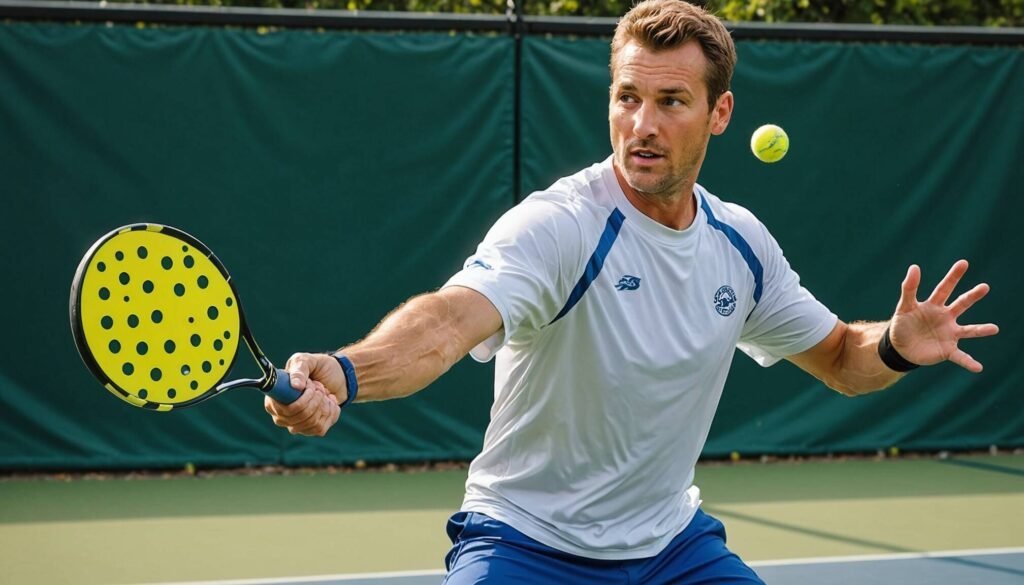
Try This Subtle Trick for Cleaner Passing Shots in Pickleball
If you’ve been playing pickleball for any length of time, you’ve probably noticed something interesting: experienced players can often predict where their opponent is about to hit the ball. It’s not magic or mind-reading. It’s all about body mechanics and the telltale signs that players inadvertently broadcast through their positioning and movement. Understanding this reality opens up a world of strategic possibilities that can dramatically improve your passing shots and overall court presence.
The key insight here is simple yet profound: your body gives away your intentions. When most players set up to drive the ball, their hips, torso, and shoulders naturally open up to face their intended target well before they make contact with the ball. This is the kinetic chain in action, the sequential movement of body segments that generates power and consistency in athletic movements. While the kinetic chain is essential for effective shot-making, the timing of when you open your body can be the difference between a predictable shot and one that catches your opponent completely off guard.
The Deception Technique That Changes Everything
The technique we’re exploring today revolves around manipulating this natural body movement to create deception. Instead of telegraphing your intentions by opening your shoulders early toward your target, you deliberately keep your shoulders closed until the very last moment before ball contact. This creates a visual illusion for your opponent, who has been conditioned to read body positioning as a reliable indicator of shot direction.
Here’s how the technique works in practice: as you approach the ball and prepare to hit your drive, consciously maintain a closed shoulder position. Your body should appear as though you’re setting up to hit down the line, keeping your chest and shoulders facing more toward the sideline rather than opening toward the cross-court angle. This closed position should be held as long as possible, creating the impression that you’re committed to a specific direction.
Then, at the very last instant before your paddle makes contact with the ball, you aggressively snap your shoulders through the swing. This sudden, explosive rotation generates the power you need while simultaneously redirecting the ball in a direction your opponent wasn’t anticipating. The violent nature of this last-second rotation is crucial because it allows you to generate the same power you would with a more conventional, earlier shoulder turn, but with the added benefit of disguising your true intention until it’s too late for your opponent to react effectively.
This approach to hitting passing shots represents a simple but powerful nuance in strategy. It doesn’t require you to completely overhaul your technique or spend months developing new muscle memory. Instead, it’s about adjusting the timing of a movement you’re already making, adding a layer of tactical sophistication to shots you’re already hitting. The beauty of this technique is that it can be applied from virtually anywhere on the court, whether you’re hitting from the baseline, mid-court, or even from closer positions.
Understanding the Biomechanics Behind the Technique
To fully appreciate why this technique works so effectively, it helps to understand the biomechanics involved in generating power in pickleball. The kinetic chain refers to the sequential activation of body segments, starting from the ground up. When you hit a powerful drive, energy transfers from your legs, through your hips, into your torso, then through your shoulders, down your arm, and finally into the paddle and ball.
In a conventional drive, players often begin opening their hips and shoulders relatively early in the swing sequence. This early rotation allows for a smooth, comfortable generation of power, and it’s generally the first way players learn to hit with force. However, this early opening also provides opponents with a clear visual cue about where the ball is headed. Experienced players develop an almost instinctive ability to read these body positions, allowing them to anticipate shot direction and begin moving toward the ball before it’s even been struck.
By delaying your shoulder rotation, you’re essentially compressing the kinetic chain into a shorter time window. Instead of a gradual, flowing opening of the body, you’re creating a more explosive, compact movement. This requires slightly different muscle recruitment and timing, but the physics of power generation remain the same. The key is that the delayed rotation doesn’t sacrifice power; it simply concentrates the power generation into a briefer moment, which serves the dual purpose of maintaining shot quality while enhancing deception.
The aggressive snap of the shoulders at the last moment also adds an element of spin and pace variation that can further confound opponents. When you rotate suddenly and forcefully, you’re able to impart more spin on the ball while still maintaining control over its trajectory. This combination of unexpected direction, pace, and spin creates a shot that is exceptionally difficult to defend against, even for players who pride themselves on their court coverage and anticipation skills.
Practical Application on the Court
Implementing this technique effectively requires some practice and conscious effort, especially if you’ve spent years developing a more conventional driving technique. The first step is to become aware of your current shoulder positioning habits. Pay attention to when your shoulders begin to open as you approach the ball. Many players will find that they start opening their body quite early, sometimes even before they’ve fully set up for the shot.
Start by practicing the delayed rotation during drilling sessions or warm-ups. Hit drives while consciously focusing on keeping your shoulders closed longer than feels natural. At first, this will likely feel awkward and may even result in some mishits as your timing adjusts. This is completely normal and part of the learning process. The goal is to develop a feel for how long you can maintain that closed position while still having enough time to generate the necessary rotation for power.
One helpful practice method is to set up target zones on the court and practice hitting to them while maintaining the delayed shoulder rotation. Start with cross-court drives, as these naturally lend themselves to this technique. Set up with your shoulders appearing to face down the line, then snap through to hit cross-court at the last moment. Once you’ve developed consistency with this direction, practice the reverse: set up appearing to hit cross-court, then snap through to hit down the line.
As you become more comfortable with the basic mechanics, begin incorporating the technique into live play situations. Start by using it selectively in situations where you have adequate time to set up properly. As your confidence and consistency grow, you can begin employing the technique more frequently and in more challenging situations. The key is gradual integration rather than trying to completely change your game overnight.
It’s also important to recognize that this technique works best when mixed with conventional drives. If you use the delayed rotation on every single shot, opponents will eventually adjust and learn to wait longer before committing to a direction. The real power of this approach comes from the unpredictability it creates when combined with more traditional shot-making. Sometimes you open early and hit exactly where your body suggests; other times you delay and redirect. This variability keeps opponents guessing and prevents them from settling into comfortable defensive positions.
Breaking It Down for Beginners
If you’re relatively new to pickleball or haven’t spent much time thinking about the technical aspects of shot-making, the concept we’re discussing might seem a bit abstract. Let’s break it down into simpler terms that anyone can understand and apply.
Think of it this way: when you’re going to throw a ball to someone, your body naturally turns to face that person before you release the ball. The same thing happens in pickleball. When you’re about to hit the ball, your body wants to turn and face the direction you’re hitting. This turning motion helps you hit with more power and accuracy, which is generally a good thing.
However, there’s a downside to this natural movement. Your opponent can see you turning and can figure out where you’re about to hit the ball. It’s like accidentally showing your cards in a poker game. Once they know where the ball is going, they can start moving to that spot before you’ve even made contact with the ball, giving them a significant advantage in getting to your shot.
The trick we’re discussing is essentially about hiding your cards a little longer. Instead of turning your body early and showing your opponent where you’re hitting, you wait until the very last second to turn. You keep your body facing one direction, making your opponent think you’re hitting one way, and then you quickly turn at the last moment to hit a different direction. It’s like a fake in basketball or a play-action pass in football: you’re using your body position to create a false expectation, then doing something different at the last second.
The reason this works so well is timing. In pickleball, players often have less than a second to react to their opponent’s shot. If they wait until they see where the ball is actually going after it’s been hit, that’s often too late to get into proper position. So experienced players learn to read body language and start moving based on what they think is going to happen. When you delay your body turn, you’re taking away this early information, forcing your opponent to wait and react to the actual shot rather than your setup. This split-second of hesitation can be the difference between them reaching your shot comfortably and them being caught flat-footed or stretching desperately to make contact.
The other thing to understand is that this technique doesn’t require you to be incredibly strong or athletic. It’s not about hitting harder or running faster. It’s purely about timing and body control. You’re still generating the same amount of power through the same basic movement; you’re just changing when that movement happens. This makes it an accessible technique for players of all ages and fitness levels. Whether you’re a twenty-something athlete or a retiree who picked up the sport for fun and exercise, you can learn to incorporate this delayed rotation into your game.
Common Mistakes and How to Avoid Them
As with any technique in pickleball, there are several common mistakes that players make when first attempting to implement delayed shoulder rotation. Being aware of these pitfalls can help you avoid them and accelerate your learning curve.
One frequent mistake is delaying the rotation too long, to the point where you don’t have enough time to complete a full, powerful swing. Remember, the goal is to delay the shoulder turn until the last moment, not to eliminate it entirely. If you wait so long that you’re forced to arm the ball rather than using your full body rotation, you’ll lose both power and control. The key is finding that optimal moment where you’ve maintained deception as long as possible while still giving yourself enough time for a complete, aggressive shoulder snap.
Another common error is telegraphing the technique through other body parts. Some players successfully keep their shoulders closed but give away their intentions through their footwork or hip positioning. The entire upper body needs to maintain the illusion of hitting in one direction. Pay attention to your stance, weight distribution, and hip position in addition to your shoulders. The deception only works if your entire body presents a coherent picture of hitting in one direction before you redirect at the last moment.
Some players also make the mistake of using this technique on every single drive, which quickly becomes predictable. Your opponent will notice that your body positioning doesn’t reliably indicate your shot direction and will adjust by waiting longer to read the actual ball trajectory. The power of this technique lies in its selective use. Mix it with conventional drives where your body positioning accurately reflects your target, creating a pattern of unpredictability that keeps opponents constantly guessing.
A technical mistake that often occurs is failing to snap the shoulders aggressively enough at the moment of contact. The delayed rotation only works if you can still generate adequate power despite the shortened time window. This requires a more explosive, forceful rotation than you might be accustomed to. If your shoulder turn is gradual or tentative, you’ll lose both the deceptive element and the power needed for an effective passing shot. Practice generating that explosive snap so it becomes second nature.
Strategic Situations Where This Technique Shines
While this technique can theoretically be used from anywhere on the court, there are certain situations where it’s particularly effective and worth prioritizing. Understanding these contexts will help you deploy the technique strategically for maximum impact.
One prime opportunity is when you’re hitting from the baseline or mid-court against opponents who are at or approaching the kitchen line. In this scenario, opponents are often actively reading your body positioning to determine which side of the court to cover. They’re making split-second decisions about whether to shade toward the line or protect the middle, and they’re basing these decisions largely on your setup. By disguising your intention until the last moment, you can exploit their early movement and hit behind them or into the space they’re vacating.
Another excellent situation for employing this technique is when you’re pulled wide to retrieve a shot near the sideline. Opponents typically expect you to hit back cross-court from this position, as it’s generally the higher-percentage shot that gives you more margin for error. By setting up as if you’re hitting the expected cross-court shot but then snapping through to go down the line at the last second, you can catch opponents leaning the wrong way and create an easy winner or, at minimum, a weak return that sets up your next shot.
The technique is also particularly valuable when you’re facing opponents who are aggressive in their court positioning and anticipation. Some players make their living by reading opponents early and jumping on balls, cutting off angles before they develop. Against these types of opponents, the delayed shoulder rotation becomes an essential tool for keeping them honest and preventing them from taking control of points through sheer anticipation and quick reactions.
In doubles play, this technique can be especially effective when targeting the middle of the court. By disguising whether you’re hitting to the forehand or backhand player until the last moment, you create confusion about who should take the ball. This split-second of uncertainty between partners can lead to either a missed ball or a weak return as players adjust their positioning at the last moment or collide attempting to cover the same ball.
Building This Into Your Long-Term Development
Like any advanced technique in pickleball, incorporating delayed shoulder rotation into your game is a process that unfolds over time. It’s not something you’ll master in a single practice session or even a single week. However, with consistent, deliberate practice, it can become a natural part of your shot-making repertoire that significantly elevates your competitive level.
Start by dedicating specific practice time to the technique. Rather than trying to implement it during competitive matches right away, work on it during warm-ups, drilling sessions, and recreational play where the stakes are lower and you can afford to experiment without worrying about the outcome. As you develop consistency and confidence with the mechanics, gradually begin incorporating it into more competitive situations.
Film yourself practicing the technique if possible. Video analysis can be incredibly revealing, showing you whether you’re actually maintaining a closed shoulder position as long as you think you are, and whether your rotation is as aggressive and sudden as it needs to be. Often, what feels like a dramatic delayed rotation is actually much subtler than intended, or vice versa. Having objective visual feedback helps you calibrate your perception and execution.
Work with a practice partner who understands what you’re trying to accomplish. Have them stand at the net and try to anticipate your drives based on your body positioning. This immediate feedback about whether your deception is working will accelerate your learning. Your practice partner can tell you when they’re being fooled and when your positioning is still giving away your intentions, allowing you to make real-time adjustments.
Remember that this technique is just one tool in your overall pickleball toolkit. It doesn’t replace good footwork, proper positioning, smart shot selection, or any of the other fundamentals that make for solid play. Instead, it enhances these fundamentals by adding another layer of tactical sophistication. The best players are those who have a variety of tools at their disposal and know when to deploy each one for maximum effect.
As you continue developing this skill, you’ll find that it opens up other aspects of your game as well. The increased body awareness required to control your shoulder rotation timing often translates to better overall body control in other shots. The strategic thinking involved in deciding when to use the technique and when to hit conventional drives sharpens your tactical decision-making across the board. And the confidence that comes from having an effective weapon for creating deceptive passing shots often leads to more aggressive, proactive play overall.
The Mental Game Component
Beyond the physical mechanics of delayed shoulder rotation, there’s a significant mental game component to using this technique effectively. Understanding and leveraging this psychological dimension can multiply the effectiveness of the technique and create opportunities beyond just the immediate shot.
Once you’ve successfully fooled an opponent with a disguised passing shot a few times, you establish in their mind that they can’t reliably read your body positioning. This creates doubt and hesitation that persists even on shots where you’re not using the delayed rotation technique. They become less certain about their reads, less confident in their anticipation, and more likely to wait and react rather than anticipating and moving early. This mental edge can be just as valuable as the actual deceptive shots themselves.
You can further exploit this mental advantage by occasionally setting up with the delayed rotation but then hitting exactly where your body initially suggested. If your opponent has learned that your closed shoulders don’t reliably indicate a down-the-line shot, they might hesitate or even lean the opposite direction, allowing you to hit a comfortable passing shot exactly where they initially expected. This layered


