
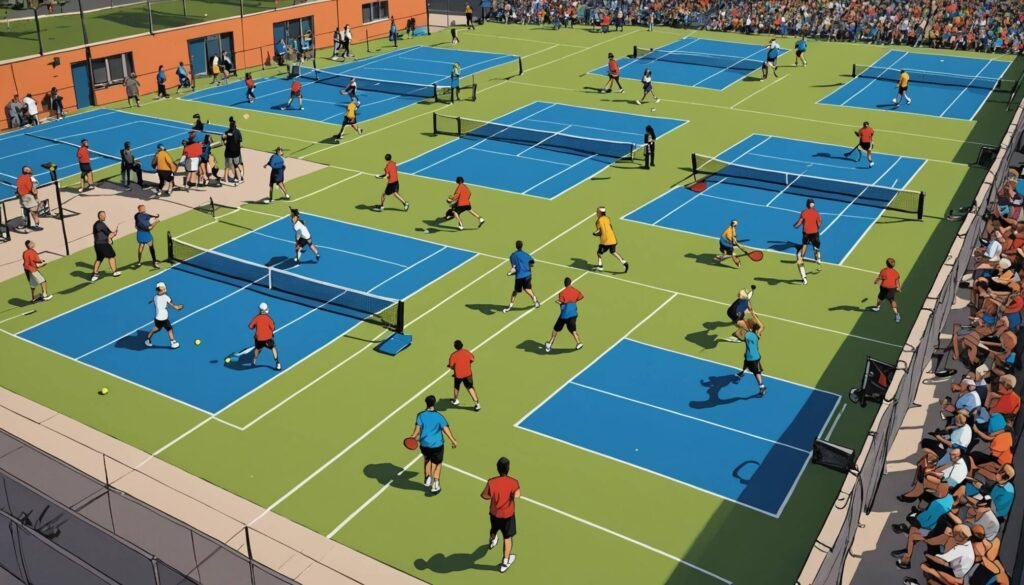
24 Million Americans Are Now Playing Pickleball: A 171% Surge in Just Three Years
The numbers are in, and they tell a story that anyone who’s stepped onto a pickleball court lately already knows: this sport isn’t slowing down. According to the latest participation report from the Sports & Fitness Industry Association (SFIA), 24.3 million Americans picked up a paddle in 2025. That represents a 22.8% increase from the previous year and a staggering 171.8% jump over the past three years.
These aren’t just statistics on a page. They represent millions of people discovering a sport that’s changing how Americans think about recreation, fitness, and community. From public parks to private clubs, from retirement communities to college campuses, pickleball courts are becoming as common as basketball hoops once were. The SFIA didn’t mince words in their assessment, calling pickleball “the dominant multi-year growth leader across all tracked sports.” In a landscape where most recreational activities struggle to maintain steady participation rates, pickleball’s trajectory stands alone.
Understanding the Growth Numbers
For those unfamiliar with how sports participation is measured, it’s worth breaking down what these numbers actually mean. The SFIA tracks two distinct categories of players: casual participants and core players. Casual participants are those who play between one and seven times per year—essentially people who might try pickleball at a family reunion, play occasionally with neighbors, or join a friend for a game now and then. Core players are the committed ones, playing eight or more sessions annually. These are the folks driving to courts before sunrise, joining leagues, and showing up rain or shine.
In 2025, casual participation reached 16.8 million people, up 23.9% from the previous year. Meanwhile, core player numbers climbed to 7.48 million, marking a 20.4% increase. This dual growth pattern tells us something important: pickleball isn’t just experiencing a curiosity surge where people try it once and move on. It’s converting newcomers into committed players who keep coming back. When both casual and core participation rise simultaneously, it signals healthy, sustainable growth rather than a temporary fad.
The Momentum Continues Despite Earlier Questions
Interestingly, this latest data represents a notable shift from projections made just months earlier. In August 2025, SFIA released its first-ever mid-year report, which suggested that early indicators pointed toward a potential leveling off of pickleball’s explosive growth. That assessment raised eyebrows across the industry and prompted discussions about whether the sport had reached a plateau. Some wondered if the unprecedented boom was finally cooling down.
Fast forward six months, and those concerns appear premature. The year-end data shows that pickleball added nearly 4.5 million new players in a single year—hardly the profile of a sport losing steam. This pattern isn’t unusual in rapidly growing activities. Mid-year snapshots can sometimes capture temporary dips or seasonal variations that don’t reflect the full picture. What matters most is the annual trend, and that trend remains decidedly upward.
The continued acceleration also follows years of remarkable expansion. Looking back at the 2024 numbers, when participation approached 20 million, many analysts predicted inevitable moderation. Yet 2025 proved those predictions wrong, suggesting that whatever ceiling exists for pickleball participation, we haven’t come close to reaching it yet.
How Pickleball Compares to Other Racquet Sports
To fully appreciate pickleball’s growth, it helps to place it in context alongside other racquet sports. Tennis, the long-established leader in this category, reached 27.3 million players in 2025, representing a 6.2% year-over-year increase. That’s solid, healthy growth for a mature sport. Table tennis attracted 15.9 million participants, though it grew by just 0.7%. Other racquet sports showed varying levels of growth, with seven of eight tracked sports posting year-over-year gains.
The broader racquet sports category has been on an upward trajectory for a decade now. According to the data, participation in racquet sports reached 20.6% of Americans in 2025, up from just 13% in 2019. This represents a genuine renaissance for paddle-and-ball sports after years of decline in the late 20th and early 21st centuries. While multiple factors contribute to this resurgence—better facilities, increased health awareness, social media promotion—pickleball undeniably drives much of the momentum.
What makes pickleball’s 22.8% annual growth rate particularly impressive is its scale. When a sport has only a few hundred thousand participants, adding 20% or 30% more players in a year is achievable. But when you’re already at nearly 20 million players, maintaining that growth rate requires bringing massive numbers of new people into the sport. Adding 4.5 million players in a single year is the equivalent of creating an entirely new major sport from scratch.
Why Pickleball Keeps Growing
Understanding why pickleball continues attracting millions of new players requires looking at the sport’s fundamental characteristics. Unlike many recreational activities that require years of practice before becoming enjoyable, pickleball offers immediate gratification. A complete beginner can have a genuinely fun experience in their first session, often managing to sustain rallies and feel competitive within an hour or two of picking up a paddle.
The game’s accessibility extends beyond skill level. Equipment costs remain relatively low compared to many sports. A decent paddle costs between $50 and $150, and most players can start with something in the lower range without feeling handicapped. You don’t need specialized clothing, expensive shoes, or elaborate gear. Many public parks and recreation centers offer free court access, and even private clubs tend to charge less than equivalent tennis or golf facilities.
Age inclusivity represents another crucial factor. Walk onto most pickleball courts and you’ll see teenagers playing alongside retirees, with everyone competing on relatively equal footing. The smaller court size and underhand serve reduce the physical demands compared to tennis, while the emphasis on strategy and placement over power creates opportunities for players of all athletic backgrounds. This intergenerational appeal is rare in sports and creates unique social dynamics that keep people engaged.
The doubles format, which dominates recreational play, builds in social interaction that many other individual sports lack. You’re constantly communicating with a partner, strategizing between points, and usually rotating to play with different people throughout a session. This social element transforms pickleball from mere exercise into a community activity. People don’t just play pickleball; they become part of pickleball groups, develop friendships, and create social networks around the sport.
Infrastructure Growth Supports Player Expansion
None of this growth would be possible without the massive expansion in pickleball infrastructure happening nationwide. Thousands of new courts have been built in the past few years, with cities, towns, and private developers rushing to meet demand. Former tennis courts are being converted, parking lots are being repurposed, and new dedicated pickleball facilities are opening regularly.
This infrastructure boom creates a positive feedback loop. More courts mean less waiting time, which encourages more frequent play. Better facilities attract new players who might have been hesitant to try the sport on makeshift courts. As participation grows, it becomes easier to justify further investment in facilities, which then supports additional growth. Communities that invest in quality pickleball infrastructure often find they’ve created popular gathering spaces that serve social functions beyond just sport.
The challenge now facing many communities is keeping pace with demand. Even with aggressive court construction, many facilities remain oversubscribed during peak hours. Online booking systems crash, players camp out to claim court time, and clubs maintain lengthy waiting lists. While these might seem like problems, they’re actually indicators of robust, sustainable demand rather than temporary enthusiasm.
Pickleball Within America’s Broader Activity Boom
Pickleball’s expansion is happening against the backdrop of a larger shift in American activity levels. The SFIA report revealed that 80.5% of Americans aged six and older—roughly 250 million people—participated in at least one sport or fitness activity in 2025. This represents the highest level ever recorded in the organization’s tracking history. Simultaneously, inactivity dropped to 19.5% of the population, the lowest rate since measurement began.
This broader trend toward physical activity creates favorable conditions for pickleball’s continued growth. As more Americans prioritize health and fitness, they’re looking for activities that combine exercise with enjoyment. Pickleball checks both boxes while avoiding the intimidation factor or time commitment that makes some people reluctant to try traditional gym workouts or team sports.
The timing also aligns with changing attitudes about aging and activity. Older adults, who historically formed pickleball’s core demographic, are increasingly rejecting passive retirement in favor of active lifestyles. Pickleball provides an ideal outlet: challenging enough to provide real exercise and mental stimulation, but forgiving enough to accommodate varying fitness levels and physical limitations.
What This Means for Someone New to Pickleball
If you’re reading about pickleball’s growth but haven’t yet tried the sport yourself, you might wonder what all the fuss is about. Imagine a game that combines elements of tennis, badminton, and ping-pong. It’s played on a court about one-third the size of a tennis court, with a net slightly lower than tennis height. Players use solid paddles to hit a plastic ball with holes—similar to a wiffle ball—back and forth across the net.
The rules are straightforward enough to learn in minutes. You serve underhand, the ball must bounce once on each side before you can volley it, and there’s a seven-foot “kitchen” zone near the net where you can’t volley the ball. Scoring works differently than tennis, with only the serving team able to score points, and games typically played to 11 points. Within your first session, you’ll understand the basics. Within a few sessions, you’ll start developing strategy and technique.
What hooks most people isn’t the rules or even the exercise—it’s the experience. There’s something uniquely satisfying about the sound of a well-struck ball, the quick exchanges at the net, and the mix of finesse and strategy required. The game moves fast enough to be exciting but not so fast that beginners feel overwhelmed. You experience success quickly, which builds confidence and encourages continued play.
The 24 million Americans now playing pickleball aren’t all athletes or fitness enthusiasts. They’re people from every background and age group who discovered an activity that’s genuinely fun, provides good exercise, and creates opportunities for social connection. That combination is harder to find than you might think, and it explains why so many people who try pickleball once become part of that 7.48 million core player group.
Looking Ahead: Where Does Pickleball Go From Here?
With 24 million players and counting, pickleball has moved well past the “niche sport” phase and into mainstream American recreation. The question now isn’t whether pickleball will continue growing, but how much further it can expand and what that growth will look like.
Several factors suggest continued expansion is likely. First, awareness still hasn’t reached saturation. Despite the impressive numbers, most Americans either haven’t tried pickleball or have only played it once or twice. As facilities multiply and the sport maintains its high profile, more people will have opportunities to discover it. Second, the demographic trends favor pickleball. An aging population looking for active recreation options will continue finding the sport appealing, while younger players are increasingly taking up the game as well.
Third, the infrastructure investments being made now will support growth for years to come. Unlike some sports booms that collapse when enthusiasm wanes, pickleball’s expansion is backed by concrete—literally—in the form of thousands of permanent courts. These facilities create lasting capacity for participation and make it easier for new players to try the sport without facing prohibitive barriers.
The professionalization of pickleball also contributes to sustained growth. Major League Pickleball, professional tours, television coverage, and sponsorship deals create visibility and aspirational figures for recreational players. When people see high-level competition, it deepens their appreciation for the sport’s strategic complexity and athletic demands. This can transform casual participants into more engaged, committed players.
The Numbers Tell a Clear Story
Looking at the data comprehensively, pickleball’s position as the fastest-growing sport in America isn’t just about impressive percentage increases. It’s about sustaining rapid growth at scale, converting casual players into committed participants, and driving broader participation in racquet sports overall. The 171.8% increase over three years represents one of the most remarkable growth stories in modern American sports.
What makes this expansion particularly noteworthy is its breadth. Pickleball isn’t growing in just one region or demographic—it’s expanding across geography, age groups, income levels, and athletic backgrounds. It’s succeeding in urban centers and rural communities, in warm-weather states and cold-weather regions. This broad-based growth suggests the sport has tapped into something fundamental about what Americans want from recreational activities: accessibility, social connection, immediate enjoyment, and regular exercise in a low-pressure environment.
The sport’s impact extends beyond participation numbers. Pickleball is creating new businesses, from equipment manufacturers to facility operators to coaching services. It’s influencing urban planning decisions as communities incorporate pickleball courts into park designs. It’s generating content for media outlets, podcasts, and social media. It’s even affecting related industries, as shown by the growth in racquet sports overall.
Challenges Accompany Growth
Rapid expansion inevitably brings challenges. Court availability remains the most pressing issue in many communities, with demand far outstripping supply. This can create frustration among players and conflicts between user groups, particularly when tennis courts are converted to pickleball use. Noise complaints from residents near outdoor courts have sparked legal battles and local controversies in some areas.
The influx of new players also creates education challenges. Understanding court etiquette, rotating fairly, respecting skill-level designations, and following facility rules become more difficult when large numbers of beginners enter the sport simultaneously. Established players sometimes express frustration with these growing pains, though most recognize that their own continued enjoyment depends on welcoming newcomers.
Quality control in equipment and instruction represents another emerging concern. As the market expands, more manufacturers produce paddles and gear, while more people offer lessons and coaching. Ensuring quality and safety standards while maintaining the sport’s accessible, welcoming character requires ongoing attention from governing bodies and the broader pickleball community.
The Road Ahead
The SFIA’s 2026 report provides a snapshot of pickleball at a remarkable moment in its evolution. With 24.3 million Americans now playing, the sport has achieved genuine mainstream status. Yet the data suggests this is still relatively early in pickleball’s trajectory. The combination of continued high growth rates, strong conversion from casual to core players, successful infrastructure development, and favorable demographic trends points toward further expansion.
Whether pickleball eventually reaches 30 million, 40 million, or even 50 million American players remains to be seen. What seems clear is that the sport has moved beyond the “fastest-growing” descriptor to simply become one of America’s major recreational activities. For the millions who already play, these numbers validate what they experience on the courts: a genuine phenomenon that’s changing how Americans spend their recreational time.
The 171% growth over three years isn’t just a statistic—it represents millions of individual decisions by people who tried pickleball and decided it was worth their time. It reflects countless communities that invested in courts, countless clubs and organizations that created welcoming environments, and countless existing players who introduced friends and family to the game. The numbers are impressive, but the real story is the human one


