How Closely Should You Watch the Ball in Pickleball? A Game-Changing Tip
We’ve all heard the classic sports advice echoing from coaches, parents, and training videos: “Keep your eye on the ball.” It’s one of those fundamental principles that gets repeated so often it almost loses meaning. But when it comes to pickleball, this age-old wisdom might be the most underutilized technique separating consistent players from those struggling with mishits and shanks. The question isn’t whether you should watch the ball, but rather how closely and for how long you should maintain that visual focus during each shot.
Recently, a fascinating discussion emerged on Reddit that has pickleball players reconsidering their approach to ball tracking. A player observed something remarkable while watching slow-motion footage of tennis legends Carlos Alcaraz and Roger Federer: both athletes kept their eyes locked on the contact point even after the ball had already left their racquet. This wasn’t just a momentary glance or casual tracking. Their eyes remained fixed on the precise location where paddle met ball well beyond the moment of impact.
Intrigued by this observation, the player decided to experiment with this technique during their own pickleball sessions. The results were nothing short of dramatic. They reported that their shanks and mishits dropped by approximately 80-90%, and they began hitting much closer to the paddle’s sweet spot with remarkable consistency. This kind of immediate improvement from a single technical adjustment is rare in sports, which makes it all the more compelling for players at every level.
Understanding Ball Tracking for Beginners
If you’re relatively new to pickleball or sports in general, the concept of “watching the ball through contact” might seem confusing or even unnecessary. After all, where else would you be looking? The reality is that most recreational players don’t actually watch the ball as closely as they think they do. Instead, they tend to track the ball’s general trajectory until just before contact, then shift their focus to where they want the ball to go or what their opponent is doing.
Think about it this way: imagine you’re trying to thread a needle. You wouldn’t look at the needle until just before the thread reaches it, then immediately look away to see where the thread will go next. You’d keep your eyes fixed on that tiny opening throughout the entire process to ensure accuracy. The same principle applies to pickleball. The ball is moving, your paddle is moving, and your body is moving. The only way to ensure these three elements meet at exactly the right moment and angle is to maintain unwavering visual focus throughout the entire contact phase.
When we talk about “watching through contact,” we mean maintaining your visual focus on the ball from the moment you identify its trajectory, through the instant it touches your paddle face, and continuing for a brief moment after it has left your paddle. This extended focus is counterintuitive because our brains naturally want to look ahead to see the result of our action or prepare for the next move. Resisting this impulse is what separates good ball-striking from great ball-striking.
The sweet spot on your paddle, that optimal hitting zone where power and control are maximized, is relatively small. Without precise visual tracking, you’re essentially hoping your hand-eye coordination will naturally guide the paddle to meet the ball perfectly. Sometimes it will, but often it won’t. By maintaining intense visual focus, you’re giving your brain maximum information to make micro-adjustments in paddle angle, timing, and positioning that happen too quickly for conscious thought.
Learning From Professional Players
The golden rule of keeping your eye on the ball absolutely pertains to recreational pickleball, not just the professional game. However, there’s a significant gap between knowing you should watch the ball and actually doing it with the intensity and duration that produces results. If you spend time watching high-level pros play, you’ll notice that maintaining visual focus through contact isn’t just a recommendation—it’s virtually a requirement for consistent, high-quality shot-making.
The best professionals in the pickleball world, including Anna Leigh Waters, Ben Johns, Gabriel Joseph Tardio, Hayden Patriquin, Anna Bright, Catherine Parenteau, and Federico Staksrud, all demonstrate this technique with remarkable consistency. Watch their eyes during slow-motion replays, and you’ll see their gaze locked on the contact point through the duration of nearly every shot, with very few exceptions. This isn’t coincidental or merely a stylistic choice—it’s a fundamental component of their exceptional ball control and shot consistency.
What makes professional players different isn’t just their physical abilities or thousands of hours of practice. It’s their unwavering commitment to technical fundamentals, even during the most intense rallies. While recreational players might maintain good visual focus during easy warm-up shots, they often abandon this discipline when the pressure increases or the pace quickens. Professional players, by contrast, treat every single shot with the same technical rigor, whether it’s a casual dink during practice or a championship point.
One particularly illuminating resource is a slow-motion video from paddle reviewer John Kew that captures professional players during a recent tournament. Watching this footage reveals just how dramatically pros keep their heads still and eyes fixed during contact. You’ll notice that their heads don’t pop up to track the ball’s flight until well after contact has been made. This discipline is something most recreational players simply don’t practice, yet it’s one of the most accessible improvements you can make to your game.
The technique crosses over from other racquet sports as well. Tennis players at the highest level have long understood the importance of watching the ball onto the strings. The same biomechanical and neurological principles apply to pickleball, perhaps even more so given the smaller paddle face and the variety of spins and speeds encountered during typical rally exchanges.
Implementing the Technique in Your Game
Understanding the importance of watching the ball through contact is one thing; actually implementing it consistently in your game is another challenge entirely. The next time you step onto the court, approach your practice session with deliberate intention about this specific technical element. Rather than just playing points and hoping for improvement, make visual tracking your primary focus for at least a portion of your practice time.
Start by treating every single shot like it’s the most important shot of the entire game, because in reality, it is. The point you’re playing right now is the only one that matters until it’s finished. This mindset shift helps create the mental discipline necessary to maintain focus shot after shot. Too often, players are mentally rushing ahead, thinking about the next shot or the last error, rather than being fully present for the current ball contact.
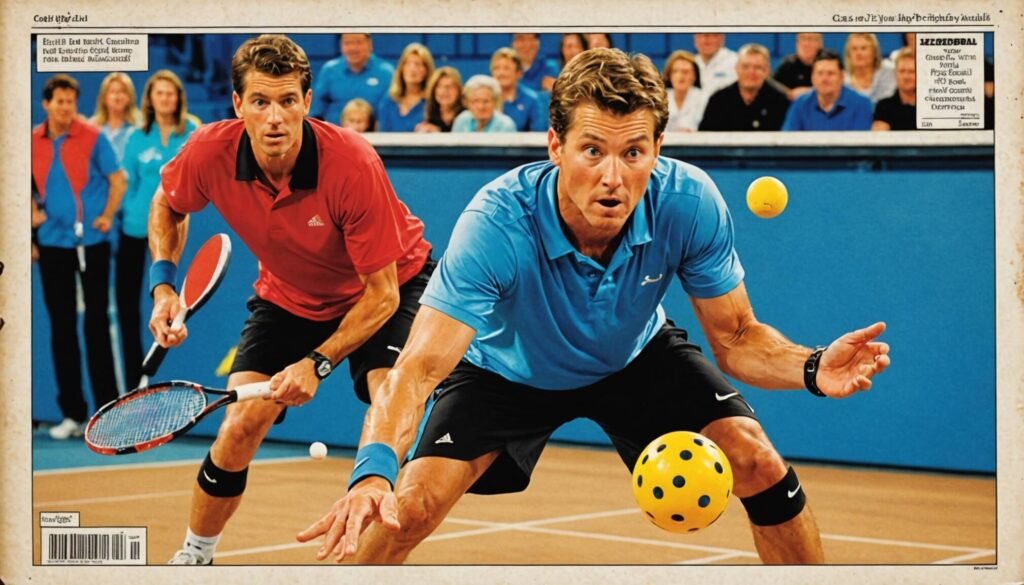
The technical execution is straightforward: watch the ball as it approaches your paddle, maintain your focus as it makes contact with the sweet spot, and don’t break eye contact with the ball until it has clearly left your paddle face. This means your head should remain relatively still during contact, not turning to follow the ball’s flight path prematurely. You should be able to see the ball compress slightly against your paddle face if you’re truly watching closely enough.
If this sounds extreme or overly meticulous, that reaction itself is probably an indication that you’re not paying close enough attention during your current game. Elite performance in any sport comes from mastering fundamentals to a degree that seems excessive to the casual participant. The difference between a 3.5 player and a 4.5 player often isn’t dramatic differences in shot selection or court positioning—it’s the consistency that comes from superior technique on basic mechanics like ball tracking.
Try implementing this technique during a practice session and pay attention to what happens. You’ll likely notice several immediate changes. First, your mishits and frame shots should decrease noticeably. Second, you’ll probably feel like you have more time to execute each shot because you’re not rushing through contact to look up. Third, your shot placement should improve because you’re making cleaner contact more consistently, which gives you better control over paddle angle and ball direction.
One useful practice drill is to call out “contact” or “hit” the moment the ball touches your paddle. This verbal cue forces you to be watching precisely at the moment of impact. If you find yourself saying the word based on feel rather than sight, you’re looking away too early. Another helpful exercise is to practice with a partner and have them randomly call out the color or brand name on the ball during rallies. If you can’t answer accurately, you weren’t watching closely enough.
Common Mistakes and How to Avoid Them
Even when players understand the importance of watching the ball through contact, several common mistakes can undermine their efforts. The most frequent error is looking up too early to see where the ball is going. This premature head movement might only happen a fraction of a second before ideal, but that’s enough to reduce the quality of contact significantly. Your peripheral vision and subsequent head turn will show you the ball’s trajectory soon enough—there’s no need to rush.
Another mistake is confusing “watching the ball” with “watching the general area where the ball is.” True ball tracking means focusing on the specific ball, seeing its rotation, and tracking it precisely onto your paddle face. Some players let their eyes glaze over or lose focus while still technically looking in the right direction. Active, engaged visual tracking requires mental effort and concentration, especially when you’re tired or distracted.
Players also sometimes apply this technique inconsistently, using it for some shots but not others. They might watch the ball carefully during a third-shot drop but then abandon the technique during a fast exchange at the kitchen line. The reality is that fast balls require even more careful tracking than slow ones, not less. When the pace increases, the margin for error decreases, making precise visual contact even more critical.
Physical tension can also interfere with proper ball tracking. If your neck and shoulders are tight, you’ll find it harder to keep your head still and eyes focused through contact. Make sure you’re maintaining relaxed ready position and breathing properly throughout points. Tension often comes from trying too hard or from anxiety about results, both of which ironically make good technique harder to execute.
The Science Behind Why This Works
There’s solid scientific reasoning behind why watching the ball through contact produces such dramatic improvements. The human visual system requires time to process information and send signals to the motor cortex, which then activates the appropriate muscles. This entire process, while incredibly fast, still takes measurable time. By maintaining visual focus longer, you’re giving your brain more complete information to work with during the critical final moments before contact.
When you look away early, you’re essentially forcing your brain to predict where the ball will be based on incomplete information. Your brain makes its best guess using the trajectory data it gathered before you looked away, but this prediction model is inherently less accurate than continued real-time tracking. Small variations in ball speed, spin, or bounce become much harder to adjust for when you’re working from prediction rather than observation.
Keeping your head still during contact also has biomechanical advantages. Head movement affects your body’s balance and alignment. When your head moves, your body naturally wants to follow, which can pull you offline during the shot. A still head promotes a stable base, which in turn allows for more consistent paddle delivery and follow-through. This is why you’ll often hear instructors emphasizing “quiet head” or “still head” during contact in various sports.
The neural pathways involved in hand-eye coordination also improve with this kind of focused practice. Each time you watch the ball carefully through contact and receive immediate feedback about the result, your brain refines its internal models of how paddle angle, timing, and ball contact relate to ball trajectory. Over time, this creates more accurate and automatic motor patterns, which is another way of saying your shots become more consistent and reliable.
Adapting the Technique for Different Shots
While the fundamental principle of watching through contact applies to all shots, the specific application varies slightly depending on the situation. During dinking exchanges at the kitchen line, the ball is moving more slowly, which actually makes it easier to maintain visual focus through contact. Use these opportunities to really ingrain the habit, watching the ball compress against your paddle face and noting the exact moment of separation.
For drives and attacking shots, the ball is moving much faster, which makes the temptation to look up even stronger. You naturally want to see where your aggressive shot is going and watch your opponent’s reaction. Resist this urge. The ball will get where it’s going whether you watch it or not, and you’ll see the result a fraction of a second later. That brief delay in satisfaction is worth the significant improvement in shot quality that comes from maintaining focus through contact.
Third-shot drops and other touch shots particularly benefit from extended visual tracking because they require such precise paddle control. The difference between a drop that lands in the kitchen and one that sits up for an attack is often just a few inches and a slight variation in paddle angle. Watching carefully through contact gives you the best chance of executing these delicate shots consistently.
Returns of serve happen at high speed and often require quick reactions, but the principle still applies. Track the ball from the server’s paddle all the way onto your own paddle, maintaining focus through contact even though the ball is moving quickly. This careful tracking helps you handle variations in serve speed, spin, and placement much more effectively than trying to rely on quick reactions alone.
Building the Habit Through Deliberate Practice
Like any technical adjustment, watching the ball through contact won’t feel natural at first. You’ve likely developed habits over months or years of play that involve looking away from contact earlier than optimal. Changing ingrained motor patterns requires deliberate practice with conscious attention to the specific technique you’re trying to improve.
Start by dedicating the first ten or fifteen minutes of each practice session specifically to this technique. During this time, don’t worry about winning points or hitting perfect shots. Focus exclusively on watching the ball onto your paddle and maintaining that focus through contact. You might even play some cooperative rallies where both you and your practice partner are working on the same technique, taking the competitive element out entirely.
As the technique becomes more comfortable, gradually increase the intensity and competitiveness of your practice while maintaining the focus on ball tracking. You’ll probably find that you sometimes slip back into old habits during intense rallies or pressure situations. This is normal and expected. When you notice it happening, simply reset your focus for the next point. Over time, the new pattern will become more automatic.
Video recording your play can be incredibly valuable for this particular technique. Set up a camera that captures your head and upper body during play, then review the footage to see how well you’re actually keeping your head still and eyes focused through contact. The visual feedback of seeing yourself on video often makes technical flaws much more obvious than they feel during play.
Consider working with a coach or more experienced player who can observe your technique and provide feedback. Sometimes an external observer can spot tendencies you’re not aware of, like looking up early on certain types of shots but not others. This kind of specific feedback accelerates improvement significantly compared to trying to self-diagnose and self-correct.
Long-Term Benefits Beyond Consistency
While the immediate benefit of watching the ball through contact is improved consistency and fewer mishits, the long-term advantages extend much further. As your contact quality improves, you’ll find that you can execute a wider variety of shots with confidence. Spins, angles, and pace variations all become more accessible when you’re consistently finding the sweet spot on your paddle.
Better ball tracking also improves your ability to read and react to your opponent’s shots. The focused attention you develop while tracking your own shots translates to better observation of opponent’s paddles, body positions, and shot patterns. You’ll start picking up subtle cues earlier, giving you more time to react and position yourself optimally.
The mental discipline required to maintain focus shot after shot also builds concentration skills that benefit your overall game. Pickleball points can be long and mentally taxing, especially during competitive matches. The ability to maintain technical focus even when tired or stressed is a significant competitive advantage that extends well beyond just ball tracking.
Perhaps most importantly, consistent ball-striking builds confidence. When you trust that you can hit the ball cleanly and accurately on a high percentage of shots, you feel more comfortable taking appropriate risks and attempting the right shot for the situation rather than playing overly safe out of fear of mishits. This confidence allows your tactical game to develop more fully because you’re not limited by technical uncertainty.
The technique of watching the ball closely through contact might seem like a small detail in the grand scheme of pickleball strategy and skill development. But it’s precisely these fundamental details that separate good players from great ones. The beauty of this particular technique is that it’s accessible to players at every level, requires no special equipment or athletic ability, and produces noticeable results almost


