Scoreboard Collapses on Player During MLP New York Match — Here’s What Happened
Nobody watching the MLP New York event on June 25, 2026 expected to see what unfolded during the final match of the day. A large baseline LED scoreboard — one that stretched roughly 30 feet wide, spanning the entire length of the baseline — tipped over and fell flat onto the court, landing directly on Brooklyn Pickleball Team player Rachel Rohrabacher’s leg. It’s the kind of thing you’d never think could happen at a professional pickleball event, and yet it did.
The good news: Rachel appears to be okay. She walked off the court on her own power, and while she didn’t return to finish the match, the fact that she was up and moving shortly after the incident is a significant relief. Play eventually resumed about 30 minutes after the scoreboard fell, and Brooklyn went on to win the match 3-1.
Here’s a full breakdown of what happened, why it matters for the sport, and what it means going forward.
What Actually Happened on the Court
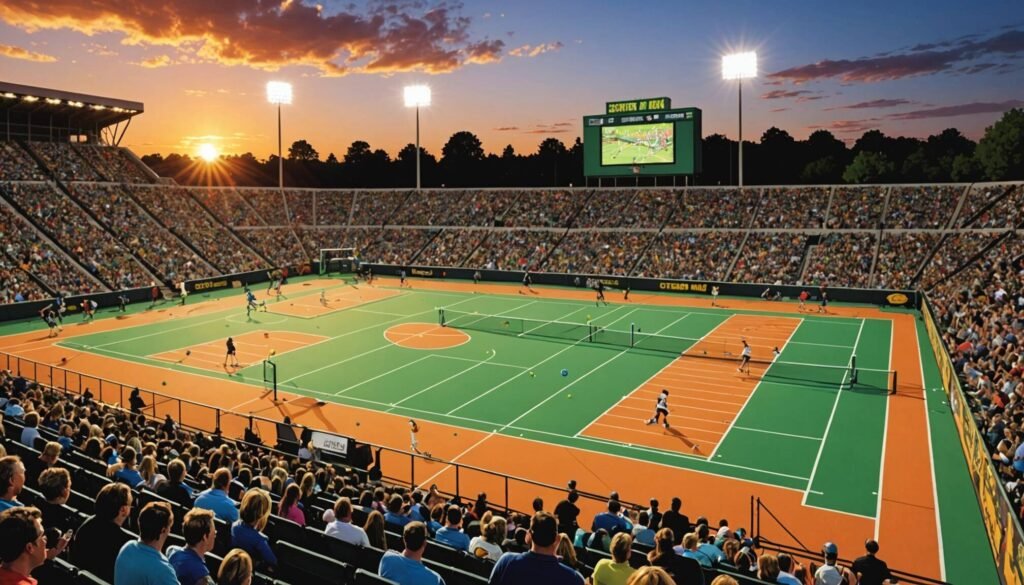
The match in question was between the Bay Area Breakers and the Brooklyn Pickleball Team, the final contest of the MLP New York event. Conditions at the outdoor venue had started off relatively calm but were getting noticeably windier as the match progressed. By all accounts from those watching live and on-site, a strong gust of wind caught the baseline LED scoreboard — a massive structure that sits at the end of the court — like a sail, and it simply tipped over, falling flat onto the playing surface.
The timing and placement of the fall meant that Rachel Rohrabacher’s leg ended up briefly trapped underneath the board. It’s a deeply unsettling image to consider: a professional athlete in the middle of competition suddenly pinned by a piece of event infrastructure. Players and personnel on site reacted quickly, rushing to her aid and lifting the scoreboard so she could free her leg.
Rachel was able to walk off the court without assistance, which was the first sign that the injury wasn’t as serious as the incident looked. She did not return to play, however. In her absence, Hannah Blatt stepped in for Brooklyn for the remainder of the match. The Bay Area Breakers women also conceded their game to Brooklyn following the incident. Brooklyn ultimately took the match 3-1.
Journalist Alex E. Weaver, who was watching the match live for The Dink, captured footage of the immediate aftermath, including Rachel returning to the court area after walking off under her own steam. The scoreboard was secured and uprighted before play was allowed to continue.
What Major League Pickleball Said
Shortly after the incident, Major League Pickleball released an official statement through their Instagram story addressing what happened. The statement read:
“During today’s match between the Brooklyn Pickleball Team and Bay Area Breakers, a strong wind gust caused a baseline LED board to tip over, temporarily halting play. Thankfully, no players sustained any significant injuries. Play resumed after the board was secured, and additional precautions have been implemented for the remainder of today’s competition and the rest of the MLP New York event. The safety of our players, fans, and staff remains our top priority, and we will continue to monitor conditions throughout the event.”
The statement is measured and appropriate. MLP acknowledged what happened, confirmed no significant injuries occurred, and made clear they implemented additional precautions immediately. For anyone who follows professional sports leagues, this is a standard but necessary response — and the speed of it suggests they understood the seriousness of the moment.
What’s worth noting is the phrase “additional precautions have been implemented.” That’s vague by design, but it likely refers to how the scoreboards and other large pieces of event infrastructure are anchored or weighted, particularly when outdoor conditions become a factor. Wind at outdoor sporting events is always a wildcard, but a structure that large becoming a safety hazard is something that genuinely needs to be addressed with more than just a statement.
Understanding the Scale of What Fell
To really appreciate how serious this incident could have been, it helps to understand what these baseline scoreboards actually are. According to reporting from The Dink, this LED board was estimated at approximately 30 feet wide — wider than the pickleball court itself. These are not small signs or lightweight banners. These are substantial, production-level LED displays that bring a broadcast-quality look to professional pickleball events.
At MLP events, the presentation has grown significantly over the past couple of years. Courts are set up with professional lighting rigs, camera systems, commentary booths, and large digital scoreboards that make the whole thing feel more like a stadium sport than a backyard game. That’s a good thing for the growth of pickleball. But with that level of production infrastructure comes responsibility — and on June 25, a gap in that responsibility became very apparent.
A 30-foot-wide LED board falling during active play is, objectively, a dangerous situation. The fact that no one was seriously hurt is fortunate. The positioning of that board relative to active players, and the unpredictability of wind during outdoor competition, is something that event organizers across all outdoor professional sports should take as a serious warning.
For Anyone Not Familiar With MLP or Professional Pickleball
If you’re reading this and you’re not deeply plugged into the professional pickleball world, here’s some context that will help all of this make more sense.
Major League Pickleball, or MLP, is the top-tier team pickleball league in the United States. Think of it like the NBA or NFL, but for pickleball. Teams are made up of both male and female professional players, and they compete in a team format across a series of events held throughout the year in different cities. MLP New York was one of those events.
Pickleball itself is played on a court that looks a bit like a smaller tennis court, with a low net and paddles instead of rackets. The sport has exploded in popularity across the U.S. over the past several years, with millions of casual players picking it up and a growing professional scene that draws real investment and media attention.
Rachel Rohrabacher is a professional player on the Brooklyn Pickleball Team, one of the franchises competing in MLP. During the match, she was actively playing on the court when the scoreboard — the large electronic display set up at the back end of the court to show the score — was blown over by the wind and fell on her leg. Her teammates and other people on site helped lift it off her immediately.
The match was paused, Rachel walked off on her own, and after about half an hour, another player stepped in for her and the match continued. Brooklyn won. But the image of a player being pinned under a piece of equipment during a professional match is something that will stick with the pickleball community for a while.
For people new to the sport, this incident is a reminder that professional pickleball is real, high-stakes competition — with real production infrastructure, real athletes, and real risks that come with outdoor live events. It’s not just a retirement community game anymore. It’s a legitimate sport at a professional level, and with that comes the responsibility to keep players safe in every situation, including ones nobody anticipated.
What This Means for Player Safety at Professional Pickleball Events
This incident is going to raise some hard questions for MLP and for professional pickleball event organizers more broadly. Outdoor events come with weather variables that are difficult to fully control, but the placement, anchoring, and risk assessment of large structures near the playing area is something that can and should be tightly managed.
Wind is not a new phenomenon at outdoor sporting events. Football stadiums, tennis tournaments, beach volleyball competitions — they all deal with wind. And they all have protocols for how equipment is secured, when play should be halted due to conditions, and how infrastructure is weighted or anchored to prevent exactly the kind of thing that happened in New York.
The fact that the scoreboard was roughly 30 feet wide and sat at the baseline — where players regularly stand during play — means that if the wind had been stronger, or if Rachel had been positioned differently when it fell, this story could have had a very different ending. That’s not meant to be alarmist. It’s just an honest assessment of the situation.
MLP’s statement that additional precautions were implemented for the rest of the event is a start. But the broader conversation this should spark is about what standards professional pickleball events hold themselves to when it comes to infrastructure safety, and whether those standards are being consistently applied across venues and weather conditions.
The sport is growing fast. More events, bigger venues, more production value. All of that is exciting. But growth has to be matched with operational rigor. This incident is a clear signal that player safety protocols need to include serious scrutiny of how large equipment is placed and secured near the playing area, especially at outdoor venues where conditions can shift quickly.
The Bigger Picture for MLP and Professional Pickleball
It would be easy to write this off as a freak accident caused by an unpredictable gust of wind. And in some ways, that’s true — nobody planned for a scoreboard to fall, and the response from those on-site was fast and effective. Rachel is okay. The match resumed. Brooklyn won.
But this incident lands at an interesting moment for professional pickleball. The sport has been working hard to establish itself as a credible, professional-grade league with the production quality and competitive intensity to attract mainstream sports fans. MLP has been a central part of that push, with team ownership groups, broadcast deals, and event presentations that are increasingly polished.
A scoreboard falling on a player during a live match is the kind of moment that can cut through the usual sports news cycle and reach people who aren’t regular pickleball watchers. That’s double-edged. On one hand, it puts pickleball in the conversation. On the other, the context isn’t exactly the kind of highlight reel MLP wants to be known for.
What matters now is how the league responds beyond the immediate statement — whether the precautions taken are substantial, whether they review their infrastructure protocols across all events, and whether they’re transparent with players, fans, and the public about what changes are being made. Those responses will say a lot about how seriously they take the safety of the people who make the league what it is.
Rachel Rohrabacher walking off that court on her own was the best possible outcome of a scary situation. Hopefully, the conversations that come out of it lead to changes that make sure something like this never happens again at a professional pickleball event.
This is a developing story and will be updated as more information becomes available. For ongoing coverage of MLP and the professional pickleball world, follow The Dink, which covers everything happening in competitive pickleball across the United States.


