The Pickleball Flick: How One Paddle Tip Adjustment Adds Real Snap to Your Attack
Most players who struggle with the pickleball flick think it’s a timing problem. They drill the shot over and over, try to snap their wrist harder, and still end up watching the ball float back to their opponent who resets it without breaking a sweat. The frustrating truth is that the problem almost never starts during the swing. It starts before the swing even begins.
There is one setup adjustment that changes everything about how much power and snap you can generate with the flick, and it comes down entirely to where your paddle tip is pointing before you initiate. Get that wrong and no amount of wrist effort will save you. Get it right and the shot becomes genuinely threatening in a way that puts real pressure on your opponents at the kitchen line.
This piece breaks down the mechanics behind that adjustment, why it matters so much, how to build the habit into your game, and when to actually use the flick inside a real rally. It also includes a plain-language explanation for anyone newer to pickleball who wants to understand what the flick is and why players at every level spend so much time trying to master it.
What Is the Pickleball Flick? A Simple Explanation for Newer Players
If you are newer to pickleball, here is the short version. When two players are both standing at the kitchen line trading soft, controlled shots called dinks, the rally can go on for a long time. Neither player wants to make a mistake, so both are keeping the ball low and patient. The flick is the shot you use to break that patience and force a winner.
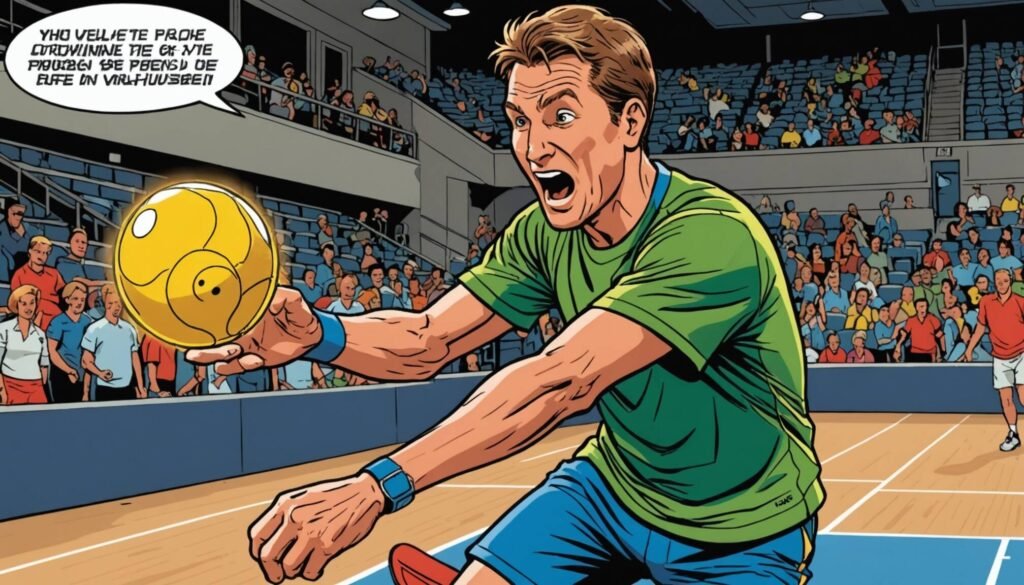
Instead of hitting the ball softly back into the kitchen, you snap your wrist quickly at the last moment and accelerate the ball past your opponent before they have time to react. It is not a big full-arm swing. The whole thing happens in a fraction of a second, driven almost entirely by the wrist. When it works, the ball travels fast and low and your opponent either misses the block completely or pops it up for an easy put-away. When it does not work, the ball floats and your opponent calmly resets it like nothing happened.
The pickleball flick is one of the most effective weapons you can develop at the kitchen line, but it requires a very specific mechanical setup to work properly. That setup is what this article is about.
Why Your Flick Feels Flat: The Real Cause
The most common reason players lose their flick is that they are setting up with the paddle tip pointing upward or level before they swing. This feels natural because it mirrors how you hold the paddle during a normal dink exchange, but it completely kills the shot.
When your paddle tip is pointing up, your wrist is already fully extended. There is no range of motion left. You have nowhere to snap from. What happens next is that your arm takes over to generate power instead of your wrist, and arm power is slower, more telegraphed, and produces a push-style contact rather than a sharp snap. The ball travels slower, sits higher over the net, and your opponent has plenty of time to read it and respond.
This is the core problem that Richard Livornese highlights on YouTube, and it explains why so many players feel stuck even after weeks of drilling. The technique at contact is not the issue. The setup before contact is broken. And until that gets fixed, no amount of wrist effort will produce a genuinely fast flick.
Think of it like a rubber band. A rubber band that is already stretched has no stored energy left to release. One that is pulled back and held has maximum energy ready to fire. Your wrist works exactly the same way. If it is already extended at setup, the rubber-band effect is gone before the swing even starts. Understanding wrist lag in pickleball gets at the same mechanical principle from a slightly different angle and is worth reading alongside this.
The Tip-Down Fix: What It Is and Why It Works
The fix is straightforward in concept, even though it takes real practice to build into a habit. Before you initiate the flick, drop your paddle tip deliberately toward the ground. Not a subtle tilt. A visible, deliberate drop of the paddle head that puts your wrist in a genuinely cocked and loaded position.
That cocked position is where all the stored energy lives. When your wrist is loaded like that, it has the full range of motion available to accelerate through the ball at contact. The snap is fast, compact, and driven by the wrist rather than the arm. The result is a ball that travels low and hard off the paddle face, the kind of shot that gives opponents genuine problems.
This is not a minor tweak. Players who make this adjustment for the first time often feel an immediate difference in how the shot responds. The wrist snap that was there all along but had nowhere to go suddenly has a full range to work with, and the difference in ball speed is noticeable right away.
The set-and-snap technique is built around this exact sequencing principle: set the wrist first, then snap through contact. If the set is missing, the snap has nothing to build from.
How to Build the Tip-Down Habit Into Your Game
Knowing the fix intellectually and actually building it into your muscle memory during live play are two different things. Here is a practical progression that works well for most players who are working on this specific adjustment.
Start without the ball entirely. Stand near the kitchen line and practice the setup motion in isolation. Drop the paddle tip toward the ground, feel what a genuinely cocked wrist position feels like, and then snap your wrist forward. Do this twenty or thirty times. The goal at this stage is just to get familiar with what loaded actually feels like in the wrist, because many players have never felt it before.
Next, have a partner feed you slow, knee-high dinks and focus only on the tip position at setup. Do not worry about placement or speed yet. Just practice arriving at the tip-down position before you swing. If the snap feels awkward at first, that is normal. The motion should feel like cracking a whip rather than pushing a door open, and it takes some repetition to rewire from the arm-driven habit most players have developed.
Once the snap feels consistent, start adding targets. The flick is most effective when aimed at the opponent’s hip or shoulder rather than an open gap in the court. Shots directed at the body are much harder to reset cleanly because your opponent cannot move their paddle freely when the ball is coming directly at them.
The final and hardest step is mixing the flick into real dinking rallies without telegraphing it. The setup position needs to look identical to your regular dink setup until the last possible moment. If opponents can read the tip drop as a signal that a flick is coming, they will be ready for it. Practice transitioning from soft dinks to the flick inside live exchanges so the setup blends in naturally.
For additional steps that players often skip when building this shot, this guide on mastering the pickleball flick covers the full development process in more detail.
Grip Pressure: The Other Half of the Equation
Tip position is the setup problem that most players overlook, but grip pressure is the execution problem that kills the shot even when the setup is right. A tight grip destroys the snap almost as effectively as a bad tip position, and the two problems together make the flick basically impossible to execute well.
The wrist snap requires a genuinely loose grip. If your forearm muscles are engaged and tense from gripping hard, your wrist is locked too. No matter how well you load the tip-down position, a tight grip will prevent the wrist from moving freely through contact and rob you of all the speed you built into the motion.
The ideal grip pressure is firm enough to control the paddle but relaxed enough to let the wrist accelerate freely. A common description is holding a tube of toothpaste without squeezing any out. Another is holding a small bird, secure enough that it cannot fly away, gentle enough that you are not crushing it. Either mental cue works. What matters is that your forearm stays relaxed so the wrist can do its job.
This principle applies across the entire game. A detailed look at how grip pressure affects your shots more broadly is worth your time, and modern grip techniques for better overall control covers how grip style and pressure interact with different shots including the flick.
When to Use the Flick in a Real Rally
Even a perfectly executed flick only works in the right situations. Knowing when to pull the trigger is just as important as the mechanics of the shot itself.
The flick works best when your opponent gives you a dink that sits up slightly above the net tape. That extra height gives you the angle and margin to snap the ball aggressively without risking the net. A ball that is too low forces you to either drive it into the net or flip it upward into your opponent’s strike zone, neither of which ends well.
The other ideal moment is after a patient dinking exchange where your opponent has started to relax their ready position. Five or six soft, controlled dinks can lull an opponent into a slightly less alert state, and a well-timed flick in that moment catches them off guard in a way that the same shot at the start of a rally would not.
What does not work is using the flick on every opportunity. Overusing it teaches opponents the pattern and gives them enough reps to start reading your setup. The best kitchen line players mix the flick with resets and drops to keep opponents genuinely uncertain about what is coming. If you want to understand how to build that kind of decision-making into your game, this breakdown on attacking the kitchen line like a 5.0 player lays out the strategic framework clearly.
It is also worth noting that everything discussed here happens inside or near the non-volley zone, so staying aware of your foot position during the snap matters. Leaning into the kitchen on contact is a fault, and momentum from a hard wrist snap can carry your foot forward if you are not careful.
How the Flick Fits Into Your Broader Kitchen Line Offense
The flick is a powerful shot, but it works best as one piece of a larger offensive system at the kitchen line rather than as a standalone weapon. On its own it wins individual points. Inside a real offensive strategy, it creates pressure that wins whole rallies by keeping opponents uncertain about what shot is coming next.
The flick pairs especially well with a patient cross-court dinking game. You keep the ball low and controlled for several exchanges, drawing your opponent into a rhythm, and then flick when they give you a hittable ball that sits up slightly. This approach works because the patience creates the opening. Without the setup work, opponents are alert and ready when the flick comes.
Understanding how the flick connects to other attack options is important for using it intelligently. This guide on roll vs. flick strategy at the kitchen puts both shots in context and helps you understand which one to reach for depending on the ball you receive. The roll and the flick solve different problems, and knowing which one fits the situation makes both shots more effective.
Disguise is also a factor. The more your flick setup looks like your dink setup, the harder it is for opponents to read. This breakdown on disguising speed-ups covers how to make opponents read soft shot until it is far too late to react properly.
The Most Common Flick Mistakes and How to Fix Them
Beyond tip position and grip pressure, several other mistakes consistently show up in players who are working on this shot. Recognizing them is the first step to correcting them.
Starting the motion too early is one of the most frequent problems. If you begin your swing before the ball reaches your ideal contact point, you lose the tight timing that makes the flick sharp. The snap needs to happen at the last moment, not as the ball is approaching from several feet away.
Contacting the ball too high is another common issue. The flick is most effective around waist height or slightly below. Trying to flick a ball at shoulder height almost always turns the shot into a weak push because the wrist cannot generate the same acceleration from that position.
Following through too long is a reliable sign that the arm is doing too much of the work. The snap is a short, compact motion. A long follow-through means you are pushing with your arm rather than snapping with your wrist, and the ball speed reflects that difference immediately.
Telegraphing with your elbow before the swing gives opponents a meaningful read on what is coming. Many players unconsciously lift their elbow slightly as a tell before the flick. Keeping your setup position neutral until the absolute last moment removes that signal and makes the shot much harder to anticipate.
Aiming at open court rather than the body is the final mistake worth calling out. A flick aimed at your opponent’s hip or backhand shoulder is significantly harder to reset than one aimed at a gap, because your opponent cannot move their paddle freely when they are being jammed. Open-court flicks give opponents a clean angle to block if they manage to read the shot in time.
If your backhand flick keeps finding the net specifically, that article covers the five most common reasons it happens and how to correct each one. And if your dinking game is creating weak opportunities that your opponents are exploiting, this piece on common dink mistakes identifies the errors that set up those situations in the first place.
How to Know When the Flick Is Actually Working
The feedback from a good flick is immediate and unmistakable. The ball travels fast and low off the paddle face. Your opponent either misses the block entirely or pops the ball up for an easy put-away. There is no ambiguity about whether the shot worked.
A bad flick is equally easy to identify. The ball rises above the net tape on the way out and gives your opponent enough time to reset softly. If that pattern keeps repeating despite your best efforts at the wrist snap, go back to the tip position and grip pressure before anything else. Those two factors are responsible for the vast majority of flat, ineffective flicks at every level of play.
Filming yourself from the side during drilling is one


