11SIX24 Is Building a Pickleball Shoe From Scratch — Here’s What You Need to Know
When a brand known for paddles decides to make shoes, you might expect a quick cash grab — slap a logo on an existing tennis shoe, call it pickleball-specific, done. That’s not what 11SIX24 is doing. According to founder and CEO David Groechel, the brand spent close to a year developing its first footwear model from the ground up, went through four or five major redesigns, and nearly scrapped the whole project before finally landing on something worth releasing.
This is the story of how that shoe came to be, what makes it different, and why it matters for pickleball players shopping for their next pair of court shoes.
Why 11SIX24 Decided to Make a Pickleball Shoe in the First Place
David Groechel has always had a thing for footwear. If you’ve ever looked at the 11SIX24 paddle lineup, you’ve probably noticed that the names — Vapor, Pegasus, Huarache — are all borrowed from iconic sneaker models. That’s not a coincidence. Groechel is genuinely a shoe guy, and that passion has clearly shaped the brand’s identity from the beginning.
So when it came time to think about where 11SIX24 could expand, footwear felt like the most natural move. But there was a problem he kept running into every time he hit the court: he couldn’t find a pickleball shoe he actually liked wearing. Not because there aren’t options out there — there are plenty — but because most of what he found wasn’t truly built for pickleball.
“I’ve never found a true pickleball shoe,” Groechel told The Dink. “Most of them were just repurposed tennis shoes.”
That frustration became a business decision. In late 2025, 11SIX24 hired a specialized shoe engineering firm and started developing a model with no existing design as its starting point. The goal was the same formula that has worked well for the brand’s paddles: high performance at a price that doesn’t require a premium brand markup.
“How can we grow the business? How can we offer more to our customers?” Groechel said. “How can we continue to sell really high-quality products at an affordable price? Shoes were the natural next step.”
That mindset — build something genuinely good, keep it accessible — has defined 11SIX24’s approach to paddles, and now they’re applying it to an entirely different product category. The ambition is real, but so is the challenge.
What the 11SIX24 Pickleball Shoe Is Actually Designed to Do
Pickleball puts some very specific demands on a shoe. The game involves short, explosive lateral movements, quick direction changes, and a lot of time at or near the kitchen line where you’re pushing off and resetting your feet constantly. A shoe that’s too stiff won’t let you move naturally. One that’s too soft will leave you feeling unstable on lateral cuts. One that’s too heavy will slow you down on split-step reactions. Getting the balance right is genuinely difficult.
Groechel described what he was going for in straightforward terms: “They’re lighter, almost like a speed shoe, but they have great cushion. They have good lateral stability. They have a shank, but it’s not a full carbon-fiber shank, so they’re not super stiff.”
That description places the shoe in a very deliberate middle ground. A full carbon-fiber shank — the kind you find in some high-end tennis and pickleball shoes — gives you torsional rigidity that some players love for stability, but it can make the shoe feel board-like underfoot. 11SIX24 went with a partial shank instead, keeping some structure without locking the foot into a rigid platform.
The cushioning approach also reflects a deliberate choice. There are popular pickleball shoes on the market that feel extremely soft underfoot, which some players love but others find mushy and unstable during lateral movement. On the other end, some court shoes are stripped down to prioritize speed and responsiveness but end up feeling punishing over a long session. Groechel’s stated goal was to find the midpoint.
“Finding that sweet spot of comfort, durability, cushion and weight was the goal all along,” he said.
One additional feature worth noting: 11SIX24 is planning to include a six-month warranty with the shoe. Groechel said this came up repeatedly in conversations with players as something that mattered to them. Court shoes take a beating, and the outsole wear on a high-friction sport like pickleball can be significant. A warranty is a meaningful commitment for a first-time footwear brand.
On price, the expected range is $120 to $140. That puts it noticeably below many of the performance-tier options from established brands, which can easily run $160 to $200 or more. For a brand whose entire identity is built around value, that pricing strategy makes a lot of sense.
The Part Nobody Talks About: Shoes Are Really Hard to Make
11SIX24 originally planned to have the shoe ready to ship in fall 2026. That didn’t happen, and the reason is instructive.
Making a paddle, as Groechel pointed out, involves working within a relatively fixed set of dimensions. There’s a defined shape, a defined weight range, a defined surface area. Yes, the engineering details are complex, but the basic problem space is constrained. Footwear is the opposite. Every shoe has to accommodate an enormous range of foot shapes, widths, arch heights, and toe box preferences — and a fit problem that affects 10% of buyers is a serious commercial problem.
The shoe reportedly went through four or five significant revisions as the team worked through fit issues. One version pinched the big toe. Adjusting for that problem created a different issue. Widening the toe box went too far. Eventually, they went back to basics and rebuilt the shape from scratch.
“It’s so hard,” Groechel said. “People’s feet are also different. You just try to capture 70% of what works for everyone.”
That’s an honest and realistic way to frame it. No shoe fits every foot perfectly, and any brand entering footwear for the first time is essentially learning this lesson in real time. The delays were significant enough that Groechel admitted the project came close to being abandoned entirely.
“It’s proven far harder than paddles,” he said. “I almost gave up on it.”
The fact that they kept going — and that Groechel recently approved what’s expected to be the final production version — says something about the commitment here. This wasn’t a side project that got killed when it got difficult. It’s a real product that nearly got killed and survived anyway.
For the Pickleball Newcomer: Why Does This Even Matter?
If you’re newer to pickleball and you’re wondering why anyone would write this much about a shoe, here’s the short version of why it matters.
Pickleball is one of the fastest-growing sports in the United States right now. Millions of people have started playing in the last few years, and as more players get serious about the game, they start paying attention to their equipment — not just their paddle, but everything they wear on the court. Shoes are a big part of that.
Here’s the thing though: until recently, there wasn’t really a robust category of shoes built specifically for pickleball. Most players wore tennis shoes, which are fine but designed around the movement patterns of a different sport. A few companies have started making pickleball-specific shoes in the last couple of years, but the category is still pretty young.
Why does the right shoe matter? Because pickleball involves a lot of lateral movement — side-to-side shuffling — along with quick forward and backward adjustments. A running shoe, which is designed to absorb impact moving forward, is actually a poor choice for court sports because it doesn’t give you the lateral support you need and the outsole pattern isn’t built for the kind of pivoting and stopping you do in pickleball. A court-specific shoe, by contrast, has a flatter outsole pattern, better lateral reinforcement in the upper, and a different kind of cushioning that works for multi-directional movement rather than straight-ahead running.
When 11SIX24 talks about building a shoe that’s lighter than a typical tennis shoe but more stable than a pure speed shoe, they’re trying to nail something that matters to anyone who plays pickleball regularly and wants their feet to feel good two hours into a session.
And the price point matters too. If the shoe lands at $120 to $140, that’s genuinely competitive with a lot of popular options that don’t even carry a pickleball-specific design. For casual players or people just getting serious about the game, that’s a meaningful difference.
When You Can Actually Buy One and What It Will Look Like
Based on the current timeline, the shoes are expected to arrive in 11SIX24’s warehouse around the end of March 2027, with a public launch planned for April. That’s a significant delay from the original fall 2026 target, but given everything that went into getting the fit right, it’s hard to argue with the decision to take more time.
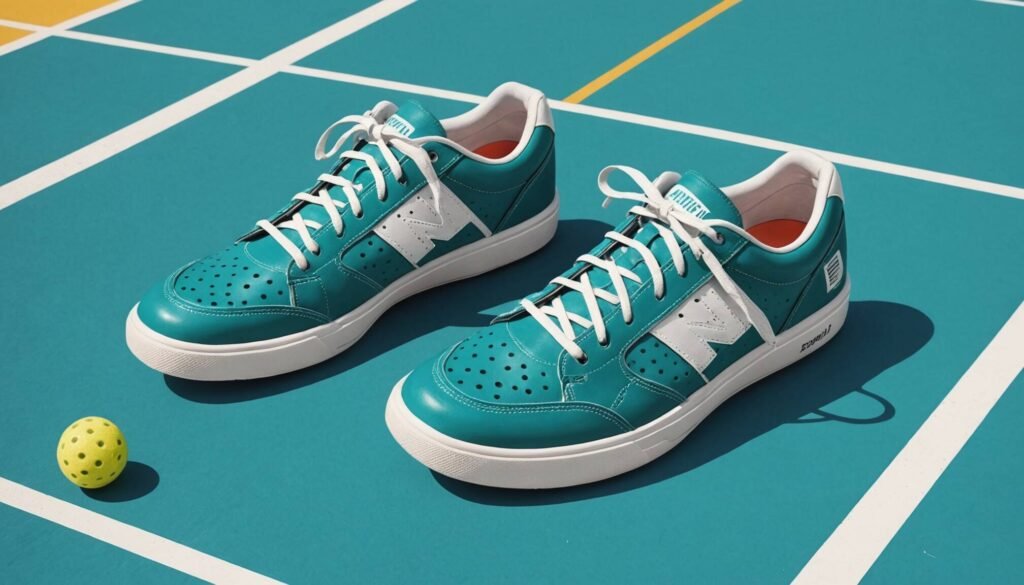
Multiple colorways are planned. The initial lineup is expected to include black, white, teal, and lavender options, along with a brighter Miami-inspired colorway that should stand out on the court. That color variety suggests 11SIX24 is thinking about the shoe as something players will want to wear, not just something that’s functional.
Groechel is realistic about who the first wave of customers will be. He expects early sales to come primarily from existing 11SIX24 fans, brand ambassadors, and players who are already engaged with the brand and willing to try something new from them. That’s a sensible expectation for a first footwear release from a brand that built its reputation on paddles.
But the longer-term goal is broader brand visibility. Every pair of 11SIX24 shoes on a court is essentially a moving advertisement for the brand, which has until now only had paddle-shaped surfaces to put its name on. Footwear is a completely different kind of exposure.
“I don’t expect to sell 100,000 pairs of shoes,” Groechel said. “It’s more about getting marketing out there and amplifying our brand awareness.”
That’s a level-headed way to frame a first product in a new category. The goal isn’t to immediately unseat established footwear brands. It’s to show that 11SIX24 can do more than paddles, get the brand in front of new audiences, and learn enough from version one to make version two better.
The 11SIX24 Way: Version One Is Just the Starting Point
One of the things that defines 11SIX24 as a brand is its willingness to iterate openly. The Jelly Bean paddle went through its own evolution. The company’s approach to surface texture and grit has developed over multiple product generations. Groechel talks about product development the way an engineer does — as a process of continuous refinement rather than a search for a finished answer.
He applied exactly the same framing to the shoe.
“The first one is not going to be perfect,” he said. “They’re really good, but I could sit here for the next year tweaking every little detail, just trying to improve every little thing.”
For players considering buying in early, that honesty is worth taking seriously. This is a first-generation product from a brand that has never made shoes before. The fit issues have apparently been resolved to a satisfactory degree, and the design philosophy is sound. But there will likely be things that get refined in a second version.
At the same time, that same iterative approach has produced paddles that players genuinely love, at prices that undercut the competition. If 11SIX24 applies the same process to footwear — and by all indications they plan to — there’s real reason to think the shoe category could become a meaningful part of what the brand does.
For now, the April 2027 launch gives pickleball players something new to watch for — a shoe built from scratch by a brand that was frustrated enough with what already existed to spend a year making something better.


