
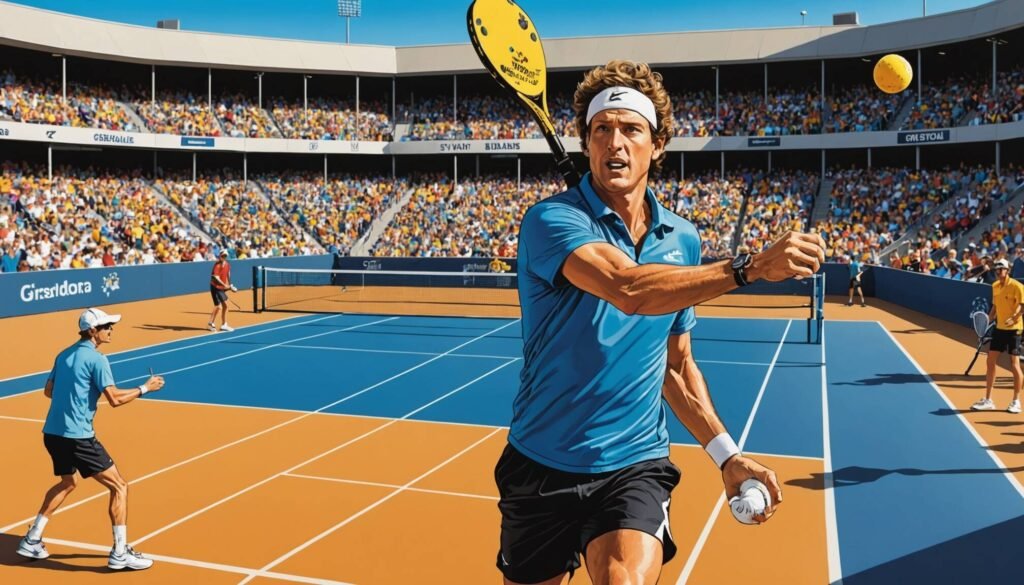
PPA Australia Pickleball Cup Recap: Hunter Johnson, Gabe Tardio, and Tyra Black Shine Down Under
The 2026 WALKER Australia Pickleball Cup wrapped up Sunday at the Queensland Tennis Centre in Brisbane, and it delivered exactly what pickleball fans had been hoping for — competitive matches, surprise performances from Australian locals, and a handful of names that left the country carrying double gold. If you needed any more proof that pickleball is growing fast beyond U.S. borders, this tournament made the case clearly.
Five events, five champions, and a week full of storylines that ranged from an Australian player winning on home soil to a men’s doubles pairing that flipped a match completely after dropping the first game by eight points. Here’s a full breakdown of what happened in Brisbane and why it matters for the sport going forward.
What Is the PPA Tour and Why Does This Tournament Matter?
Before diving into the results, it’s worth explaining the bigger picture for anyone who might be newer to professional pickleball. The PPA Tour is one of the top professional pickleball circuits in the United States. It runs events throughout the year across various American cities, attracting the best players in the world and significant prize money. Think of it as the major league of pickleball competition.
What makes the Australia Pickleball Cup particularly significant is that the PPA Tour is actively expanding internationally. Bringing a top-tier professional event to Brisbane isn’t just about putting on a show — it’s a strategic investment in the sport’s global future. Pickleball has exploded in popularity inside the United States over the past several years, and now the top organizations are betting that the rest of the world is ready to follow. Australia, with its strong tennis culture and love of racket sports, is a natural fit for that expansion.
The tournament featured five separate events — men’s singles, women’s singles, mixed doubles, men’s doubles, and women’s doubles — with American professionals competing alongside Australian players and other international talent. A record Australian prize purse was on the line, which also helped attract serious competition from both sides of the Pacific.
Hunter Johnson Captures Men’s Singles Gold
Hunter Johnson came into the tournament as the top seed in men’s singles, and he backed that up with one of the more complete performances of the week. His path through the bracket was methodical — he took down Kyle Stoker, Daiki Tanabe, Hong Kit Wong, and Grayson Goldin in straight games before reaching Sunday’s championship match against Christian Alshon.
The semifinal win over Goldin was particularly sharp. Johnson earned an 11-9, 11-3 result that showed both his composure under pressure and his ability to accelerate when he senses an opponent is vulnerable. Goldin is no easy out, which made the margin in the second game all the more impressive.
Alshon was a different story in the final. He pushed Johnson to a third game, splitting the first two sets and forcing a deciding game that could have gone either way. Johnson ultimately came through 11-8, 5-11, 11-8 — a scoreline that reflects just how competitive the championship match really was.
The win is another significant result for Johnson in 2026. Earlier this month at the Las Vegas Open, he defeated Ben Johns in straight games, which is about as strong a singles statement as you can make in professional pickleball. Johnson is clearly operating at a level where he deserves to be considered among the very best singles players on the tour, and the Australia gold only adds to that case.
Gabe Tardio and Tyra Black Each Win Two Gold Medals
If there were two players who had an especially productive week in Brisbane, it was Gabe Tardio and Tyra Black. Both left Australia with double gold, and both did it by competing across multiple events at a high level throughout the week.
Tardio and Black teamed up in mixed doubles, which is one of the more entertaining formats in professional pickleball — it pairs one male and one female player on each side of the net. They navigated a competitive bracket that included wins over Dylan Frazier and Kaitlyn Christian, and then the sibling duo of JW Johnson and Jorja Johnson, before facing Christian Alshon and Parris Todd in the final.
That championship match was a three-game battle. Tardio and Black dropped the opener 7-11 before responding with consecutive wins of 11-6 and 11-7. It was the kind of performance that demonstrates real resilience — dropping the first game to a team like Alshon and Todd and coming back to win two straight is not something every partnership can do.
From there, Tardio went and won men’s doubles alongside Hayden Patriquin. That final — which will be covered more fully in the next section — required a similar comeback after dropping the first game 3-11. Tardio found another gear and helped secure the gold with wins of 11-6 and 11-7.
Meanwhile, Black partnered with Jorja Johnson in women’s doubles and the pair won the gold medal over Parris Todd and Australian Danni-Elle Townsend, 11-5 and 11-6. The connection between the two was sharp throughout, and the margin of victory in both games tells you how well they played when it counted most.
For Tardio specifically, the week was a reminder of how versatile he is becoming. He’s already widely recognized as one of the top men’s doubles players in the game. Adding a mixed doubles title to his 2026 resume, in a different country, against a strong international field, further cements his status as one of the sport’s elite competitors.
Andie Dikosavljevic Wins Women’s Singles on Home Soil
The most emotionally compelling story of the entire tournament was undoubtedly Andie Dikosavljevic’s run to the women’s singles championship. A Brisbane resident competing on her home court, Dikosavljevic — a former collegiate tennis standout at Auburn University — defeated Judit Castillo in the final 11-6, 11-6, giving the local crowd exactly what they were hoping for.
What made the championship even more meaningful was the path Dikosavljevic took to get there. Her semifinal matchup against fellow Australian Sahra Dennehy was arguably the most dramatic match of the entire week. After losing the first game 5-11, she dominated the second game 11-1, then held on to win a tense deciding game 12-10. That kind of mental toughness — going from dropping the opener badly to flipping the match completely — is not easy to manufacture under pressure in front of a home crowd.
She carried that momentum into Sunday and was clean in the final, not dropping a game against Castillo. For a player competing in her home city against a field that featured several established American professionals, the result was significant on multiple levels.
It also says something real about the state of international pickleball. Dikosavljevic came through the tennis pipeline, transitioned to professional pickleball, and is now winning tournaments against players who have been competing at the highest level of the sport for years. The standard is rising outside the United States, and results like this are part of why the PPA Tour’s international expansion strategy makes sense.
Tardio and Patriquin Prove Their Men’s Doubles Partnership
With Ben Johns absent from the Australian tournament, Gabe Tardio joined forces with Hayden Patriquin as the top seeds in men’s doubles. Both players compete together for the St. Louis Shock in Major League Pickleball, so there was already an established chemistry between them heading into the event.
Their run through the bracket was efficient — they moved through their early matches without too much trouble before defeating Dylan Frazier and Connor Garnett 11-5 and 11-9 in the semifinals. That set up a championship match against JW Johnson and Tama Shimabukuro, who had taken care of George Wall and Joey Wild to reach the final.
Johnson and Shimabukuro came out with a lot of energy in the first game, taking it 11-3 and putting Tardio and Patriquin in a real hole early. The response from the top seeds in the second and third games — winning 11-6 and 11-7 respectively — was composed and deliberate. They didn’t panic, they stayed with their process, and they outlasted a strong team in the back half of the match.
It’s an encouraging result for a pairing that will likely continue to compete together throughout the rest of the 2026 season. Tardio and Patriquin have the kind of complementary games that work well in doubles, and the Australia championship adds to the evidence that they’re one of the more dangerous teams on the tour when they’re on.
Australian Players Make Their Presence Felt Throughout the Tournament
One of the important storylines of the week wasn’t just who won the gold medals — it was how Australian players performed across the bracket throughout the tournament. And the answer is: better than many might have expected.
Dikosavljevic winning the women’s singles was the headline result, but she wasn’t alone. Sahra Dennehy reached the women’s singles semifinals, which is a strong result in any field featuring American professionals. Her three-game match against Dikosavljevic was competitive and close right down to the wire.
Danni-Elle Townsend — a former Columbus Sliders teammate of Parris Todd from Major League Pickleball — reached the women’s doubles final alongside Todd. They fell to Black and Jorja Johnson, but earning silver against that level of competition in front of a home crowd is nothing to overlook.
On the men’s side, Harrison Brown registered a notable win over Zane Navratil — an 11-6, 11-4 result that demonstrated he can compete with and beat established American professionals when he’s locked in. He eventually fell to Grayson Goldin, but the Navratil result was a talking point throughout the week.
These performances matter for the future of Australian pickleball and for the sport more broadly. When international players can compete at this level in their own backyard, it creates a foundation for the sport to continue growing organically in those markets. Fans watching in Brisbane saw players from their own country competing and winning against Americans who play this game professionally for a living. That’s how sports build real local audiences.
Other Notable Storylines from the Week
A few other moments from Brisbane deserve attention before moving on.
Dylan Frazier — one of the most recognizable names in men’s doubles — suffered an early singles upset at the hands of Liam Lamb, who won 11-8 and 11-4 in a result that turned some heads. Frazier regrouped and made it to the men’s doubles semifinals alongside Connor Garnett, but the early singles exit was a surprise given his ranking and overall level of play in 2026.
Christian Alshon had a strong overall week even if he didn’t collect any gold medals. He reached the men’s singles final against Hunter Johnson and the mixed doubles final alongside Parris Todd. Two silver medals is a respectable result by any standard, and Alshon’s consistency throughout the week in two very different formats was impressive. Competing at that level across singles and mixed doubles in the same week requires a lot of physical and mental energy.
You can check out the full final results from the tournament as reported on X following the conclusion of play on Sunday.
What the Australia Pickleball Cup Means for the Sport’s Global Future
It’s worth zooming out and thinking about what this tournament represents beyond the five gold medals awarded on Sunday. The PPA Tour is in the middle of a deliberate international expansion, and events like the Australia Pickleball Cup are central to that strategy.
Pickleball is already the fastest-growing sport in the United States, with millions of players picking up paddles across the country every year. The next challenge for the sport — and for the professional organizations built around it — is figuring out how to replicate that growth internationally. Australia is a logical starting point given its existing tennis culture, English-speaking population, and strong sports infrastructure.
The fact that the event offered a record Australian prize purse helped draw top-tier American talent to make the trip. And the presence of that American talent gave Australian players a meaningful benchmark to measure themselves against. That combination — high prize money, top competition, local talent rising to the occasion — is exactly the formula the PPA Tour needs to make these international events feel legitimate and sustainable over the long term.
If Dikosavljevic’s women’s singles championship doesn’t inspire young Australian athletes to pick up a pickleball paddle and take the sport seriously, it’s hard to know what will. A local player, competing in her home city, winning gold against an international professional field. That’s the kind of story that resonates beyond the pickleball community and into the broader sports conversation.
For anyone who follows the PPA Tour closely, the next event to watch is the PPA Hong Kong Slam, which continues the tour’s push into international markets and should bring another interesting collection of competitors and storylines.
The Australia Pickleball Cup was a success by almost any measure, and it’s another data point in the argument that professional pickleball is no longer just an American story. It’s becoming something genuinely global, one tournament at a time.


