
Pickleball Clubs Keep Opening Across the U.S. — But the Business Side Is Getting Complicated
There’s a strange tension running through the pickleball industry right now. On one hand, new clubs are opening at a rapid pace. On the other, some of the biggest names in the space are struggling to keep the lights on. These two things are happening at the same time, and if you’re a regular player who loves showing up to open play a few times a week, it’s worth understanding what’s actually going on beneath the surface.
The court count is still climbing. The business fundamentals, for some operators, are not keeping up.
The Numbers: What the Data Actually Shows
The clearest snapshot of where things stand comes from Business of Pickleball, a newsletter run by industry analyst David Johnson. His October 2026 edition laid out the data in a way that’s hard to ignore, and it paints a picture that’s equal parts optimistic and cautionary.
Across six major pickleball franchise brands that Johnson tracks, the number of open locations grew from 145 in January 2026 to 199 by September 2026. That’s a 37% jump in under nine months. Some of those brands expanded dramatically during that stretch. Ace Pickleball grew from 21 locations to 32. Pickleball Kingdom went from 23 to 34. PickleRage doubled entirely, going from five locations to ten. These are not small numbers. For a sport that was barely a blip on the national radar a decade ago, this kind of franchise expansion is genuinely remarkable.
Indoor court counts also continued to rise. Using data sourced from Pickleheads, the total went from 28,130 courts in December 2025 to 29,946 in September 2026, an increase of about 6.5%. That’s nearly 1,800 more indoor courts available to players across the country in less than a year. More options, more access, more places to bring a friend who’s never held a paddle before.
But here’s where the data gets more complicated. That growth rate is slowing. In June, the net increase in indoor courts was 418 in a single month. By September, that number had dropped to just 70. The headline growth story is still technically intact, but the momentum is clearly softening. Whether that’s a natural plateau or the beginning of a more significant contraction is the question that operators and investors are sitting with right now.
Expansion Without Stability: The Case of The Picklr
Perhaps the most striking data point in Johnson’s tracker involves The Picklr, one of the largest and most recognizable pickleball franchise chains in the country. By September 2026, The Picklr was listed at 76 open locations, up from 60 in January. That’s 16 new clubs in nine months — the kind of growth that would typically be celebrated as a sign of a thriving business.
Then, in October, The Picklr’s parent company filed for Chapter 11 bankruptcy, securing $4.5 million in financing commitments to try to reorganize. The company was clear that individual franchisees are not part of the filing and that clubs would remain open, but the optics are jarring. Here is a brand that was actively opening new locations while simultaneously heading toward a bankruptcy filing. Growth and financial distress coexisted, and that’s something the court count alone would never tell you.
This is a critical distinction that every pickleball player and potential club owner needs to internalize: the number of locations a brand has open does not tell you whether those locations are profitable, or whether the corporate structure supporting them is solvent. A packed schedule board and a waiting list for court time does not automatically mean the rent is getting paid on time.
The Real Economics Behind Club Closures
To understand why clubs can look busy and still fail, it helps to think about how pickleball facilities actually make money — and where the money goes. Facility consultant West Shaw has written in depth about the brutal economics behind club closures, and the core problem isn’t lack of interest from players. It’s the structure of the costs.
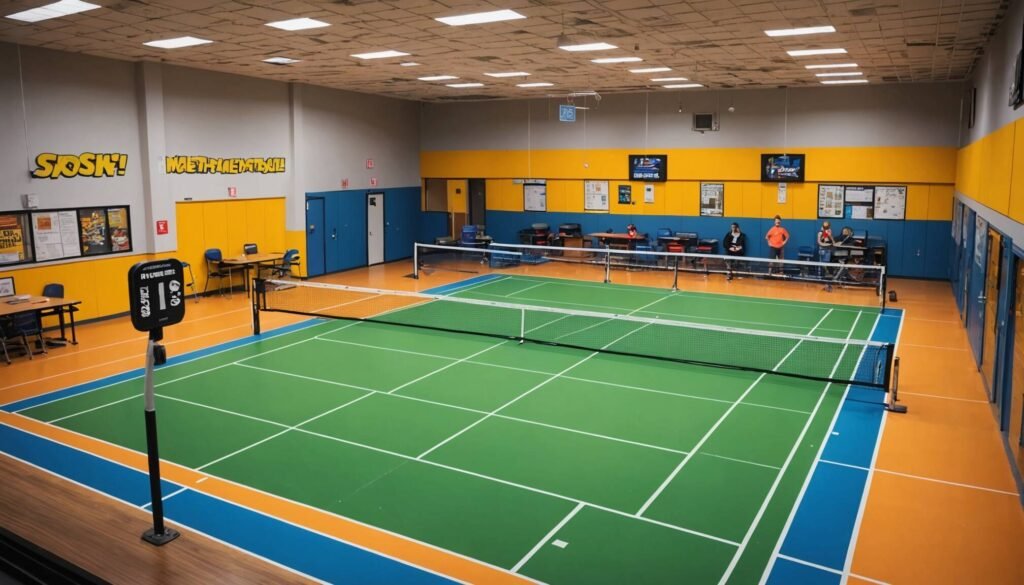
Pickleball clubs require large footprints. A facility with ten indoor courts needs a lot of square footage, which means a lot of rent. Commercial leases in desirable areas — the suburban markets where most of the pickleball demographic lives — can run into tens of thousands of dollars per month. That number doesn’t change based on how many people showed up on a Tuesday afternoon. It’s fixed, it’s relentless, and it has to be covered regardless of what’s happening on the courts.
Then there’s the peak-hour problem. The vast majority of recreational players want to play in the evenings and on weekends. That’s when the courts are full, that’s when the energy is high, and that’s when the revenue comes in. But those peak windows are limited. You can only fit so many hours of court time into a Friday night or a Saturday morning. The rest of the week — weekday mornings, early afternoons — tends to be far quieter, and those hours still have to be funded by the same lease and the same operating costs.
Clubs that looked at the pickleball boom and signed expensive leases for oversized facilities betting that demand would fill every hour of every day have found themselves in a difficult position. The evenings are packed. The economics still don’t work. And when those leases come up for renewal or when the initial operating capital runs out, there’s nowhere to go.
Johnson’s earlier reporting also noted that nine pickleball facilities listed for sale had cut their asking prices by an average of 39%. That’s not a sign of a healthy marketplace for club ownership. That’s a sign that sellers are having trouble finding buyers at their original valuations, which means the market is recalibrating what a pickleball facility is actually worth as a business.
What This Means for Players: A Plain-Language Breakdown
If you’re someone who just loves playing pickleball and you’ve never thought much about the business side of your local club, here’s what all of this means in practical terms that actually affect your experience as a player.
First, the good news: there are more places to play than ever before. The franchise expansion means that in many mid-sized and large U.S. cities, you now have multiple dedicated indoor pickleball facilities to choose from. Competition between clubs can be good for players — it often means better programming, more flexible scheduling, and more competitive pricing for memberships or court time. The overall access story for recreational players is genuinely positive.
Now the complicated part. Some of the clubs you play at — or clubs that look healthy from the outside — may be operating under significant financial strain. When a club closes, it usually happens quickly. Members sometimes find out with very little notice, prepaid memberships don’t always get refunded, and the courts they relied on for their weekly routine are suddenly gone. This is not hypothetical. It has happened across the country over the past couple of years as the initial wave of pickleball investment has met the reality of running a brick-and-mortar business.
If you are a paying member at a pickleball club, it is reasonable to pay attention to the signs of financial health at your facility. Is programming growing or shrinking? Are staff members consistent, or is there high turnover? Is the ownership communicating actively with members? These are not foolproof indicators, but they matter. Clubs that are doing well tend to invest in the experience. Clubs that are struggling tend to cut corners in ways that become visible over time.
And if you are thinking about buying a membership to a club that requires a significant upfront payment — the kind that promises discounts in exchange for paying a year or more in advance — it’s worth thinking carefully about the risk that the club may not be around for the full duration of that commitment.
The Shakeout Is Real, But Pickleball Isn’t Going Anywhere
It’s easy to read these numbers and conclude that the pickleball bubble is bursting. That would be an overreaction. The participation numbers for the sport remain strong. Millions of Americans play regularly, millions more are being introduced to the game every year, and the sport’s demographic appeal — it’s genuinely accessible to players across a wide age range — gives it a durability that many fitness trends don’t have.
What’s happening in the club and facility space right now is probably better described as a shakeout than a collapse. The initial wave of investment attracted operators with wildly varying levels of business sophistication. Some approached it carefully, signed reasonable leases, built manageable facilities, and ran programming that kept members coming back and paying. Others saw the boom, moved fast, overbuilt, and signed leases that only make sense if the courts are generating revenue around the clock.
The operators who made careful decisions are mostly doing fine. The operators who bet big on the assumption that pickleball demand would be unlimited and evenly distributed across all hours of the day are the ones in trouble. The market is in the process of sorting that out, and the sorting process is not painless. It involves closures, price cuts on club valuations, and in some cases, bankruptcy filings.
What comes out the other side of that process should be a healthier, more stable club ecosystem — one where the facilities that survive have figured out how to operate sustainably, and where new operators entering the market have the benefit of learning from the mistakes of the first wave. That’s not a bad outcome for the sport long-term, even if the transition period is messy.
The Bottom Line for the Industry
The data from Business of Pickleball is a useful reminder that surface-level growth metrics don’t tell the whole story. Six major chains growing from 145 to 199 locations in nine months is a real and significant expansion. But The Picklr filing for Chapter 11 at the same time its location count hit 76 is a real and significant warning sign. Both things are true simultaneously, and ignoring either one gives you an incomplete picture.
For players, the message is to enjoy the access that this expansion has created while staying aware that not every club you walk into is on solid financial footing. For operators and investors, the message is that passion for the sport is not a substitute for sound unit economics. The landlord doesn’t care how much you love pickleball. The lease payment is due on the first of the month regardless of how many dink battles happened the night before.
Pickleball is not going away. But the business of pickleball is getting a hard lesson in what separates a sport people love from a business that can sustain itself. Those are related, but they are not the same thing. The clubs that understand the difference are the ones that will still be open five years from now.


