
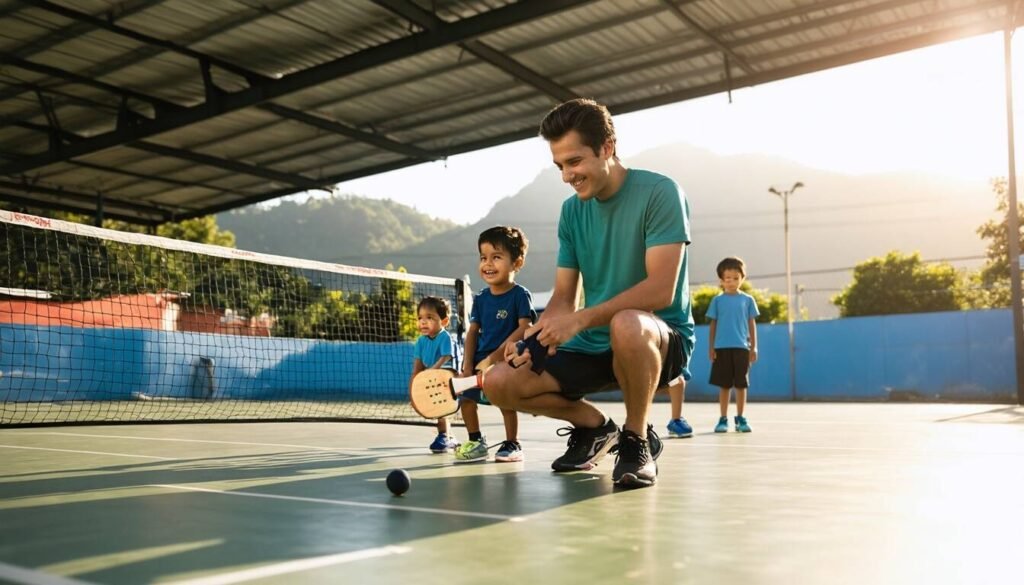
Liam Duffin Wants to Bring Pickleball to Guatemala, and It Has Nothing to Do With Trophies
Most professional pickleball players measure success in rankings, prize money, medals, and sponsorship deals. Liam Duffin is chasing something different right now. He wants to see a group of kids in Guatemala pick up a paddle for the first time. It is a small, human goal inside a sport that is growing at breakneck speed, and it says a lot about what pickleball can be when you look past the pro tour.
Duffin is a Selkirk-sponsored player with multiple collegiate national and world championship titles and a PPA Challenger silver medal. He is working with the Orange Couch Foundation to raise $25,000 to build a pickleball court at a school in Guatemala. The story comes from The Dink Pickleball, and it is worth slowing down to think about, because it touches on community, access, and why people fall in love with this game in the first place.
Who Is Liam Duffin?
Duffin has built a serious résumé in a short time. He has won collegiate national titles and world championship titles, and he took a silver medal at a PPA Challenger event. He became a Selkirk-sponsored athlete in March 2026, which is a meaningful step for any player looking to make a career in the sport. Sponsorships like that usually signal that a brand sees both talent and a person worth putting in front of the public.
Players at this level tend to be asked about their next tournament, their paddle, or their partner. Duffin is talking about a school in Guatemala instead. That does not make his competitive career less important. It shows that the competitive side is only one part of what pickleball has given him, and he wants to pass some of that along.
He also shares his journey on social media under the handle @pickleballwithliam, where he has posted about this project. For a younger player building a name, using that platform to raise money for kids rather than only promoting himself is a noteworthy choice.
A Personal Connection to Guatemala
This project did not come out of nowhere. Before his pickleball career took off, Duffin spent eight months in Guatemala as a missionary for The Church of Jesus Christ of Latter-day Saints. He lived among families who had far fewer material possessions than most Americans are used to, yet he saw generosity, warmth, and happiness everywhere he went.
In his words, “When I was in Guatemala, I met people who had so little compared to what we’re used to here, but they had this incredible sense of community and happiness.” That experience stayed with him. He has wanted to go back ever since, and pickleball has finally given him a reason and a way to do it.
One memory in particular shaped the idea. In Zaragoza, Guatemala, Duffin watched a small futsal court act as the center of the surrounding neighborhood. People gathered there. Kids played, adults watched, and neighbors talked. The sport being played almost did not matter. What mattered was having a place to go and something to share.
That is the heart of the project. Duffin is not trying to export pickleball as a product. He is trying to recreate that feeling of belonging, and he believes a pickleball court can do the same thing a futsal court did in Zaragoza.
Partnering With the Orange Couch Foundation
To make it happen, Duffin connected with Charles Judd of the Orange Couch Foundation. It is a Utah-based nonprofit that operates a school in Guatemala and organizes monthly humanitarian trips to the country. Its focus is improving educational opportunities for children, including providing scholarships to students at Colegio Meso America in Patzicía.
The numbers the foundation shares are striking. According to the organization, $700 is enough to sponsor a child’s education for an entire school year. That gives you a sense of scale. A $25,000 court is a significant investment for a project like this, but the foundation already has a school, a presence on the ground, and a regular flow of volunteers. That infrastructure matters. A court built without local partners can easily sit unused. A court built inside an existing school has teachers, students, and a community already in place.
The foundation has committed to planning and designing the court at its school. It would become the community’s first dedicated pickleball court. The plans call for a professional-grade playing surface and a steel roof to protect students from the sun and rain. The roof is not a luxury. In a tropical climate with intense sun and heavy seasonal rain, shelter means the court can be used far more days of the year.
For both Duffin and the foundation, the court is about more than concrete and paint. It is about creating a space where kids can build friendships, gain confidence, and experience some of the same benefits pickleball has given millions of people around the world.
Bringing Pickleball to a New Generation
The court would serve students between the ages of six and 18, and many of them have never played pickleball. Some may never have heard of it. That makes the introduction itself a big part of the plan.
Once construction is finished, Duffin plans to travel back to Guatemala and teach the children in person. He will cover the fundamentals and help them discover both the competitive and social sides of the game. Duffin speaks some Spanish, and the foundation plans to provide translation help during instruction. That is a practical detail, but it also shows respect. Good coaching depends on clear communication, and the kids deserve to understand what is being taught.
Importantly, the goal is not to find Guatemala’s first pickleball star. Duffin is open about that. He hopes to share something that has become a major part of his life, and whether it produces a champion is secondary. As he put it, “Maybe one of those kids falls in love with the game and becomes an amazing player someday. That would be incredible. But even if that never happens, if we’ve given these kids a place where they feel happy, safe, and connected to each other, then we’ve accomplished something really special.”
There is also a bigger picture. Futsal courts are already common across the region. Duffin believes temporary pickleball nets and paddles could be set up on those existing courts, offering a simple, low-cost way to introduce the sport to more communities. One dedicated court could be the starting point for something much larger. Pickleball’s small court size and simple rules make that idea realistic in a way that some other sports are not.
Pickleball Is Bigger Than the Court
Pro pickleball is in a period of rapid growth. Much of the conversation naturally centers on tournament results, player contracts, prize money, and commercial opportunities. That attention is understandable. The sport has become a big business, and the people who compete in it deserve to be paid and recognized.
Stories like Duffin’s act as a reminder of why the sport took off to begin with. Pickleball brings together people of different ages, backgrounds, and experiences. A grandparent and a teenager can play on the same court. Strangers become friends after a single game. Providing a place for that to happen can be just as meaningful as anything achieved in professional competition.
That is the reflective part of this story. We often talk about pickleball’s growth in terms of participation numbers and new courts. Duffin’s project asks a different question: who gets access to those courts, and who gets left out? Building one court at one school will not answer that question for the whole world. But it is a concrete, honest effort to widen the circle.
Pickleball Explained for Someone New to the Sport
If you are not familiar with pickleball, here is the short version. Pickleball is a paddle sport played on a court about the size of a badminton court, with a net similar to tennis but lower. Players use solid paddles, a bit larger than ping-pong paddles, to hit a perforated plastic ball over the net. It can be played as singles or doubles, and the rules are simple enough that most people can start playing within an hour.
That ease of entry is a big reason the sport has exploded in popularity across the United States. You do not need expensive equipment, a huge amount of space, or years of training. People of very different fitness levels can enjoy a good game together. It is also a social sport. Players rotate, chat between points, and often end up making friends at the local courts.
Now think about what that means for a place like Guatemala. Many schools there already have a hard, flat surface used for futsal, a fast version of indoor soccer. Pickleball can fit onto that kind of surface with a portable net and a few paddles. That is why Duffin’s idea is practical, not just hopeful.
For a reader new to all of this, the takeaway is straightforward. A well-known player is using his connection to the sport and to a country he loves to build a place where children can play, make friends, and feel part of something. The sport is the tool. The community is the point.
Why This Story Matters for the Pickleball Community
It is easy to get lost in the gear debates, ranking changes, and pro tour drama. Those things are fun, and they are part of the culture. But the sport also has a responsibility, and an opportunity, to give back. Players who have benefited from pickleball’s growth are in a good position to help others experience it.
Duffin’s story is a good example of how that can work well. It starts with a real relationship, not a publicity plan. He lived in Guatemala, he saw what a community court meant, and he found a local partner with experience on the ground. The project has a clear budget, a defined design, a timeline built around construction, and a plan for teaching the kids afterward. Those are the signs of a project that has been thought through.
It also shows that you do not need to be at the top of the sport to make an impact. You need a clear idea, honest motivation, and the willingness to work with the right people. Plenty of players at local clubs could take inspiration from that, whether through equipment drives, youth clinics, or fundraising for community courts closer to home.
How to Support the Project
Duffin and the Orange Couch Foundation are currently seeking donations toward their $25,000 goal. Anyone who wants to learn more or contribute can visit the Orange Couch Foundation website. Donations can also be made through Venmo at @OrangeCouch-Foundation.
Even a small contribution helps. If you play regularly, consider sharing the project with your club, your local group chat, or your social media followers. Fundraising often succeeds through many small gifts and a lot of word of mouth rather than a few large checks.
Final Thoughts
Liam Duffin has already earned titles, medals, and a sponsorship. Yet the thing he says he is most looking forward to is not another trophy. It is watching the children of Guatemala discover the same game that has given him so much.
That is a good reminder for the rest of us. Pickleball is a sport, but it is also a way of bringing people together. A single court with a steel roof in Patzicía may never appear on a pro tour broadcast. But for the kids who play there, it could become the place where they laugh, learn, and feel like they belong. That is worth more than a podium finish.


