Haworth Earns #1, ALW Triples, and Ben and Gabe are Unstoppable – PPA Greater Zion Cup Recap
The Black Desert Resort in southwest Utah hosted the Greater Zion Cup for the first time in history, and it delivered a tournament that will be remembered for years to come. The luxury resort provided stunning picturesque views throughout the week, setting the stage for some exceptional pickleball competition. This wasn’t just another tournament on the calendar—it was a Cup event, which meant players were competing for 1,500 PPA Points, representing 1.5 times more than a standard Open. With that kind of value on the line, every top player showed up ready to battle, and the level of play reflected those high stakes.
The tournament produced several major storylines that will shape the narrative of the 2026 season. From Chris Haworth’s ascension to the number one ranking in men’s singles to Anna Leigh Waters’ extraordinary display of dominance across all three disciplines, the Greater Zion Cup showcased why professional pickleball continues to captivate audiences. The competition was fierce, the drama was real, and the performances ranged from breathtaking to utterly exhausting for those who fought through multiple matches to reach Championship Sunday.
Anna Leigh Waters Claims Her 43rd Triple Crown Despite Running on Empty
Anna Leigh Waters continues to redefine what’s possible in professional pickleball. At the Greater Zion Cup, she won her 43rd career triple crown, capturing gold in women’s singles, women’s doubles, and mixed doubles—all while appearing to be running on fumes by the end of Championship Sunday. The sheer volume of pickleball she played was staggering: 26 games across 13 matches just to reach the finals in all three disciplines. What makes this even more impressive is that she didn’t lose a single game during that grueling path to Championship Sunday.
The dominance Waters displayed during pool play and the early knockout rounds was almost absurd. With the exception of beating Lea Jansen 13-11 in the first game of the semifinals, no other opponent in any discipline managed to score more than 7 points against her before the finals. Think about that for a moment—across singles, doubles, and mixed doubles, through numerous matches and opponents, Waters was so thoroughly in control that reaching 8 points against her was a noteworthy achievement. This level of consistency and dominance is precisely why she’s considered the greatest of all time in women’s pickleball.
Championship Sunday tested Waters in ways that the earlier rounds hadn’t. She started her day in mixed doubles, partnering with Ben Johns against Anna Bright and Hayden Patriquin. This matchup has been generating buzz as one of the premier rivalries in mixed doubles, though calling it a rivalry might be generous given the historical record. Hayden and Anna have only managed to defeat Ben and Anna Leigh once in their entire matchup history. The Greater Zion Cup finals reinforced that pattern, with Johns and Waters winning 11-5, 11-0, 15-13.
The match itself told two very different stories. Through the first two games and halfway into the third, it appeared to be a total blowout. Ben and Anna Leigh were in complete control, and Hayden and Anna looked unable to string together consecutive points. But then something shifted. Bright and Patriquin mounted a furious comeback in game three, suddenly finding their rhythm and pushing the favorites to the absolute brink. The 15-13 third game might not have been part of “the best match ever,” but it deserves consideration as one of the best individual games ever played at the professional level. The momentum swings, the critical points, and the pressure both teams faced made for edge-of-your-seat entertainment.
Next up for Waters was women’s doubles, where she and Anna Bright faced Parris Todd for the third consecutive finals. This time, Todd was partnering with Kate Fahey, who was making her first Championship Sunday appearance in women’s doubles. Unfortunately for Fahey and Todd, they ran into the buzzsaw that is Bright and Waters in peak form. The final score of 11-3, 11-3, 11-0 tells the story—total domination. Bright and Waters are operating on a different level right now, and with Jorja Johnson not playing her best pickleball lately, there’s simply no legitimate competitor in sight who can challenge them consistently.
The statistics from the Greater Zion Cup women’s doubles draw are almost hard to believe. Bright and Waters delivered two double bagels (winning 11-0, 11-0) against different opponents during the tournament. They also pickled Kate and Parris in game three of the finals. Their combined scoreline for the week was 121-15, which works out to an average score of 11-1.36 per game. Let that sink in—their opponents averaged just 1.36 points per game against them throughout the entire tournament in Utah. That’s not dominance; that’s a complete redefinition of what’s possible in women’s doubles.
Finally, Waters faced Kate Fahey in the singles finals for the 15th time in their careers. Coming into the match, Fahey had only managed to take a single game off Waters in all their previous encounters. Given Waters’ exhaustion from an already long day and a grueling week, this seemed like Fahey’s best opportunity to change that narrative. And for one glorious game, it looked like she might do exactly that. Fahey came out like a freight train, racing to an 8-0 lead while Waters looked sluggish and frustrated. Waters even received a technical warning due to a disputed line call and challenge, adding to her visible frustration.
Fahey extended her lead to 10-0, coming within one point of accomplishing something that had never happened before on the PPA Tour—pickling Anna Leigh Waters. But champions find ways to respond to adversity, and Waters demonstrated exactly why she’s considered the GOAT. She clawed her way back into the game, eventually closing the gap to 8-10 before Fahey was able to close it out with a crushing serve return, winning game one 11-8.
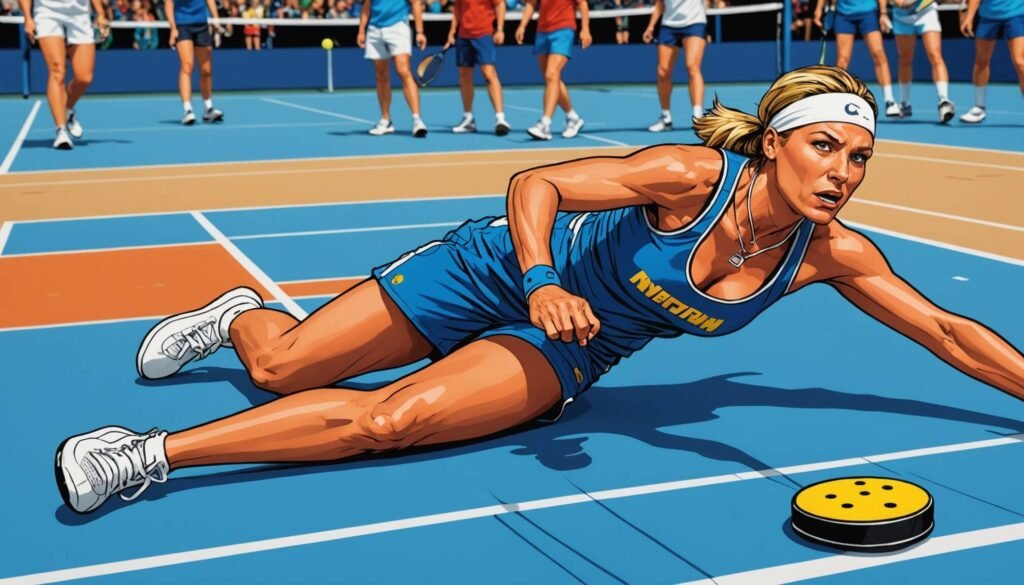
From that point forward, the match completely flipped. Waters went on an absolutely devastating 22-5 run, winning the next two games 11-3, 11-2 to capture her third gold medal of the day. After the final point, Waters simply collapsed on the court, gasping for air and looking genuinely grateful to have survived the day. The image of her lying on the court, completely spent, perfectly captured the toll that winning a triple crown takes on even the most elite athlete in the sport.
Chris Haworth Wins Gold and Claims the #1 Ranking in Men’s Singles
One of the biggest storylines emerging from the Greater Zion Cup was Chris Haworth’s ascension to the number one ranking in men’s singles. Haworth not only won the gold medal but also took over both the number one seed and the overall number one ranking in the discipline. This represents a remarkable journey for a player who was ranked as the 57th seed just six months ago. The speed of his rise through the rankings is almost unprecedented in professional pickleball.
To be fair, Haworth needed a bit of luck for the rankings to break his way. Hunter Johnson, who had been holding the top spot, lost early in the draw to JW Johnson, which opened the door for Haworth. But luck only gets you so far—Haworth still had to win his matches, and he did so in convincing fashion. His path to the finals included victories over Crum, Frazier, and John Lucian Goins, each match demonstrating different aspects of his well-rounded game.
The finals pitted Haworth against Federico Staksrud, a matchup that had recent history favoring the Argentine player. Fed had won their two most recent encounters, including one just two weeks prior in Texas and another in two games at Worlds. The momentum seemed to be with Staksrud coming into the match, which made Haworth’s performance even more impressive.
From the opening points, Haworth looked like a man on a mission. The altitude at the Black Desert Resort can affect players differently, sometimes causing groundstrokes to sail long or making movement more taxing. Haworth showed no such issues, hitting precise groundstrokes while moving efficiently all over the court. His shot selection was sharp, his movement was crisp, and his mental game was strong. He won 11-9, 11-5 in a performance that announced his arrival at the pinnacle of men’s singles.
What makes Haworth’s achievement even more interesting is that it validates a prediction made earlier in the year. In an article featuring 26 predictions for 2026, one forecast suggested that Haworth would reach the number one ranking. At the time, with Haworth sitting at 57th in the rankings, such a prediction seemed ambitious at best. Now, with several events still remaining in the season, that prediction is looking remarkably prescient. If Haworth can maintain his current level of play, he has a legitimate chance to hold onto the top ranking through the remainder of the year.
Gabe Tardio and Ben Johns Show Championship Mettle Despite Struggles
Men’s doubles on the PPA Tour has developed significant parity among the teams seeded second through fifth, with occasional Cinderella runs from lower-seeded partnerships sneaking into the semifinals. However, at the very top of the division, one team has clearly separated itself from the rest of the field. Gabe Tardio and Ben Johns are establishing themselves as the dominant force in men’s doubles, and their performance at the Greater Zion Cup reinforced that status despite not having their best stuff all week.
The finals matched Tardio and Johns against Hayden Patriquin and Christian Alshon in what turned out to be one of the best matches of the entire tournament. The final score of 13-11, 3-11, 3-11, 11-2, 11-7 tells the story of a marathon battle with massive momentum swings. For anyone with limited time to watch tournament coverage from the weekend, this is the match to prioritize—it had everything you want in a championship-level contest.
What made this victory particularly impressive was that Ben and Gabe clearly weren’t firing on all cylinders throughout the week. They dropped a game to Haworth and Lenhard early in the draw, which isn’t typical for them. Then both Jay and Jaume and the Johnson brothers (JW and CJ) also managed to take games off them in subsequent matches. During certain stretches of games two and three in the finals, both Tardio and Johns looked genuinely lost, appearing discombobulated and unable to find their usual rhythm.
In his post-match interview, Gabe was refreshingly honest about how the match felt from their perspective. “I didn’t think we were going to win after game three,” he admitted, acknowledging how close they came to losing. That kind of candor is rare in professional sports, where athletes typically project confidence even in difficult moments. But it speaks to how challenging the match was and how uncertain the outcome felt even to the eventual champions.
This is what separates good teams from great ones—the ability to find ways to win even when you don’t have your best stuff. Are Gabe and Ben eventually going to lose a tournament? Absolutely. The law of averages suggests it’s inevitable. But it didn’t happen in Utah, and their ability to grind out a victory in difficult circumstances demonstrates their championship mentality. This gold medal marked their sixth consecutive men’s doubles title together in 2026, a streak that shows no signs of ending despite the increasing quality of the competition.
Understanding the Tournament for Pickleball Newcomers
If you’re relatively new to following professional pickleball, the Greater Zion Cup offers a perfect window into understanding how the sport works at the elite level. Unlike recreational pickleball you might play at your local courts, professional tournaments involve players competing in multiple disciplines over several days, with the best players often entering three separate draws: singles, doubles, and mixed doubles.
The tournament format starts with pool play, where players are grouped and compete in round-robin matches to determine seeding for the knockout rounds. Once the knockout stage begins, it’s single elimination—lose and you’re out. The stakes get progressively higher as players advance through quarterfinals, semifinals, and eventually Championship Sunday, where all the finals are held in front of the biggest crowds and broadcast to viewers around the world.
What makes events like the Greater Zion Cup particularly significant is the points structure. As a Cup event, it awards 1,500 PPA Points to winners, compared to 1,000 points for a standard Open. These points determine player rankings, which in turn affect seeding for future tournaments, sponsorship opportunities, and overall career earnings. When you understand that context, you realize why every top player showed up for this event—the points on offer were simply too valuable to pass up.
The physical and mental demands on players during these tournaments are extraordinary. Consider Anna Leigh Waters’ path to her triple crown: she played 26 games just to reach the finals in all three disciplines, then had to play three separate finals matches on Championship Sunday. Each game is played to 11 points (win by 2), and matches are best two out of three games. The cumulative effect of all that high-level competition explains why she was literally lying on the court gasping for air after her final victory.
Rankings in professional pickleball are dynamic and constantly changing based on recent performance. Chris Haworth’s rise from 57th to 1st in just six months illustrates how quickly fortunes can change for players who find their form. The ranking system creates compelling narratives as players chase points throughout the season, knowing that each tournament offers both opportunity and risk. One early loss to an unseeded opponent can derail a entire tournament and cost hundreds of ranking points.
Other Notable Storylines from the Greater Zion Cup
Christian Alshon’s performance throughout the tournament deserves special recognition given the circumstances he was battling. Alshon was fighting the flu during the event, ultimately retiring from his singles match against Noe Khlif after game one, citing illness. He and his partner Rohrabacher also lost in mixed doubles to Kate Fahey and Federico Staksrud 8-8 in the quarterfinals. The illness clearly affected his ability to compete across all disciplines.
What makes Alshon’s week even more remarkable is that despite dealing with severe flu symptoms, he played some of his best pickleball in the men’s doubles final, only falling short in a five-game thriller. After the tournament, Alshon revealed that he had temperatures reaching at least 103 degrees and was coughing up blood on Championship Sunday. The fact that he could compete at such a high level under those conditions speaks volumes about his toughness and competitive spirit. Hopefully, he’ll have adequate time to rest and fully recover before the next event.
John Lucian Goins appears to have rediscovered some of his form after a lengthy drought. He won back-to-back tournaments over six months ago but had struggled to make deep runs in tournaments since then. In the last two events, however, Goins made the semifinals at both, winning bronze at the Greater Zion Cup and narrowly missing bronze in Texas. When a player of Goins’ caliber finds his groove, it changes the competitive landscape of the entire draw.
Lacy Schneemann and Meghan Dizon put together an impressive run to the semifinals in women’s doubles that included a significant upset of the second-seeded team, Jorja Johnson and Hurricane Tyra Black, in the quarterfinals. Schneemann and Dizon had previously won bronze together in Minnesota earlier in the year, and they came close to capturing another bronze medal in Utah. Their chemistry as a partnership appears to be developing nicely, and they’re becoming a team that higher seeds will need to take seriously.
One developing situation worth monitoring involves Hayden Patriquin and his composure under pressure. Hayden received multiple technical violations during the Greater Zion Cup, raising questions about whether this represents an emerging pattern. In a men’s doubles quarterfinal match against Jay and Jaume, Patriquin became frustrated when his team was down 11-12 and launched a ball high into the air in anger. The ball launch resulted in an immediate technical foul, awarding a point to Jay and Jaume and giving them the game one victory at 13-11. Alshon and Patriquin recovered to win the match 11-1, 11-6 in the next two games, but the incident was notable.
Then in the mixed doubles finals, within just


