
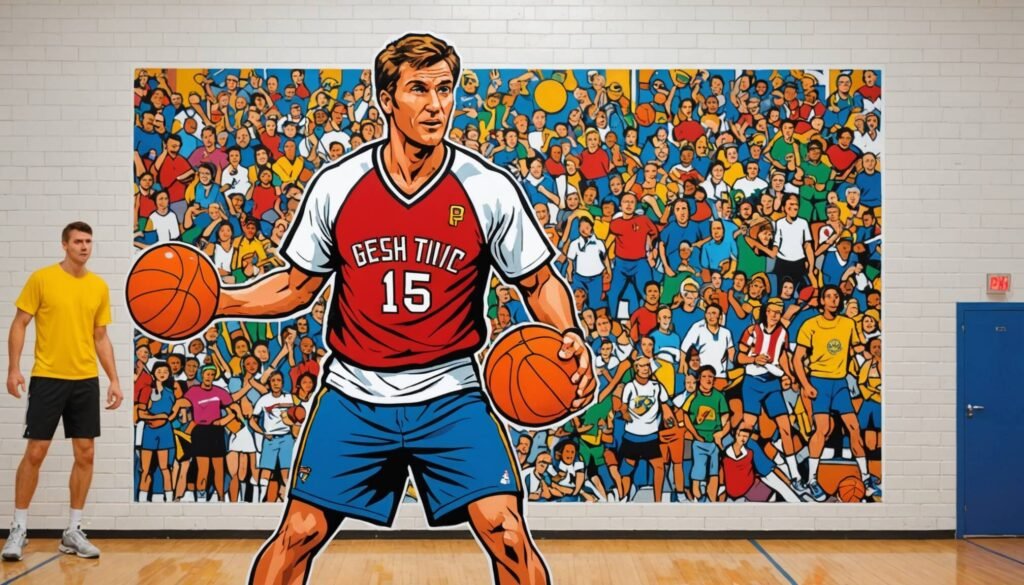
Alabama Church Goes Viral for ‘Pickleball Paul’ Gym Mural
In Madison, Alabama, a local church has captured the internet’s attention with something most people don’t expect to see on sanctuary walls. Good Shepherd United Methodist Church has become an unlikely viral sensation thanks to its creative gym murals featuring biblical figures engaging in various sports. Among the playful artwork, one character in particular has resonated with the pickleball community: “Pickleball Paul,” a clever depiction that combines religious tradition with America’s fastest-growing sport.
The story began when Andie Morgan Williams was at the church watching her son play basketball. She noticed the colorful murals adorning the gym walls and decided to share them on social media. What happened next caught everyone by surprise. The post exploded across platforms, garnering thousands of shares and comments from people who found the intersection of faith and pickleball both amusing and heartwarming. The murals, painted by Atlanta-based artist Chad Camp, showcase biblical figures in modern athletic scenarios, including “Air Moses” performing a basketball dunk and, of course, “Pickleball Paul” ready to serve on the court.
The Story Behind the Murals
According to Pastor Brittany Dawkins-Camp, the church’s artistic journey began nearly two decades ago with “Air Moses.” This first mural, created around 2006, was designed to bring a sense of fun and relatability to the church’s gymnasium space. The leadership team wanted something that would make people smile, something that connected familiar biblical stories with the everyday activities happening in that very room. The Jordan-inspired basketball pose was both iconic and immediately recognizable, making it a perfect choice for the space.
Fast forward to about two years ago, when the church established a thriving community pickleball league. As Today reported, the addition of “Pickleball Paul” came as a natural response to the growing pickleball community within the church. Pastor Dawkins-Camp explained that they wanted something to represent the three-day-a-week pickleball league that had become such an integral part of their community programming. The decision to feature the apostle Paul wielding a pickleball paddle wasn’t just about decoration. It was about acknowledging and celebrating a ministry that had brought people together in unexpected ways.
The choice of Paul as the featured biblical figure for pickleball carries its own subtle meaning. Paul, known for his missionary journeys and letters that form much of the New Testament, was someone who brought people together across different communities. In a way, the pickleball league does the same thing, creating connections between church members and neighbors who might never have otherwise walked through the church doors.
Pickleball as Modern Church Ministry
Good Shepherd United Methodist Church isn’t alone in recognizing pickleball’s potential as a community-building tool. Churches across America have been converting their fellowship halls, parking lots, and outdoor spaces into pickleball courts, using the sport as a bridge between traditional ministry and modern community engagement. The sport’s accessibility makes it particularly well-suited for church settings. Unlike basketball or volleyball, pickleball doesn’t require exceptional height, strength, or years of practice to enjoy. People of all ages and fitness levels can play together, creating natural opportunities for intergenerational connection.
What makes pickleball especially valuable for churches is its social nature. The smaller court size means players are close enough for conversation between points. Games are relatively short, allowing for player rotation and interaction with different people throughout an evening. The sport naturally creates the kind of informal fellowship that churches have always sought to foster, but perhaps struggled to achieve in more formal settings. When someone comes to play pickleball at a church gym on Tuesday evening, they’re more likely to recognize faces when they drive past that same building on Sunday morning.
The weekly pickleball league at Good Shepherd runs three days a week, a significant commitment of space and resources that speaks to how seriously the church takes this ministry. These regular gatherings have created a consistent community presence, turning the church from a place that people visit once a week into a neighborhood hub that’s active and welcoming throughout the week. The “Pickleball Paul” mural serves as both a lighthearted joke and a genuine acknowledgment of this ministry’s importance.
The Viral Moment and Community Response
The response to the viral video has exceeded anything the church leadership anticipated. Pastor Dawkins-Camp shared that they played the news clip during worship service as part of their announcements, turning the unexpected publicity into a moment of celebration for the entire congregation. The attention has affirmed what the church already knew: their commitment to being present and relevant in their community resonates with people far beyond their immediate neighborhood.
Both Williams, who posted the original video, and Pastor Dawkins-Camp have expressed genuine surprise at how quickly and widely the murals spread across social media. The pastor noted that it’s been particularly rewarding to see people love the murals as much as the congregation does. The positive reaction validates the church’s approach to ministry, which emphasizes meeting people where they are rather than expecting them to conform to traditional expectations of what a church should look like or how it should function.
The viral moment also highlights something interesting about contemporary culture’s relationship with religion. While church attendance has declined in many parts of the United States, there remains widespread affection for creative, authentic expressions of faith that don’t take themselves too seriously. The murals work because they’re genuinely clever without being disrespectful, playful without being frivolous. They suggest a community that can laugh at itself while still taking its mission seriously.
Understanding the Appeal: A Beginner’s Perspective
For those who might not immediately understand why a church mural featuring biblical figures playing sports would resonate so strongly, it helps to consider the broader context of how religious institutions are evolving in America. Traditional church attendance has been declining for decades, particularly among younger generations. Many churches have struggled to remain relevant in communities where spiritual seeking looks very different than it did in previous generations.
The “Pickleball Paul” mural represents a shift in how some churches are thinking about their role in the community. Rather than focusing exclusively on Sunday services and traditional religious programming, these churches are asking how they can serve their neighbors seven days a week. Sports leagues, community dinners, support groups, and recreational activities have become ministries in their own right, not just tools for evangelism but genuine expressions of care for community wellbeing.
Pickleball, specifically, has become a cultural phenomenon in its own right. The sport has grown exponentially in recent years, with participation increasing across all age groups. It’s accessible, social, and genuinely fun, which makes it an ideal activity for building community. When a church dedicates wall space to celebrating pickleball players, they’re acknowledging that ministry happens on the court just as much as it happens in the sanctuary.
The humor of “Pickleball Paul” and “Air Moses” also matters. These murals suggest a community that doesn’t take itself too seriously, that can find joy in the intersection of the sacred and the everyday. For many people who feel alienated by religious institutions that seem rigid or judgmental, this kind of playfulness can be surprisingly welcoming. It signals that this is a place where you can be yourself, where showing up to play pickleball in your athletic shorts is just as valid as showing up in Sunday clothes.
The Broader Impact on Pickleball Culture
The viral success of Good Shepherd’s murals also speaks to the growing cultural significance of pickleball itself. Just a few years ago, a “Pickleball Paul” mural might not have made sense to most people. The sport was still relatively niche, known primarily to retirees and a small group of dedicated players. Today, pickleball courts are appearing in parks, schools, and yes, churches, across the country. The sport has its own professional tours, equipment companies, and growing media coverage.
When a church in Alabama creates a mural celebrating pickleball, and when that mural goes viral nationally, it demonstrates how thoroughly the sport has penetrated mainstream American culture. Pickleball is no longer a curiosity or a joke about retirement communities. It’s a legitimate cultural force, one that brings people together across generational and social boundaries. The fact that a religious institution would celebrate the sport with permanent artwork shows how pickleball has become woven into the fabric of community life.
The attention surrounding the murals may also inspire other churches and community organizations to think creatively about how they acknowledge and celebrate the activities that happen in their spaces. Public art has always served to reflect community values and identity. When Good Shepherd commissioned “Pickleball Paul,” they were making a statement about who they are and what they value. The positive response suggests that many people are hungry for institutions that can honor tradition while embracing contemporary community life.
What This Means for Churches and Communities
The success of Good Shepherd’s approach offers valuable lessons for religious and community organizations trying to stay relevant and connected to their neighborhoods. First, it demonstrates the power of meeting people where they are. Rather than asking community members to adopt traditional church activities, Good Shepherd provided something the community wanted: pickleball courts and regular playing opportunities. The spiritual component follows naturally from genuine relationship and service.
Second, the murals show the importance of having a sense of humor and not taking institutional dignity too seriously. There’s something delightfully absurd about “Pickleball Paul” that makes people smile. That moment of joy and surprise can open doors that more serious approaches might leave closed. When people see that a church can laugh at itself, they’re more likely to believe it might be a place where they could belong.
Third, the viral moment demonstrates how small, authentic gestures can have outsized impact. Good Shepherd didn’t commission these murals as a publicity stunt. They created them to bring joy to their own community and acknowledge the real ministries happening in their space. The fact that they resonated nationally was a bonus, not the goal. This authenticity comes through in the coverage and helps explain why the response has been so overwhelmingly positive.
The Future of Faith and Pickleball
As pickleball continues to grow in popularity, we’ll likely see more churches and community organizations incorporating the sport into their programming. The Good Shepherd model, with its combination of accessible facilities, regular programming, and public celebration of the community that forms around the sport, offers a template that others can follow. The murals themselves might inspire similar creative expressions in other locations, as organizations realize that public art can be both fun and meaningful.
For the pickleball community, the viral murals represent welcome recognition of the sport’s cultural significance. Every time pickleball appears in mainstream news or social media, it introduces the sport to potential new players and validates existing players’ enthusiasm. The fact that a church would create permanent artwork celebrating pickleball sends a message that this is a sport worth taking seriously, even as we have fun with it.
Pastor Dawkins-Camp’s comment that the murals reflect “the heartbeat of our church” captures something essential about both faith communities and pickleball culture. Both, at their best, are about bringing people together, creating space for connection, and finding joy in shared experience. When a church in Alabama puts “Pickleball Paul” on their gym wall, they’re not just decorating a space. They’re making a statement about what matters, about who they are, and about the kind of community they’re trying to build. The fact that this message has resonated so widely suggests they’re onto something that extends far beyond Madison, Alabama, and far beyond the walls of any single church.


