How to Stay on the Pickleball Court Longer: The Foundation Most Players Overlook
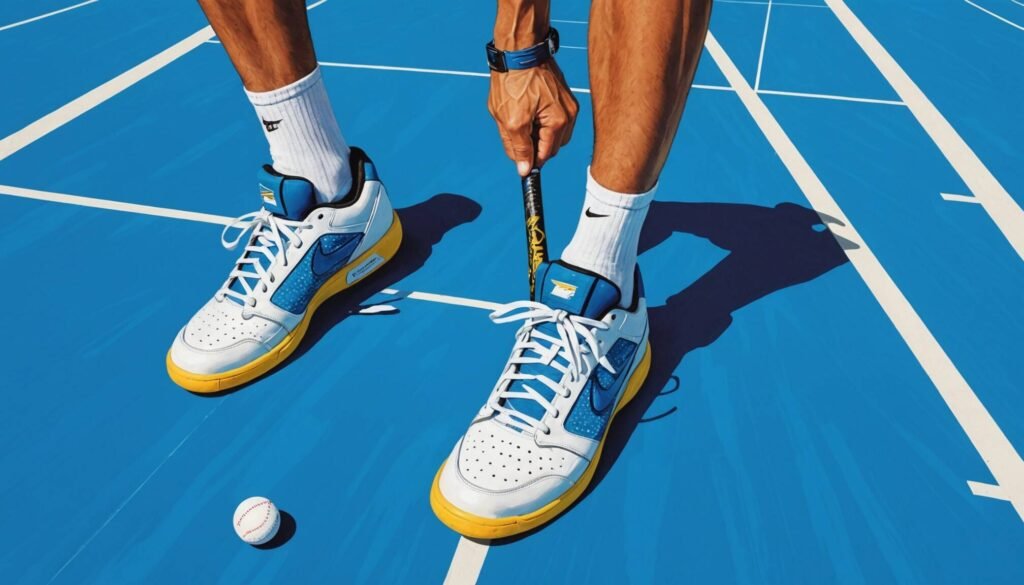
Every pickleball player is obsessed with improvement. We analyze our third shot drops, invest in the latest paddles with cutting-edge carbon fiber technology, and study the pros to perfect our dinking technique. We’ll spend hours debating whether we need more spin, power, or control from our equipment. But there’s something most players completely ignore, something that absorbs the impact of every explosive sprint to the net, every sudden stop at the kitchen line, and every awkward split step during a fast exchange. It’s not your paddle, your ball, or even your shoes—it’s what’s inside those shoes.
The insoles in your pickleball shoes might be the most underrated piece of equipment in your bag. While players regularly upgrade their paddles and debate the merits of different shoe brands, the insoles that came factory-installed in those shoes rarely get a second thought. That’s a mistake, especially for players who spend multiple hours on the court each week. The reality is that standard insoles are designed for general use, not for the specific demands of a sport that requires constant lateral movement, quick directional changes, and repetitive stress on your feet and legs.
The Connection Between Your Feet and Your Performance
Understanding why insoles matter requires looking at the mechanics of pickleball movement. Unlike tennis, where players cover a larger court with longer strides, pickleball demands quick, explosive movements in a compact space. You’re constantly loading and unloading your legs—pushing off to reach a wide ball, stopping abruptly to reset at the kitchen line, and maintaining an athletic ready position that keeps pressure on your feet and legs for extended periods.
Every time your foot strikes the ground during these movements, energy is either absorbed by your body or returned to power your next step. Standard foam insoles mostly just absorb that impact, which means your muscles and joints are doing more work than they need to. Over the course of a two-hour session or a full tournament day, that inefficiency compounds. Your legs feel heavier, your movements get slower, and you’re more prone to fatigue-related mistakes.
This is where performance insoles make a tangible difference. Rather than simply cushioning your feet, advanced insoles are engineered to store and return energy with each step. Think of it like a trampoline versus a foam mat—one gives you bounce and propulsion, while the other just absorbs your effort. For a sport like pickleball that demands dozens of explosive movements per game, that energy return can be the difference between staying fresh through your fourth match and feeling like your legs are made of concrete by the third.
What Makes VKTRY Insoles Different
VKTRY Insoles have gained attention in the pickleball community for their unique construction. Unlike traditional foam or gel insoles, they feature a full-length carbon fiber plate that’s customized based on your weight and activity type. Carbon fiber is the same material used in high-performance paddles and professional athletic equipment because of its strength-to-weight ratio and ability to flex and return to its original shape repeatedly without breaking down.
The way these insoles work is straightforward but effective. When you push off for a quick movement to the net, the carbon fiber plate flexes and stores mechanical energy. As you complete that movement, the plate releases that stored energy, effectively giving you a small boost with each step. It’s not a dramatic, immediately noticeable feeling like switching from a dead ball to a new one, but rather a subtle advantage that becomes apparent over time—your legs feel fresher, your movements stay crisp, and you can maintain your intensity longer.
The customization aspect is particularly important. A 150-pound player and a 220-pound player need different levels of support and energy return. VKTRY addresses this by offering insoles with varying flex patterns matched to your body weight, ensuring you’re getting the optimal balance of support and propulsion for your specific needs. This level of personalization simply doesn’t exist with the generic insoles that come standard in athletic shoes.
The Real-World Impact on Your Game
The benefits of performance insoles become most apparent in three specific areas that matter to pickleball players. First is the reduction in leg fatigue. That heavy, dead-leg feeling that creeps in during your second or third hour on the court happens because your muscles are working overtime to absorb impact and generate power. When your insoles are returning energy instead of just absorbing it, your muscles don’t have to work as hard, which means they stay fresher longer. Players consistently report being able to play an extra game or two before feeling worn out.
Second is the improvement in movement quality. Quicker, snappier movements aren’t just about fitness—they’re also about efficiency. When you can push off more effectively and maintain better stability during rapid directional changes, you’re able to get to more balls and set up better shots. This is especially valuable at the kitchen line, where small improvements in footwork can mean the difference between a weak pop-up and a well-executed counter-punch.
Third is injury prevention, which becomes increasingly important as players age or increase their playing volume. The repetitive stress of pickleball takes a toll on feet, ankles, knees, and hips. Better shock absorption and energy distribution can reduce that cumulative stress, potentially helping players avoid common overuse injuries like plantar fasciitis, Achilles tendinitis, and knee pain. While insoles aren’t a magic solution for injury prevention, they’re part of a comprehensive approach to taking care of your body so you can keep playing the sport you love.
Professional Endorsement and Player Experience
The fact that professional players are choosing to use and endorse these insoles adds credibility to their effectiveness. James Ignatowich, one of the top players on the professional tour, recently became a brand ambassador for VKTRY. Professional players are notoriously particular about their equipment because small advantages matter at the highest level of competition. When a pro chooses to use a product, it’s typically because they’ve experienced genuine benefits that help their performance, not just because of a sponsorship check.
For recreational players, the advantages can be even more pronounced. While pros are already at peak fitness with optimized movement patterns, recreational players often have more room for improvement in both areas. The energy return and support from performance insoles can help compensate for technique inefficiencies and fitness limitations that are common among amateur players. It’s not a replacement for skill development or conditioning, but it’s a tool that can help you play better and longer with the fitness and technique you currently have.
Understanding Insoles for the Average Player
If you’re new to thinking about insoles or generally unfamiliar with sports performance equipment, the concept might seem unnecessarily complicated. Here’s a simpler way to think about it: your feet are the foundation of every movement you make on the pickleball court. Just like you wouldn’t build a house on a weak foundation, you shouldn’t expect optimal performance from your body if your feet aren’t properly supported.
Standard insoles that come in athletic shoes are basically thin pieces of foam designed to provide minimal cushioning and prevent your feet from sliding around inside the shoe. They’re adequate for walking around or light activity, but they’re not engineered for performance. They compress over time, lose their shape, and provide no mechanical advantage for explosive athletic movements. Think of them as the basic tires that come on a new car—they’ll get you where you’re going, but they’re not optimized for performance.
Performance insoles like VKTRY are more comparable to upgrading to high-performance tires. They’re specifically engineered to enhance what you’re trying to do. The carbon fiber plate provides a rigid but flexible platform that works with your body’s natural mechanics to improve energy transfer. When you push down into the ground to move, that force compresses the carbon fiber slightly. As you push off, the carbon fiber springs back to its original shape, giving you a small boost. Multiply that small boost by the hundreds or thousands of steps you take during a playing session, and the cumulative effect becomes significant.
The other key benefit is improved stability and support. The rigid platform helps control excessive foot motion—things like overpronation or supination—that can lead to injury or inefficient movement. It’s similar to how a quality paddle provides a stable hitting surface that helps you control the ball better. With better support under your feet, you’re able to move more confidently and precisely, which translates to better court positioning and shot execution.
Durability and Long-Term Value
One consideration when evaluating any piece of equipment is how long it will last and whether it represents good value. Carbon fiber insoles have a significant advantage over foam-based products in this regard. Foam compresses permanently over time, which means traditional insoles lose their cushioning and support properties relatively quickly. Most foam insoles need to be replaced every few months with regular use.
Carbon fiber, by contrast, is incredibly durable and maintains its structural properties through repeated stress cycles. VKTRY insoles are designed to last for years rather than months, even with heavy use. While the upfront cost is higher than basic foam insoles, the cost per use over the life of the product is actually quite favorable. Players regularly report using the same pair of insoles for a year or more without noticing any degradation in performance.
This durability also means the insoles will likely outlast multiple pairs of shoes. You can transfer them from one pair to another as you wear out your court shoes, which further improves the value proposition. Considering that serious pickleball players might spend several hundred dollars on a paddle that lasts six months to a year, investing in insoles that provide daily benefits and last significantly longer makes practical sense.
Current Promotional Opportunity
For players who have been considering trying performance insoles, timing matters. VKTRY is currently running a Memorial Day promotion from May 20th through May 26th, offering $50 off their Gold Performance Insoles. This discount makes them significantly more accessible for players who have been curious but hesitant about the price point. Additionally, the company offers a 90-day money-back guarantee, which removes much of the risk from trying them. That’s enough time to play through dozens of sessions and really evaluate whether you’re experiencing the benefits of better energy return, reduced fatigue, and improved movement quality.
The guarantee is important because individual response to equipment can vary. While most players report positive experiences with performance insoles, the magnitude of the benefit depends on factors like your current fitness level, playing frequency, the quality of your existing insoles, and your biomechanics. Having three months to test them in real playing conditions allows you to make an informed decision based on your actual experience rather than just marketing claims.
Practical Considerations for Getting Started
If you decide to try performance insoles, there are a few practical points to keep in mind. First, there’s typically a brief break-in period as your feet and legs adapt to the different support structure and energy return. Some players notice the difference immediately and feel great from the first session, while others need a few playing sessions for their body to adjust. This is normal and doesn’t indicate that the insoles aren’t right for you.
Second, make sure you’re ordering the correct size and flex level for your weight. The customization that makes these insoles effective only works if you’re using the right specifications. Most companies, including VKTRY, provide detailed sizing guides and flex recommendations based on your weight and activity type. Taking a few extra minutes to get this right ensures you’re getting the optimal performance from the product.
Third, consider whether you need to adjust the fit of your shoes. Performance insoles are typically thicker and more substantial than the basic insoles they’re replacing. In most cases, this isn’t an issue, but if your shoes fit very snugly, you might need to go up a half size or adjust your lacing to accommodate the slightly different volume inside the shoe. The insoles should fit comfortably without making your shoes feel cramped.
The Bigger Picture of Performance Enhancement
Focusing on insoles fits into a broader philosophy about pickleball improvement that goes beyond just paddle technology and shot technique. The best players understand that performance is multifaceted—it’s about skill, strategy, fitness, and also about optimizing all the small factors that affect how your body performs over time. This includes everything from proper warm-up and cool-down routines to adequate recovery, appropriate conditioning work, and yes, using equipment that helps your body perform optimally.
What’s interesting about the insole discussion is that it highlights how many players have a somewhat narrow view of equipment optimization. There’s enormous focus on paddles, which makes sense given how central they are to shot execution. But players often overlook the equipment that affects their movement, endurance, and injury resilience. Your ability to get to balls, maintain intensity throughout a long session, and avoid injuries that keep you off the court all directly impact your results, yet they receive far less attention than paddle selection.
This isn’t to diminish the importance of having a good paddle that matches your playing style. But it’s worth remembering that even the best paddle in the world won’t help you if your legs are too tired to get into position or if you’re sidelined with an overuse injury. A more holistic approach to performance enhancement considers all the factors that contribute to playing your best pickleball, including some that might seem less glamorous than the latest paddle technology.
Making the Decision That’s Right for You
Ultimately, whether performance insoles make sense for you depends on your playing volume, your current experience with fatigue or discomfort, and your willingness to invest in equipment that provides subtle but cumulative benefits rather than dramatic, immediate changes. Players who are on the court four or five days a week will likely notice more significant benefits than those who play once or twice a week. Similarly, players who already experience leg fatigue, foot discomfort, or minor overuse issues may find that better insoles provide meaningful relief.
The key is approaching this as an experiment rather than a guaranteed solution. Try them during the guarantee period, pay attention to how your legs feel during and after playing, and evaluate whether your movement quality and endurance seem improved. For many players, the difference is subtle at first but becomes more apparent over time as they realize they’re consistently able to play longer and move better than they were before. For others, the benefits might be less dramatic but still worthwhile, particularly in terms of reduced soreness and faster recovery between playing sessions.
What’s clear is that insoles deserve more consideration than they typically receive from the pickleball community. While they may not be as exciting as the latest power-focused paddle or as obviously impactful as improving your serve technique, they address a fundamental aspect of performance that affects every single point you play. Your feet are in constant contact with the court, absorbing forces and generating movement hundreds of times per session. Optimizing that interface between your body and the playing surface is worth serious consideration for any player looking to improve their game and extend their time on the court.
The current promotional pricing combined with the money-back guarantee creates a low-risk opportunity to test whether this particular performance enhancement makes a difference for your game. Whether you’re dealing with tired legs, looking for an edge in competitive play, or simply wanting to enjoy more hours on the court without discomfort, addressing what’s literally beneath your feet might be the performance hack you’ve been overlooking.


