Three-Person Pickleball Drills: Transforming Practice When You’re Down a Player
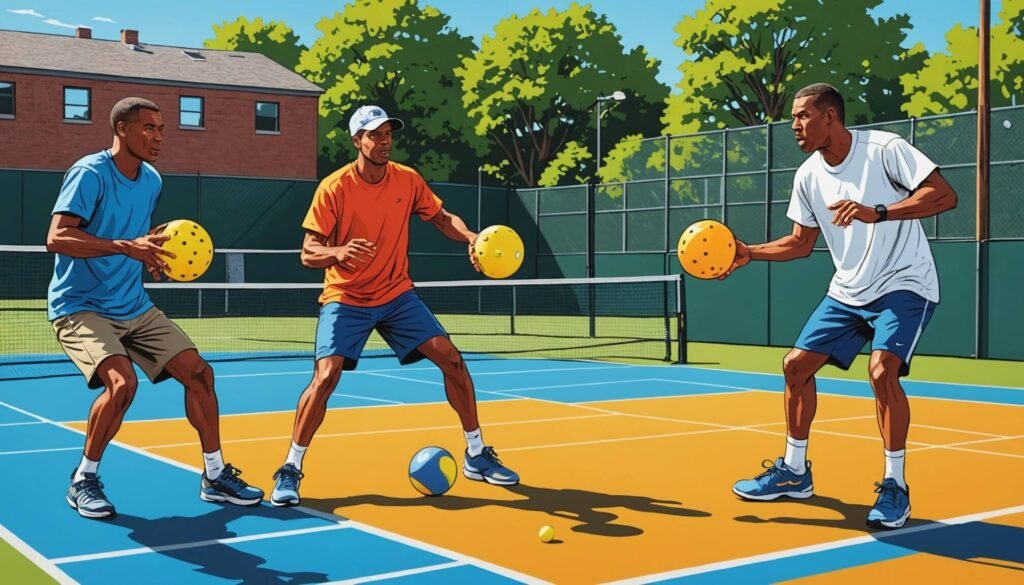
The moment your group chat lights up with “Sorry, can’t make it tonight” from your fourth player, you might feel that sinking disappointment. Your perfectly planned pickleball session seems destined for cancellation or awkward rotation on crowded public courts. But what if that missing fourth wasn’t a problem at all? What if three players actually created better training opportunities than four?
Anna Bright, currently ranked as the world’s number two professional pickleball player, has a completely different perspective on the three-person situation. In a detailed instructional video breaking down her approach to training, Bright makes a compelling case that three-person drilling isn’t just a backup plan when someone cancels. It’s actually her preferred method for developing real match skills and adding new techniques to your game.
The conventional wisdom in pickleball circles says you need four players for proper practice. You need even sides, balanced competition, and realistic game scenarios. Bright challenges this assumption completely. She argues that three-person drilling offers unique advantages that traditional four-player games and two-person drills simply cannot replicate. The format forces you to think differently about shot selection, court positioning, and tactical decision-making in ways that accelerate your development as a player.
Understanding Why Three Players Changes Everything
When you’re working with just one drilling partner, you’re essentially running maintenance mode on your existing skills. You hit crosscourt dinks back and forth. You practice your serves and returns. You groove the fundamentals you already know. There’s value in this repetition, but it rarely pushes you into new territory or forces you to adapt and problem-solve in real time.
The moment you add a third player to the court, the entire dynamic shifts. Suddenly you can’t just hit the same comfortable crosscourt shot over and over. You have to think about moving the ball around to different targets. You have to consider court geometry and spacing in ways that don’t matter when you’re just hitting with one person. You have to make strategic decisions about when to attack, when to reset, and how to create pressure through ball placement rather than just power.
Bright explains this distinction clearly in her instructional content. “Drilling with one other person is more for maintenance,” she notes. “Generally, I think it can be a little bit difficult to really add new skills and kind of simulate real gameplay with a drill without drilling with three people.” This isn’t a knock on two-person drilling, which has its place. It’s simply recognizing that different practice formats serve different purposes in your development as a player.
The three-person format creates what Bright calls more realistic gameplay simulation. You’re not just hitting balls back and forth in predictable patterns. You’re making reads, adjusting to different looks, and executing under the kind of pressure you’ll face in actual competitive situations. The solo player gets an enormous volume of touches, while the pair works on coordination, communication, and defensive consistency. Everyone benefits, just in different ways depending on their position in the drill.
The First Variation: No-Speedup Drilling for Consistency and Control
Bright’s first three-person drill variation focuses entirely on consistency, ball movement, and offensive anticipation. The rules are straightforward: no speedups allowed from anyone. The entire point is played out through dinking, with the emphasis on smart placement and sustained rallies rather than aggressive attacks.
When you’re the solo player in this variation, your job becomes fascinating. You’re essentially orchestrating the entire point, moving the ball around between your two opponents, never letting them get comfortable with a predictable pattern. Bright describes this as “puppet master” thinking. You’re pulling the strings, creating uncomfortable angles, forcing your opponents to stretch and adjust, and generally making their lives difficult without ever speeding the ball up.
The technical execution matters enormously here. You need to maintain good spacing from the kitchen line, keep your outside leg engaged for balance and power transfer, and take balls out of the air whenever possible to maintain offensive pressure. The goal isn’t to end points quickly. It’s to play long, sustained rallies that test everyone’s consistency and focus under pressure. As you and your drilling partners improve over time, these rallies should naturally get longer because everyone is making fewer unforced errors and placing balls more precisely.
Bright emphasizes one critical point during her demonstration: “I don’t want to see any chronic crosscourt dinkers. So many of you guys just ignore the person in front of you entirely.” This is perhaps the most common mistake recreational players make during dinking rallies. They get comfortable hitting crosscourt to the same target over and over, completely forgetting that there’s another opponent standing right in front of them. The three-person no-speedup drill forces you to break this habit by requiring constant target variation.
The scoring system keeps things competitive and measurable. Bright typically plays this variation to seven or eleven points, with players rotating positions after each game so everyone gets experience as the solo player. This rotation is crucial because playing solo versus playing as a pair develops completely different skills. As the solo player, you’re working on court coverage, decision-making, and offensive dinking. As part of the pair, you’re developing defensive consistency, communication with your partner, and the discipline to stick to the no-speedup rule even when tempting opportunities appear.
Over time, you can track improvement in this drill by measuring rally length. If you’re consistently playing fifteen to twenty shot rallies, and a month later you’re playing thirty to forty shot rallies, you’ve made genuine progress in your consistency and ball control. This kind of measurable improvement is harder to track in regular games where points end quickly due to speedups and attacks.
The Second Variation: Solo Speedup for Decision-Making Under Pressure
The second three-person drill variation flips the script entirely on the first format. Now, only the solo player is allowed to speed the ball up. The pair can only dink. This creates a completely different dynamic that emphasizes decision-making, shot selection, and execution under pressure.
As the solo player in this variation, you’re touching every single ball. This gives you unlimited opportunities to implement specific shots or techniques you’re working on in your game. Maybe you’re trying to develop a more reliable backhand attack. Maybe you’re working on holds and freezes at the kitchen line. Maybe you’re trying to improve your decision-making about when to attack versus when to reset. This drill gives you a controlled environment to practice these skills with realistic ball feeds and defensive pressure from your opponents.
The key to this variation is making smart choices about when and where to attack. Just because you can speed every ball up doesn’t mean you should. Part of the learning process is recognizing which balls are truly attackable and which ones are better left as dinks to set up a better opportunity on the next shot. Bright emphasizes this point explicitly: “When you’re that person, I really want us focusing on making good decisions. If there’s anything you’re kind of working on, it’s a great chance to implement it in a way that’s pretty realistic to actual gameplay.”
The pair, meanwhile, is getting excellent practice at defensive countering and dinking under pressure. They know an attack could come at any moment, so they need to maintain good ready position, stay balanced, and be prepared to handle speedups from various angles and heights. This defensive readiness is crucial for match play, where you rarely know exactly when your opponent will attack.
The solo speedup variation also teaches you about sustainable offense. Because you’re playing against two defenders who are only dinking, you can’t just blast every ball as hard as possible. You need to use placement, disguise, and shot variety to break down their defense. This is much more realistic than drilling where both sides are attacking constantly, which rarely happens in actual competitive play.
Bright typically plays this variation to eleven points, again rotating positions so everyone experiences both roles. The solo player is developing their offensive game and decision-making. The pair is developing their defensive consistency and partnership coordination. Both skill sets are essential for competitive play, and this drill format develops them simultaneously in ways that benefit all three players.
The Third Variation: Anything-Goes Chaos for Match Simulation
The final three-person drill variation removes all constraints. Anyone can speed the ball up at any time, from any position on the court. This is as close to actual match play as drilling gets, with the added benefit that you’re getting significantly more touches than you would in a standard four-player game.
Bright offers two options for implementing this variation. You can play it truly anything-goes, where speedups are allowed both off the bounce and out of the air. Or you can restrict speedups to aerial balls only, which creates slightly more extended rallies and emphasizes the importance of keeping balls low. Both approaches have merit depending on what you’re trying to accomplish in your practice session.
The anything-goes variation typically plays faster than the previous two formats because points end more quickly when everyone has full attacking freedom. Bright recommends playing to just five points to keep the rotation moving and prevent fatigue from affecting technique and decision-making. The shorter games also maintain intensity, as players know they need to make every point count.
The learning in this variation comes from experiencing real match pressure with realistic ball movement and positioning challenges. You have to be ready to defend against attacks from any position. You have to capitalize on opportunities when they appear. You have to manage the chaos of fast-paced exchanges where the ball can come at you from multiple angles. This kind of adaptability only develops through exposure to varied, unpredictable situations.
During the demonstration, Bright’s demeanor noticeably changes when they switch to anything-goes. “Now I have to be ready to counter, too,” she observes, and you can see the intensity ramp up immediately. The rallies become more dynamic. Players move more urgently. Decision-making happens faster. This is the closest you can get to competitive match conditions in a controlled practice environment.
The three-person format maintains its advantage even in this open format because the solo player still gets significantly more touches than any individual would get in a four-player game. More touches means more opportunities to execute under pressure, more chances to make reads on incoming balls, and more repetitions of the specific skills that win points in competitive situations.
Building an Effective Three-Person Practice Session
The real power of Bright’s approach comes from combining these variations into a structured practice session. You don’t have to pick just one format and stick with it for an entire hour. Instead, you can strategically sequence the variations to accomplish different training goals within a single session.
A logical progression starts with the no-speedup variation as your warmup. This gets everyone moving, establishes good dinking mechanics, and builds consistency before introducing more chaos. Spend fifteen to twenty minutes here, rotating through positions so everyone gets comfortable with the format and starts grooving their ball placement and court movement.
From there, transition into the solo speedup variation. Now you’re adding offensive elements while still maintaining significant control over the pace and structure of points. This is where you work on specific shots and situations you’re trying to add to your game. Spend another fifteen to twenty minutes in this format, again rotating positions regularly.
Finish with the anything-goes variation to simulate match conditions and test everything you’ve been working on under realistic pressure. The shorter games in this format make it perfect for the end of a session when fatigue might be setting in. You can run several quick games to five points, get everyone maximum touches and intensity, and end the session feeling like you’ve genuinely prepared for competitive play.
The beauty of this structure is its flexibility. If you’re working with players at different skill levels, you can adjust the time spent in each variation. If someone is struggling with consistency, spend more time in the no-speedup format. If everyone is comfortable with the basics and wants to work on offensive decision-making, emphasize the solo speedup variation. The format adapts to your specific needs and goals for any given session.
Bright emphasizes this point explicitly in her instruction: “You can have so much fun with three-person drilling. It’s a great way to kind of add things in and simulate real point play and get a ton of touches.” The fun factor matters more than many players realize. When practice feels engaging and purposeful, you’re more likely to maintain focus, push yourself, and ultimately improve faster than if you’re just going through the motions with boring, repetitive drills.
Why Professional Players Prioritize This Training Method
Understanding why someone at Anna Bright’s level emphasizes three-person drilling reveals important insights about effective practice methodology. Professional players don’t have unlimited time to train. They need every practice session to maximize skill development and prepare them for the specific demands of competitive play. The three-person format accomplishes this in ways that other practice structures struggle to match.
First, the volume of touches in three-person drilling is substantially higher than in regular four-player games. More touches means more repetitions of critical skills. More repetitions means faster development and better retention of technique under pressure. This efficiency matters enormously when you’re trying to add new shots or refine existing skills on a compressed timeline.
Second, the format forces decision-making in ways that closely mirror actual match situations. You’re not just hitting balls into an empty court or working on technique in isolation. You’re making real-time choices about shot selection based on your positioning, your opponents’ positioning, and the tactical situation of the point. This kind of contextual learning transfers directly to competitive play in ways that isolated technique work does not.
Third, three-person drilling allows for precise skill targeting. If Bright wants to work on her offensive dinking, she can spend significant time as the solo player in the no-speedup variation. If she wants to improve her decision-making on attacks, the solo speedup format gives her unlimited opportunities. If she needs match simulation, the anything-goes variation provides it. This specificity of training is difficult to achieve in regular games where you can’t control the situations you encounter.
The professional preference for three-person drilling should tell recreational players something important: this isn’t just a backup plan when your fourth cancels. It’s a legitimate training methodology that produces measurable results. If the best players in the world choose this format despite having access to any training method they want, recreational players should pay attention and incorporate these approaches into their own practice routines.
Practical Implementation for Recreational Players
Taking Anna Bright’s professional approach and adapting it for recreational players requires some thought about skill level, available time, and specific goals. The good news is that these three-person variations work effectively across all skill levels, from advanced beginners to competitive tournament players. The format scales naturally because each player is working at their own level while still benefiting from the structure.
If you’re new to three-person drilling, start with just one variation per session. The no-speedup format is the most accessible because it emphasizes consistency and control rather than power or advanced shot-making. Play a few games to seven points, rotating positions after each game. Focus on the fundamentals: moving the ball around, maintaining good spacing at the kitchen line, and extending rallies through smart placement rather than trying to hit winners.
As you get comfortable with the basic format, pay attention to what you’re learning. In the no-speedup variation, you should be developing better court awareness and understanding of how ball placement creates pressure. In the solo speedup variation, you should be learning when to attack and when to be patient. In the anything-goes variation, you should be developing adaptability and the ability to handle chaos without falling apart technically.
Track your progress over time through simple metrics. How long are your average rallies in the no-speedup format? Are you making smarter attacking decisions in the solo speedup variation? Are you handling pressure better in the anything-goes format? These qualitative assessments give you feedback about whether the practice is translating into actual skill improvement.
The social aspect of three-person drilling also matters for recreational players. It’s easier to coordinate three schedules than four. You need less court space than two separate pairs. And the rotation keeps everyone engaged rather than sitting out or waiting for their turn. These practical advantages make three-person drilling more sustainable as a regular practice routine rather than just an occasional substitute when someone cancels.
Understanding the Concepts for Pickleball Newcomers
If you’re relatively new to pickleball or unfamiliar with the concept of structured drilling, the idea of three-person practice might seem confusing or unnecessarily complicated. Why not just play regular games? Why do you need specific rules about who can speed the ball up? Understanding the reasoning behind these practice structures will help


