
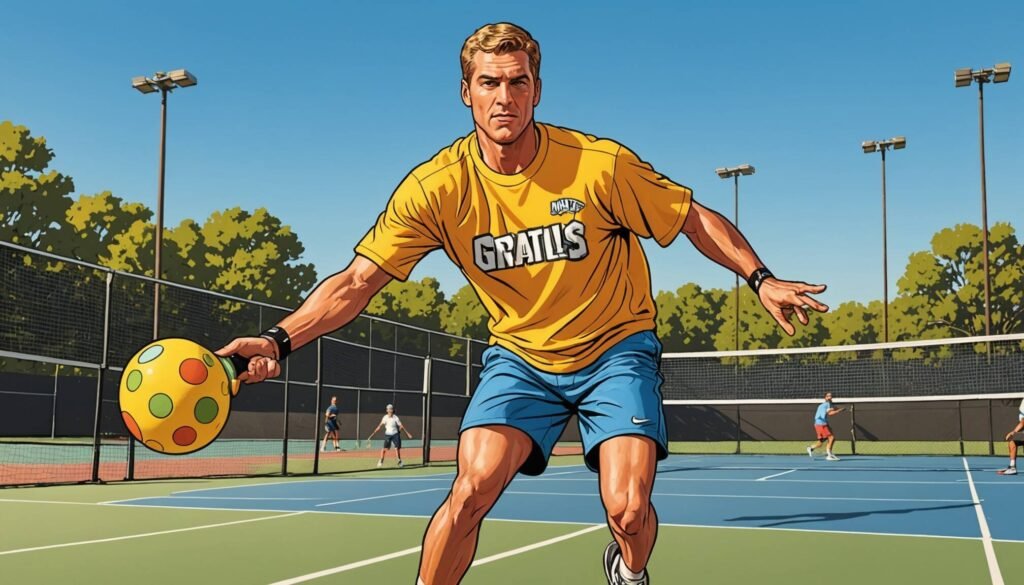
5 Pickleball Drills That Will Transform Your Game in 2026
The journey to becoming a better pickleball player doesn’t always require grueling conditioning sessions or endless hours on the court. Sometimes, the most profound improvements happen when you slow down, isolate a specific aspect of your technique, and give your body time to internalize the change. This approach forms the foundation of five strategic drills that can fundamentally alter how you approach the game, building consistency, precision, and court awareness in ways that produce visible results almost immediately.
These aren’t complex routines that demand special equipment or extensive setup time. Instead, they focus on mechanical adjustments and mental frameworks that address the most common weaknesses in recreational play. By targeting shot selection, body positioning, wrist control, footwork timing, and contact point awareness, these drills create a comprehensive system for improvement that layers seamlessly into your existing practice sessions and competitive matches.
Understanding the Foundation: What Makes These Drills Different
Before diving into the specific techniques, it’s worth understanding what sets these particular drills apart from traditional practice routines. Most players approach practice with a quantity-over-quality mindset, hitting hundreds of balls without clear objectives or measurable benchmarks. They walk off the court tired but not necessarily improved, having reinforced both good habits and bad ones in equal measure.
These five drills operate differently. Each one addresses a specific mechanical or mental gap that creates cascading errors throughout your game. When you fix your target selection, every shot becomes more intentional. When you stabilize your wrist, your contact point becomes more reliable. When you time your split step correctly, your entire defensive game transforms. The beauty lies in how these adjustments compound, with each one amplifying the effectiveness of the others.
For players new to structured practice, these drills offer something even more valuable: immediate feedback. You’ll know within a few repetitions whether you’re executing correctly because the ball flight will tell you. This creates a learning loop that accelerates improvement and keeps practice sessions engaging rather than monotonous. You’re not just hitting balls; you’re solving problems, one mechanical adjustment at a time.
Drill One: The Target Fix for Shot Consistency
The first and perhaps most transformative drill focuses on something that seems almost too simple to matter: knowing exactly where you want the ball to go before you swing. This might sound obvious, but watch recreational players for an hour and you’ll notice a troubling pattern. When asked about their target on a particular shot, most will offer vague responses like “somewhere deep” or “just trying to keep it in play.” This lack of specificity creates a mental void where inconsistency thrives.
The target fix drill requires you to establish three parameters before every single shot you hit. First, decide on your spin selection. Are you putting topspin on this ball to bring it down quickly? Are you adding underspin to keep it floating? Or are you hitting it flat for pace? Second, visualize the trajectory. How much clearance do you want over the net? A few inches? A foot? Two feet? Third, determine your pace. How hard are you swinging?
Once you’ve set these three intentions, the final step is picturing the exact landing spot on your opponent’s court. Not just “deep” or “crosscourt,” but a specific zone you can visualize clearly. This landing spot becomes your target, and suddenly your brain has something concrete to measure against. When the ball lands, you’ll immediately know if your trajectory was too high, if your spin selection was wrong, or if your pace was off.
This awareness transforms every shot into actionable feedback. Instead of hitting and hoping, you’re creating a controlled experiment where each attempt teaches you something about your control and precision. Over time, this deliberate practice approach does something remarkable: it trains your unconscious competence. Your body learns to make micro-adjustments automatically because you’ve given it thousands of clear examples of what success looks and feels like.
The target fix also addresses one of the most common problems in recreational pickleball: shot-making consistency. When you don’t have a clear target, your brain can’t optimize the complex sequence of movements required to execute the shot. But when you give it specific parameters, everything from your grip pressure to your follow-through adjusts instinctively to meet those requirements. This is how you build the kind of consistency that separates intermediate players from advanced ones.
Drill Two: The Elbow Push for Directional Control
The second drill addresses a mechanical flaw that plagues players across all skill levels: the elbow flip. Watch recreational players closely and you’ll notice that after making contact with the ball, many of them let their hitting elbow flare outward, away from their body and away from their intended target. This seemingly minor deviation creates surprisingly significant problems with accuracy, consistency, and ball control.
The elbow push drill corrects this by establishing a simple rule: your hitting elbow should move directly toward your target throughout your entire swing. If you’re hitting straight ahead down the line, your elbow extends forward in that direction. If you’re aiming crosscourt, your elbow pushes diagonally toward that corner. If you’re targeting the middle of the court, your elbow drives toward center. This alignment between your elbow direction and ball direction creates a kinetic chain that dramatically improves accuracy.
The reason this works comes down to biomechanics. Your elbow is the joint that controls your forearm, which controls your wrist, which controls your paddle. When your elbow moves in one direction but you want the ball to go in another, you’re creating a disconnect that your wrist and hand must compensate for. These compensations work sometimes, but they’re inherently inconsistent because they require split-second timing and adjustment that varies with each shot.
When you push your elbow toward your target, you eliminate that compensation requirement. Your entire arm structure works in harmony, creating a more stable, repeatable motion. The paddle face naturally aligns with your target, your contact point becomes more consistent, and your shots feel cleaner. Players who implement this adjustment often report that their dinks, drives, and volleys all improve simultaneously because the underlying mechanism is the same across all these shots.
To practice this drill effectively, start with slow, controlled feeds where you have plenty of time to think about your elbow position. Before each swing, mentally rehearse pushing your elbow toward your target. Make the motion exaggerated at first, really emphasizing that forward push. As the movement becomes more natural, gradually increase the pace of the feeds until you’re executing the elbow push instinctively even during fast exchanges.
Drill Three: The Wrist Set for Paddle Control
Your wrist represents the final link in the chain between your body and the paddle, which means even small movements at the wrist joint translate into significant changes in paddle angle and ball trajectory. This makes wrist stability absolutely critical for consistency, yet many recreational players swing with loose, reactive wrists that constantly shift position throughout their stroke. The result is unpredictable ball flight and frequent errors that seem to have no clear cause.
The wrist set drill solves this problem by teaching you to establish and maintain a stable wrist position throughout your entire swing. The concept is straightforward: before you begin your forward swing, set your wrist in the position you want it to be at contact, then keep it locked in that position until after you’ve hit the ball. For a forehand, this typically means setting your wrist with a slight upward angle that keeps the paddle face properly oriented. For a backhand, you’ll set your wrist in your natural backhand position.
Think of this as creating a rigid frame that connects your forearm to your paddle. Once your wrist is set, it shouldn’t flex, extend, or rotate during the swing. Your entire stroke power comes from your shoulder and core rotation, not from wrist flicks or last-second adjustments. This might feel restrictive at first, especially if you’re used to using your wrist actively during shots, but the consistency gains are immediate and substantial.
The easiest way to develop this skill is through slow-motion practice. Take your normal stance and go through your swing motion in extreme slow motion, paying attention to what your wrist does from start to finish. Most players will be surprised to discover their wrist moves more than they realized. Once you’ve identified these unwanted movements, practice the motion again, this time consciously keeping your wrist stable. The goal is for your wrist to feel exactly the same at the end of your swing as it did at the beginning.
For more insights on proper wrist usage, understanding when stability matters most versus when controlled wrist action can be beneficial becomes an important distinction as your game develops. The key is making deliberate choices rather than allowing random wrist movements to introduce inconsistency into your shots.
Drill Four: The Split Step for Reaction Time
Even perfect stroke mechanics won’t help much if your body isn’t properly positioned to execute them. This is where the split step becomes essential, serving as the foundation for quick, balanced movement in any direction. Yet despite its importance, the split step remains one of the most neglected fundamentals in recreational pickleball, with many players either skipping it entirely or executing it with poor timing that negates its benefits.
The split step is a small, controlled hop that you execute right as your opponent makes contact with the ball. The mechanics are simple: you start in a ready position with your weight on the balls of your feet, then perform a slight hop so that you’re landing softly just as your opponent’s paddle meets the ball. This landing loads your legs like compressed springs, with your knees bent and your body centered, creating a platform from which you can explode in any direction instantly.
The timing is everything here. If you split step too early, you’ll land and then have to reload before you can move, wasting valuable reaction time. If you split step too late, you’ll still be in the air when the ball comes at you, leaving you flatfooted and unable to react. The goal is to synchronize your landing with their contact so that the instant you see where the ball is going, your body is perfectly positioned to move toward it.
When executed correctly, the split step transforms your court coverage. Instead of reaching, lunging, or taking awkward recovery steps, you’ll find yourself gliding smoothly to balls that previously seemed just out of reach. Your balance improves because you’re always moving from a stable, centered position rather than trying to adjust from wherever you happened to be standing. Your reaction time gets faster because you’ve eliminated the lag between recognizing where the ball is going and beginning your movement toward it.
To develop proper split step timing, start with controlled drills where a partner feeds you balls at a moderate pace. Focus exclusively on timing your split step to their contact point, not on where the ball goes or how you return it. Once the timing becomes automatic, gradually increase the pace and randomness of the feeds. The goal is to reach a point where you split step instinctively every time your opponent is about to hit, making it as natural as breathing.
For players looking to enhance their overall footwork technique, the split step serves as the foundation upon which all other movement patterns are built. Master this timing and every other aspect of your court movement will improve as a natural consequence.
Drill Five: Getting Behind the Ball
The fifth and final drill addresses what might be the most common positional error in recreational pickleball: hitting balls from alongside your body rather than from in front of it. This happens because most players have a significant gap between what they think they’re doing and what they’re actually doing, a phenomenon often called the “feel versus real” problem. You might feel like you’re perfectly positioned, but video analysis would show the ball is actually off to your side, forcing you to reach or adjust at the last moment.
Getting behind the ball means positioning yourself so that the ball’s trajectory brings it between your feet before you make contact. This requires active footwork, constantly shuffling and adjusting so that you’re not reaching to the side but rather swinging through a ball that’s directly in front of your body. When you achieve this position, everything about your shot mechanics improves: you can use your full body rotation, your contact point becomes more consistent, and you can generate more controlled power.
The drill itself involves a deliberate exaggeration of proper positioning. For every ball that comes to you, imagine it’s traveling down the exact center of your body, directly between your feet. This mental image forces you to move more than you instinctively want to, overriding the lazy habit of reaching instead of moving. For both forehands and backhands, practice shuffling your feet until the ball’s path would take it between your legs if you didn’t swing at it.
This exaggeration is temporary and intentional. Most players are so far from optimal positioning that normal adjustments don’t create enough change to overcome muscle memory. By overcompensating initially, you reset your internal calibration. Over time, as this exaggerated positioning becomes comfortable, you can relax back toward a more natural stance that still maintains the essential principle: always be behind the ball, never beside it.
The benefits of this adjustment extend across every shot type. Your dinks become softer and more controlled because you’re not fighting sideways momentum. Your drops land more consistently because your paddle path is cleaner. Your drives gain power because you’re rotating through the ball rather than pushing it from the side. Players who commit to mastering this positioning often describe it as an “unlock” moment where suddenly everything they’ve been working on starts clicking into place.
How These Drills Work Together
While each of these five drills targets a specific aspect of your game, their real power emerges when you understand how they interconnect and reinforce each other. The target fix gives your shots purpose and direction. The elbow push ensures your body mechanics align with that intention. The wrist set stabilizes your paddle through the execution. The split step prepares your body to reach the next ball. And getting behind the ball ensures clean contact when you arrive.
This isn’t a sequential process where you master one drill and then move to the next. Instead, you’re developing these skills in parallel, with improvements in one area naturally supporting progress in the others. When you have a clear target, you’re more motivated to get behind the ball properly. When your wrist is stable, you can focus more attention on your elbow path. When your split step timing improves, you have more time to set up properly behind the ball.
The most effective practice approach involves cycling through these five focus areas, spending 10-15 minutes on each during your training sessions. One day you might emphasize the target fix and wrist set. The next session could focus on the split step and getting behind the ball. Over time, as each element becomes more automatic, you’ll notice them starting to blend together into a cohesive whole that feels natural rather than mechanical.
This integrated approach mirrors how high-level players actually think about the game. They’re not consciously running through a checklist of mechanical adjustments on every shot. Instead, they’ve trained these fundamentals so thoroughly that they happen automatically, freeing their conscious mind to focus on strategy, patterns, and reading their opponents. That’s the ultimate goal of these drills: to build unconscious competence that allows you to play instinctively at a much higher level.
Making Practice Stick: Implementation Strategies
Understanding these five drills intellectually is one thing; actually implementing them consistently enough to change your game is another challenge entirely. The gap between knowing what to do and actually doing it under pressure represents one of the biggest obstacles in skill development. Here are some practical strategies for making these adjustments permanent parts of your game rather than concepts you understand but rarely execute.
Start by choosing just one drill to focus on during each practice session or match. Trying to implement all five simultaneously will overwhelm your working memory and likely result in you defaulting to old habits under pressure. Instead, dedicate an entire session to, say, the target fix. Before every single shot, go through the mental process of setting your three parameters and visualizing your landing spot. Accept that your performance might temporarily dip as you divert attention to this one aspect. The temporary dip is the price of long-term improvement.
Once that first drill becomes more automatic, typically after several dedicated sessions, add a second focus area. You might spend the first half of practice emphasizing the target fix and the second half working on the elbow push. Gradually, as each element requires less conscious attention, you can add another layer until you’re integrating all five principles naturally into your play.


