Watch the Ball: 5 Ways to Hit Cleaner Pickleball Shots
There is one habit that separates players who find the sweet spot consistently from those who shank shots at the worst possible moments. It has nothing to do with your grip, your stance, or how much you practice. It comes down to where your eyes are when the ball meets your paddle. Most players look away a fraction too early, and that tiny mistake ripples through the entire shot.
This piece breaks down why watching the ball into your paddle matters, what the research actually says about visual focus in sport, and five concrete ways to build the habit so it shows up automatically during returns, drives, and serves.
Why Watching the Ball Matters More Than You Think
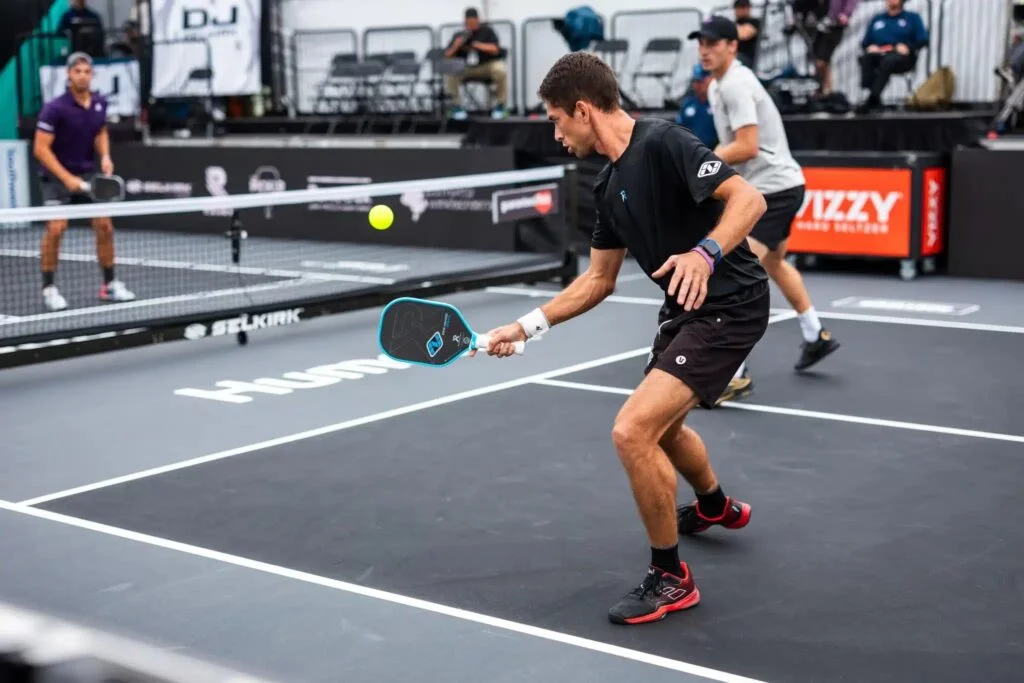
When you lift your eyes to look at your target before the ball has left your paddle, your head moves. Your shoulders follow. Your arm fires slightly off schedule. The result is contact that is never quite where you planned it. The shot might go in, but it will not be the shot you wanted, and over a full match that gap adds up to a lot of unforced errors.
Holding your focus on the ball for just a few extra milliseconds keeps your head, shoulders, and swing arm stable through the hit. That stability is what produces clean contact on the sweet spot. It sounds almost too simple to make a real difference, but the effect is measurable and consistent across skill levels.
The science backs this up. A 2025 study published in Psychology of Sport and Exercise found that consistency in how long athletes hold their final visual fixation before contact predicts aiming performance better than the raw length of the gaze itself. In other words, it is not just about looking at the ball for a long time. It is about doing it the same way every time so your body knows what to expect.
If you look at the paddle face of a professional player after a session, you will see ball marks clustered near the center. Most recreational players show marks scattered toward the edges. That pattern tells the whole story about where their contact is landing and why their shot consistency never quite settles. The difference is not always physical ability. A lot of it is visual discipline.
For Newer Players: What Does Watching the Ball Actually Mean?
If you are newer to pickleball or coming from a sport where this was never drilled into you, the concept of watching the ball sounds obvious. Of course you are watching the ball. You can see it coming. But there is a big difference between tracking a ball as it moves toward you and keeping your eyes locked on it through the moment of contact and for a beat afterward.
Think about what happens naturally. The ball is coming. You get into position. You start your swing. And right before you hit it, your eyes jump ahead to where you want the ball to go. Your brain is already thinking about the next moment before the current one is finished. That instinct is completely normal, but it is also exactly what causes the paddle to twist slightly, the arm to fire a touch early or late, and the ball to come off the edge instead of the center.
The fix is to treat your head like a camera on a tripod. Let everything else move around it. Keep your chin down and your focus on the ball until it is gone, then look up. It takes practice because it feels unnatural at first. Your brain wants to look at the target. Training it to stay patient through contact is a skill, not an instinct.
A 2025 systematic review of eye-tracking research confirmed that expert racket sport players consistently hold longer, steadier final fixations than novices. The good news is that this is trainable. It is not some gift you are born with. You build it through deliberate repetition.
Watching the Ball vs. Getting Low: They Are Not the Same Thing
A lot of players confuse these two cues. Getting low brings your eye line closer to the ball, which helps you see it more clearly as it comes in. Watching the ball is a focus decision that happens after your position is set. You can be perfectly low and still look up too early. You can be a little upright and still track the ball cleanly into contact.
Think of your body position as the setup and your visual focus as the execution. Both matter, but they solve different problems. If your contact feels off even when your footwork is good, the issue is almost certainly the focus piece. You are set up correctly, but your eyes are leaving before the job is done.
The two habits do reinforce each other. When you are lower, it is easier to keep your head quiet because your posture is more stable. But do not assume that getting low automatically fixes your ball watching. You need to train them separately and then let them work together.
Why Aggressive Shots Are Where This Breaks Down Most
On easy dinks and slow resets, most players watch the ball reasonably well. The problem shows up on aggressive shots, which is exactly where clean contact matters most. On a forehand drive, a hard return, or a serve, your brain shifts into a higher gear. It starts thinking about where the ball is going, what your opponent will do, and what you need to do next. The ball you are currently hitting gets only a fraction of your attention.
That mental rushing ahead is one of the quietest and most damaging habits in recreational pickleball. You are not making a technical mistake. You are just thinking about the wrong thing at the wrong moment. Taking an extra two tenths of a second to stay with the ball through contact produces noticeably cleaner results on harder shots. Not because you slowed your swing, but because you slowed your eye movement.
Returns are a perfect example. You have less time on a return and more pressure to do something good with the ball. That combination tempts your eyes to leave early almost every time. Training the habit specifically on returns pays off faster than anywhere else on the court.
Can You Actually See the Ball Hit the Paddle?
Probably not, and that is completely fine. The ball moves too fast for your eyes to track through the final milliseconds of contact. Even elite players in racket sports are split on whether they actually see the moment of impact or whether they are simply keeping their head still and staring at the contact zone.
The goal is not perfect vision of the collision. The goal is to delay your head lift until after the ball has left the paddle. That delay, even if it is only a couple of milliseconds, is enough to keep your body stable through the swing and produce cleaner contact. Think of it as keeping your head quiet rather than seeing every frame.
The habit also removes a mental layer of pressure. If you are trying to literally see the ball hit the strings, you will tense up. If you are simply committing to keeping your eyes in one place until the ball is gone, you stay relaxed. Relaxed hands and a quiet head are what the sweet spot feels like.
5 Ways to Train Your Eyes to Stay on the Ball
These five methods build the habit through deliberate practice. Trying to remember to watch the ball mid point rarely works because you are already thinking about too many things. The goal is to make it automatic through repetition in training so it shows up without conscious thought during competition.
1. Pick a Contact Point Cue Before Each Swing
Before you swing, pick a spot just in front of your paddle face and commit your eyes to it. You are giving your visual attention somewhere specific to land instead of letting it wander to the target. This works because your eyes follow the ball into that predetermined zone instead of leaping ahead. It is a small act of intention that changes what your body does. Do this on every shot during warm up until it becomes part of your pre-swing routine rather than a conscious decision.
2. Add the Two Tenths Pause
On returns and drives, mentally add a tiny beat after contact before you lift your head. You are not changing your swing speed. You are only slowing your eye movement. The ball is already gone by the time you look up, but your head stayed quiet through the moment that mattered. Most players are surprised how different their contact feels after just a few minutes of drilling this. The shot feels more controlled even when you are swinging just as hard as before.
3. Check Your Paddle Marks After a Session
Look at your paddle face after you play. If the scuff marks are scattered near the edges and spread across the face, your contact is inconsistent and eye focus is a likely cause. If the marks cluster near the center, your visual discipline is working. This is a simple feedback tool that tells you where your contact actually is versus where you think it is. Use it once a week to track whether the habit is taking hold.
4. Drill With a Slow Feed and a Visual Task
Have a partner feed easy balls and call out something you see on the ball as it meets your paddle. It could be a color stripe, the logo, or just confirming the ball touched the paddle face. Adding a visual task forces your eyes to stay on the ball instead of drifting. Jay Devilliers’ double ball drill uses a similar principle with added difficulty. Start simple and increase the speed of the feed as the habit becomes more automatic.
5. Quiet Your Head on Purpose
Think of your head as a fixed point that everything else rotates around. Your hips turn, your shoulders rotate, your arm swings, but your head stays anchored. Keep your chin down through contact. When your head chases the target, your shoulders open early and your arm comes through at the wrong angle. When your head stays still, your swing stays on plane and your contact improves almost immediately. Practice this on soft feeds before you try it at full speed.
Start with one of these in your next warm up. Layering all five at once usually leads to overthinking. Pick the one that feels most relevant to where your contact is breaking down and drill it until it requires no thought. Then add the next one.
Where the Habit Pays Off Most on the Court
Returns, forehand drives, and serves are the three shot types where watching the ball produces the most immediate improvement. All three feel aggressive and all three tempt you to think about the outcome before the contact is done. Returns especially, because the time pressure is real and the margin for error feels smaller.
If your drives are floating or getting crushed back at you, the problem might not be your swing path or your grip. It might be that your eyes are leaving the ball early and your arm is firing slightly off time as a result. Better visual discipline on drives often fixes contact issues that players have been trying to solve with technique adjustments for months.
The habit also pays off in pressure situations. When the score is tight and the point matters, the instinct to look at the target early gets stronger. Players who have drilled the habit have something to fall back on. Instead of tensing up and rushing, they have a simple cue: stay with the ball. That one cue can hold your mechanics together when everything else wants to fall apart.
Should You Watch the Ball or Your Opponent’s Paddle?
Both, but at different moments. Before the ball reaches you, reading your opponent’s paddle tells you what kind of shot is coming. The angle of the face, the speed of the swing, and the contact point all give you information you need to position yourself and prepare your response. That anticipation piece is genuinely valuable and worth developing.
But once the ball is on its way to you, your focus belongs entirely on the ball. The information you needed from your opponent’s paddle has already been used. Now the job is to execute your shot cleanly. Think of it as a handoff from anticipation to execution. Eyes on their paddle to read, then eyes on the ball to hit.
Players who try to keep watching their opponent after the ball leaves the opponent’s paddle are splitting their attention at exactly the wrong moment. The rope rule and ball watching guide from The Dink covers the positioning side of this in more detail if you want to go deeper on the anticipation piece.
Building the Habit Into Your Pre-Point Routine
The most reliable way to make this stick is to attach it to something you already do before every point. A short pre-point routine gives you a mental reset and a place to drop in a simple cue like “ball to paddle.” Say it quietly before you return serve or before you toss for your own serve. That verbal cue primes your attention before the pressure of the point takes over.
Warm up is also an underused opportunity. A few minutes of intentional ball watching during warm up wires the habit in before the first point starts. If you spend warm up casually hitting without any focus on where your eyes are, you are warming up your body but not your attention. Both matter.
Players who build this into a larger mental framework tend to hold onto it better under pressure. The habit lives inside your routine rather than floating loose as something you try to remember. That structure is what makes it show up when the score is close and your brain wants to default to rushing.
Common Mistakes When You Try to Watch the Ball
The first mistake is staring so hard that your body tenses up. You want a quiet head and relaxed focus, not locked shoulders and gripping eyes. Tension in your upper body hurts contact as much as looking away early does. Relaxed focus is the goal, not intense focus.
The second mistake is only practicing this on easy shots. Easy feeds make it simple to watch the ball because there is no pressure. The habit breaks down on faster balls and higher-stakes moments, which is exactly where you need it most. Practice it on drives and returns at realistic speeds from early in your training, not just during slow warm up rallies.
The third mistake is expecting it to work immediately. You are retraining a deeply ingrained instinct that your brain has been running for years. There will be sessions where it feels worse before it feels better. When your attention drifts mid match and you shank one, use a quick 6 second mental reset to clear it and refocus rather than letting one mishit become five.
Give it at least two to three weeks of intentional practice before you judge the results. Habits that change your nervous system take time to root. The players who stick with it long enough to feel the difference almost always keep it for good, because once you know what clean contact feels like, you do not want to go back to guessing.
Frequently Asked Questions
How do you watch the ball better in pickleball?
Pick a contact point just in front of your paddle and keep your eyes there until the ball is gone. Delay lifting your head to look at your target by a couple of milliseconds. Keep your head still while your body rotates around it. Build the habit during warm up and slow feeds before trying it at full speed.
Should you watch the ball hit the paddle in pickleball?
Yes, you should track the ball as close to contact as you can. You likely cannot see the exact instant of impact because the ball moves too fast. The goal is to keep your head quiet through contact rather than see every frame of the collision.
Why do I keep mishitting the ball in pickleball?
A common cause is looking up at your target too early, which shifts your shoulders and changes your arm timing. Thinking about your next shot before you finish the current one also leads to mishits. Slowing your eye movement by two tenths of a second often fixes it without changing anything else about your technique.
Is watching the ball the same as getting low?
No. Getting low is a body position that brings your eye line closer to the ball. Watching