
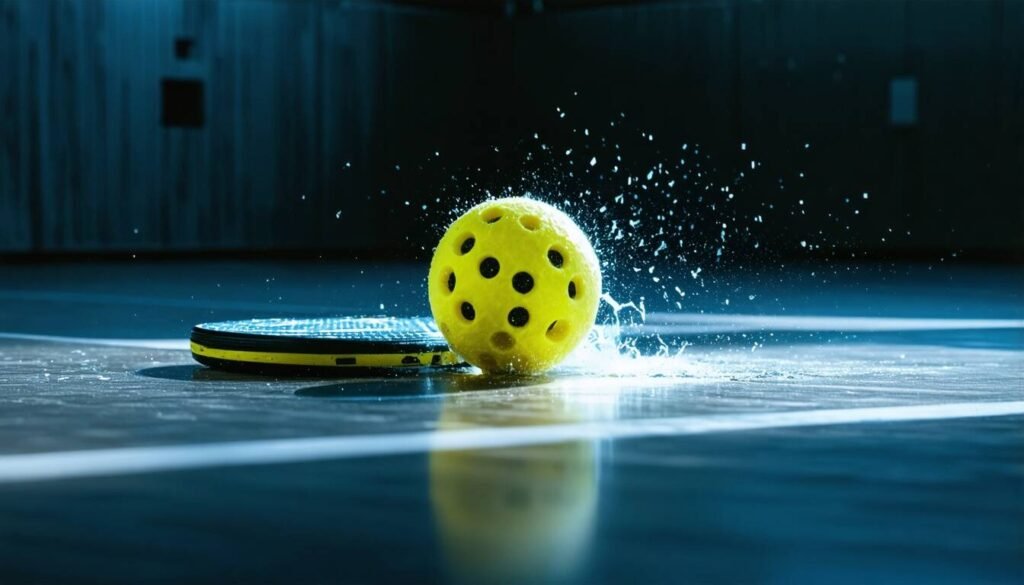
Why the Franklin X-44 Might Be Your New Favorite Pickleball
For years, the Franklin X-40 has been the default ball of recreational pickleball. It is affordable, it is reliable, and it shows up at nearly every park, rec center, and backyard net in the country. If you have played a casual game of pickleball in the United States, there is a good chance you have hit one. But the sport has changed a lot since the X-40 became a staple. Paddles are more powerful, rallies are faster, and players are paying closer attention to the ball itself. That is where the new Franklin X-44 comes in.
The X-44 is not simply a refreshed X-40. It is a different kind of ball, built to deliver the faster, livelier performance that has made other popular ball options more appealing to recreational players. Early impressions suggest Franklin got it right. Below, we look at what makes this ball different, what testing showed, who it suits, and what it means for the way recreational players think about their equipment.
Why the Ball Matters More Than Most Players Think
Ask a group of recreational players what they spent the most time researching, and the answer is almost always the paddle. Shoes come second. The ball is usually an afterthought, something you grab from whatever tube is in the bag. Yet the ball is the one piece of equipment every single point depends on. It determines how fast the game plays, how high it bounces, how easy it is to see, and how consistent your shots feel from one rally to the next.
As paddle technology has advanced, the gap between a modern paddle and an older, slower ball has become more noticeable. Players with powerful, responsive paddles want a ball that matches that energy. A ball that feels dead or inconsistent can make even a great paddle feel flat. That context explains why the X-44 launch is a bigger deal than a typical product update. It reflects a shift in how recreational players think: the ball is no longer just a consumable, it is part of the setup.
Faster, Brighter, and Built to Perform
The most immediate difference with the X-44 is speed. It plays noticeably faster than the X-40. The reason starts with its design. The X-44 uses a 44-hole, two-piece construction and has a firmer feel, which gives players a livelier response off the paddle. Franklin describes it as featuring “innovative two-piece construction and 44 precision-beveled holes,” built to deliver “the speed, crisp, responsive feel, and consistency demanded by today’s best players.”
Marketing language aside, the practical result is a ball that jumps off the paddle a bit more. Drives carry with more pace, resets require a little more touch, and the overall rhythm of play feels quicker. For players who have felt that the X-40 plays a bit soft with modern paddles, that is a welcome change.
What Independent Testing Found
Claims from a manufacturer are one thing. Independent testing is another. Respected paddle reviewer John Kew compared the X-44 against another popular high-performance ball using a ball cannon, which removes the human variable and gives a more objective look at how a ball behaves. His findings were impressive:
- 20% more rebound: The X-44’s initial coefficient of restitution was roughly 20% higher than the X-40’s.
- Consistent performance: After an initial break-in period, the ball’s rebound performance leveled out, closely mirroring the wear curve of another popular option.
- Excellent visibility: Its bright optic-yellow color makes the X-44 noticeably easier to track, both indoors and outdoors.
- Reliable bounce: Kew reported no unusual hops or flat spots during roughly four hours of play with one ball.
Each of these points matters for a different reason. The extra rebound explains the livelier feel. The consistent wear curve means the ball does not fall apart quickly or change character in the middle of a session. The visibility makes the game easier on your eyes. And the absence of odd bounces is what every player wants from a ball: predictability.
The Visibility Factor
Kew and his co-host were especially enthusiastic about how easy the ball is to see. The difference was so dramatic that going back to a duller-colored ball felt like a downgrade. That may sound like a small detail, but it is not.
Think about where most recreational pickleball actually happens. Many players are on indoor courts with dark backgrounds, shadowy corners, and uneven lighting. Others play outdoors in changing sun conditions, with trees, fences, and bright skies behind the ball. A ball that is easier to track reduces mis-hits, late reactions, and the frustrating moments when you lose the ball against a wall or ceiling. For newer players still developing their hand-eye coordination, and for older players who may notice contrast more, a brighter ball can make the game feel more enjoyable and less tiring.
A Better Ball for Every Level of Play?
The X-44 is not just for advanced players chasing more speed. It is an appealing option for anyone who wants a more responsive, consistent ball without giving up visibility. Here is how it breaks down by level:
- Beginners get a ball that is easier to see and track.
- Intermediate players get a livelier feel that rewards clean contact.
- Advanced recreational players get the pace and rebound they have come to expect from modern high-performance balls.
That range is part of what makes the X-44 interesting. Often a ball designed for speed ends up favoring strong players at the expense of everyone else. Here, the brighter color helps newer players, while the added pop and firm feel give more experienced players something to work with. It is a rare case where an upgrade does not leave anyone behind.
The Break-In Period
There is one adjustment worth mentioning. Fresh X-44s come in a little hot. Kew found that the ball needed a few games to settle into its more consistent playing characteristics, and The Dink’s Alex E. Weaver echoed that in his own play. In other words, a brand-new X-44 will feel livelier than it will after a few games.
Once broken in, though, performance was impressively stable. If you are used to opening a new ball and expecting identical behavior from the first point to the last, plan on a short adjustment. Some players may even enjoy the extra pop early on. Others will want to hit a few warm-up games before a competitive match with a fresh ball.
Pickleball Balls Explained for Someone New to the Topic
If you are not deep into pickleball gear, all of this may sound like a lot of detail about a small plastic ball. So let’s simplify it.
A pickleball is a lightweight, hollow plastic ball with holes in it. The holes affect how it flies through the air and how it bounces. Different balls are built differently, and those differences change how the game feels. A bouncier ball makes the game faster. A softer ball slows it down. A brighter ball is easier to see. A more durable ball lasts longer before it cracks or goes out of shape.
The “coefficient of restitution,” mentioned in the testing, is just a technical term for bounciness. It measures how much energy a ball keeps after hitting a surface. When Kew says the X-44 had roughly 20% higher initial rebound than the X-40, he is saying it bounces back noticeably more. A “ball cannon” is a machine that fires balls in a repeatable way, so the test does not depend on how hard a person happened to swing.
“Two-piece construction” means the ball is made from two molded halves joined together, which affects how consistent the shape and wall thickness are. The “44 holes” refers to the number of holes on the surface. The X-40 has 40, and the X-44 has 44, with beveled edges designed to help the ball perform consistently.
For the average person, the takeaway is simple. The X-44 is a new ball from a brand most players already know. It is faster, easier to see, and appears to hold up well. If you play casually and have never thought about the ball, this is a good reason to start paying attention, because a better ball can make the game more fun without costing much more than what you already use.
Where the X-44 Fits in Recreational Pickleball
Franklin has an established presence in recreational pickleball. Its balls are familiar at clubs, open plays, and community courts. That matters because adoption in this sport often follows what people see others using. If the X-44 catches on in the same places the X-40 does, it could become a regular sight at clubs, open play sessions, and backyard courts.
There is also a bigger story here. For a long time, recreational players had fewer choices when it came to higher-performance balls. Many had to settle for whatever was available at the local store or whatever the group provided. Now another strong option is entering the mix, and competition tends to push everyone to improve. More options mean players can match their ball to their paddle, their court conditions, and their preferred style of play.
Is It Time to Rethink Your Go-To Ball?
If you have used the same ball for years out of habit, the X-44 is a good prompt to reconsider. The testing points to a ball that is faster, easier to see, and steady after a short break-in. Those are the qualities most recreational players care about, even if they do not always say it out loud.
The bottom line is that players just got another excellent ball to add to their bags, and this one deserves a serious look. If you want to try it for yourself, you can check out the X-44 from Franklin and see how it feels with your own paddle. Grab a few, play a handful of games to get past the break-in, and judge it by how it performs on your home court. For many players, the first time they track a bright ball cleanly across a dim gym will be reason enough to make the switch.
This article is based on reporting from The Dink Pickleball.


