
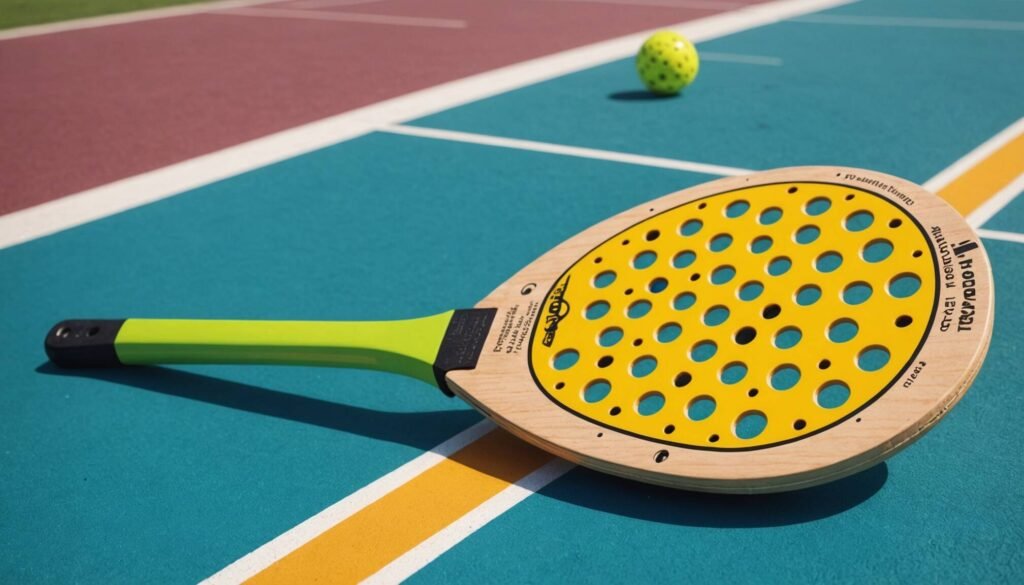
Meet Xcaliber: Pickleball’s Most Unconventional USAP-Approved Paddle
In the ever-expanding world of pickleball equipment, where hundreds of brands release new paddles with slight variations on familiar themes, one paddle stands defiantly apart from the crowd. The Xcaliber by XCELER8 isn’t just different—it’s polarizing, conversation-starting, and completely unlike anything else you’ll see on the courts. When Chris Olson from Pickleball Studio recently featured this unusual paddle in one of his videos, the pickleball community was reminded that innovation in this sport doesn’t always follow conventional paths.
The Xcaliber represents something rare in modern pickleball: genuine design differentiation. While most manufacturers compete over incremental improvements in materials, surface texture, or core construction within the familiar paddle silhouette, XCELER8 went back to the drawing board and reimagined what a paddle could look like. The result is a piece of equipment that generates immediate reactions—whether fascination, skepticism, or outright disbelief—but never indifference.
The Paddle That Breaks All the Rules
At first glance, the Xcaliber looks less like a pickleball paddle and more like something you might find in a sci-fi film or a specialized sporting goods catalog from an alternate universe. Its most distinctive feature is the ergonomic pistol grip handle, which replaces the traditional cylindrical grip found on virtually every other paddle on the market. This handle design angles the grip in a way that’s meant to support a more natural wrist position, theoretically reducing strain during extended play and providing a more secure hold throughout long matches.
The paddle’s elongated shape further distinguishes it from standard designs. While elongated paddles have become increasingly popular in recent years for their extended reach and larger sweet spot, the Xcaliber takes this concept to a new level, combining the elongated face with its unique grip system to create a playing experience that its manufacturer claims offers both maximum power and confident control.
According to the company’s marketing materials, the Xcaliber Ergo is positioned as “a premium ergonomic pickleball paddle built for maximum power and confident control.” The pistol grip style is specifically designed to support a more natural wrist position and provide a secure hold through long matches. The company targets two distinct player demographics: competitive players seeking high performance, and senior players who prioritize comfort, stability, and confidence without sacrificing power.
Despite its radical appearance, the Xcaliber isn’t some experimental prototype that exists in a regulatory gray area. The paddle received official USAP approval in January 2025, meaning it meets all the technical specifications required for tournament play. This approval is significant because it demonstrates that innovation in paddle design doesn’t have to conform to aesthetic conventions, as long as the equipment meets the governing body’s standards for dimensions, materials, and performance characteristics.
The paddle retails for $229, positioning it in the premium segment of the market alongside high-end offerings from established brands. It’s the only model XCELER8 currently offers, which suggests the company is fully committed to this singular vision rather than hedging its bets with a more conventional backup option.
From Tournament Courts to Social Media Spotlight
The Xcaliber gained renewed attention when Chris Olson featured it in a recent Pickleball Studio video, jokingly announcing, “I’ve found my new main, hope you’re ready for this,” before unboxing the paddle. The humor in his presentation reflects the typical reaction most players have when first encountering this equipment—a mixture of curiosity, amusement, and genuine confusion about how such an unconventional design could possibly work on the court.
But here’s where the story gets interesting: Chris and his brother Aizec have personal history with the Xcaliber. Less than a year before Chris’s video, the brothers faced an opponent wielding this exact paddle in a tournament—and lost. This detail transforms the Xcaliber from a curiosity into something worth taking seriously. It’s one thing to create an unusual-looking paddle; it’s another thing entirely to win matches with it against skilled competition.
This tournament loss adds credibility to the Xcaliber’s performance claims. While it’s easy to dismiss unconventional equipment as gimmicky, the results speak for themselves. The paddle isn’t just approved for tournament play—it’s actually being used successfully in competitive environments. This suggests that beneath its unusual exterior lies legitimate performance capability that can compete with traditional paddle designs.
The fact that Chris is now exploring the paddle himself, potentially setting up content around using it in future tournaments, indicates that the pickleball community is beginning to take the Xcaliber more seriously. There’s speculation that he and Aizec might enter a tournament wielding Xcalibers of their own to avenge their previous defeat, which would make for compelling content and provide valuable insights into how the paddle performs in the hands of experienced players.
Understanding the Ergonomic Advantage
For those new to pickleball or unfamiliar with equipment nuances, it’s worth explaining what makes the Xcaliber’s design potentially beneficial despite its unconventional appearance. Traditional pickleball paddles feature a straight, cylindrical handle similar to what you’d find on a tennis racket or table tennis paddle. Players grip this handle and rotate their wrist to position the paddle face for different shots—forehands, backhands, volleys, and dinks.
The pistol grip design of the Xcaliber works differently. Instead of requiring the player to adjust their wrist angle to position the paddle correctly, the angled grip is designed to naturally place the paddle face in the optimal position when the player’s wrist is in a neutral, relaxed position. This is similar to the ergonomic principles used in computer mice, keyboards, and other tools designed to reduce repetitive strain injuries.
For players who experience wrist pain, fatigue, or conditions like tennis elbow or carpal tunnel syndrome, this design difference could be genuinely significant. By reducing the amount of wrist deviation required during play, the Xcaliber might allow these players to continue enjoying pickleball with less discomfort. This explains why the company specifically markets to senior players who often face these challenges.
The elongated paddle face provides additional reach, which can be advantageous for players who struggle with mobility or want to cover more court area without moving as much. Combined with the ergonomic grip, this creates a paddle that prioritizes comfort and accessibility while still claiming to deliver the power and control that competitive players demand.
The Broader Context of Paddle Innovation
The Xcaliber exists within a rapidly evolving pickleball equipment landscape. With thousands of brands producing countless new models, differentiation has become increasingly challenging. Most innovation in recent years has focused on materials science—carbon fiber surfaces, polymer cores, specialized foams, and various textures designed to enhance spin. These improvements are meaningful but often imperceptible to the average player.
Design innovation, by contrast, is immediately visible. The Xcaliber joins a small but growing category of unusual paddles that have received USAP approval despite looking nothing like traditional equipment. These paddles challenge our assumptions about what pickleball equipment should look like and open up possibilities for future innovation.
The reaction to paddles like the Xcaliber reveals interesting dynamics within the pickleball community. Many players are deeply traditional, preferring equipment that looks familiar and proven. Others are eager to experiment with anything that might provide an edge or solve a specific problem they’re experiencing. Still others are simply curious about new technology and willing to try unconventional approaches.
What’s particularly interesting about the Xcaliber is that it’s not trying to hide its differences. Some innovative paddles attempt to maintain a relatively conventional appearance while incorporating subtle design changes. The Xcaliber does the opposite—it embraces its uniqueness and uses it as a marketing point. This bold approach either works brilliantly or fails spectacularly, with little middle ground.
Performance Questions and Real-World Testing
The critical question surrounding any unconventional paddle is whether its design actually translates to improved performance on the court. Marketing claims about power, control, and comfort are easy to make; delivering on those promises is considerably harder. The Xcaliber’s tournament success provides some evidence that the paddle can perform at competitive levels, but questions remain.
How does the pistol grip affect shot variety and paddle manipulation? Traditional grips allow players to make subtle adjustments to paddle angle by rotating their wrist or adjusting their grip pressure. Does the fixed angle of the Xcaliber’s grip limit these adjustments, or does it provide greater consistency by removing variables? These are questions that can only be answered through extensive play time and testing.
The elongated shape should theoretically provide a larger sweet spot and better reach, but it also changes the paddle’s balance point and swing weight. How do these changes affect maneuverability at the net during fast exchanges? Does the increased reach come at the cost of quick-reaction volleys? Again, real-world experience will determine whether the theoretical advantages materialize in actual gameplay.
The comfort claims are perhaps the most verifiable aspect of the Xcaliber’s design. Players with wrist issues will know relatively quickly whether the ergonomic grip reduces their discomfort. If the paddle genuinely allows players with repetitive strain injuries to play longer and with less pain, that alone could justify its existence regardless of any performance advantages for healthy players.
Who Should Consider the Xcaliber?
Based on its design and marketing, the Xcaliber seems ideally suited for several specific player categories. Senior players dealing with arthritis, wrist pain, or reduced grip strength might find the ergonomic design genuinely helpful. The pistol grip’s secure hold and natural wrist position could make extended play more comfortable and sustainable.
Players recovering from wrist or elbow injuries might also benefit from the reduced strain that the ergonomic design promises. If the paddle truly minimizes wrist deviation and promotes a more neutral position, it could serve as a therapeutic tool that allows continued play during recovery.
Competitive players looking for differentiation might find value in the Xcaliber’s unique characteristics. In a sport where equipment has become increasingly homogenized, using a distinctive paddle that opponents aren’t familiar with could provide a psychological edge. The paddle’s proven tournament success suggests it’s not just a novelty item but a legitimate competitive option.
Curious experimenters and early adopters represent another potential audience. These players enjoy being first to try new technology and don’t mind if their equipment choices generate comments and questions on the court. For these players, the Xcaliber’s unconventional appearance is a feature rather than a drawback.
However, the paddle is likely not ideal for everyone. Players who frequently switch between paddles might struggle with the Xcaliber’s unique grip, which requires a different approach than traditional designs. Those who prioritize conventional aesthetics or worry about standing out on the court might find the paddle too visually distinctive for their comfort.
The Future of Paddle Design
Whether the Xcaliber becomes a mainstream success or remains a niche product, its existence expands the boundaries of what’s possible in pickleball paddle design. It demonstrates that USAP approval is achievable even for radically different designs, which might encourage other manufacturers to explore unconventional approaches.
The paddle also highlights an important truth about equipment innovation: sometimes the most effective improvements come from questioning fundamental assumptions rather than refining existing designs. By asking “what if we completely rethought the paddle grip?” instead of “how can we make a traditional grip slightly better?” XCELER8 created something genuinely novel.
As pickleball continues to grow and attract players from diverse backgrounds with varying physical abilities and needs, equipment that accommodates different requirements becomes increasingly valuable. The Xcaliber’s focus on ergonomics and accessibility points toward a future where paddle design becomes more inclusive and considers a broader range of player needs beyond pure performance metrics.
The Verdict: Innovation Worth Watching
The Xcaliber represents a fascinating experiment in pickleball paddle design. Its radical appearance immediately captures attention, but the paddle’s tournament success and USAP approval suggest there’s substance behind the style. Whether it will gain widespread adoption or remain a specialized tool for specific player needs remains to be seen.
What’s certain is that the Xcaliber challenges conventional thinking about what a pickleball paddle should look like and how it should function. In a market saturated with similar-looking products making incremental improvements, this kind of bold differentiation is valuable even if it doesn’t appeal to every player. The paddle proves that there’s still room for genuine innovation in pickleball equipment design.
For players experiencing wrist discomfort, struggling with grip issues, or simply curious about alternative approaches to paddle design, the Xcaliber merits serious consideration. Its $229 price point isn’t cheap, but it’s competitive with other premium paddles and might be worthwhile if the ergonomic benefits deliver as promised.
As Chris Olson’s renewed interest in the paddle suggests, sometimes the most unusual-looking equipment deserves a second look. His previous tournament loss to a Xcaliber-wielding opponent proved that unconventional doesn’t mean ineffective. Whatever content results from his exploration of this paddle will provide valuable insights into how it performs in skilled hands and whether its unique design translates to on-court advantages.
In the end, the Xcaliber serves as a reminder that pickleball is still a young sport with room for experimentation and innovation. While traditional paddle designs work well for most players, alternatives like the Xcaliber ensure that the sport remains accessible to players with different needs and preferences. Whether you love it, hate it, or simply can’t stop staring at it, the Xcaliber has earned its place in pickleball’s ongoing equipment evolution.


