How to Handle the Wide Aggressive Dink in Pickleball
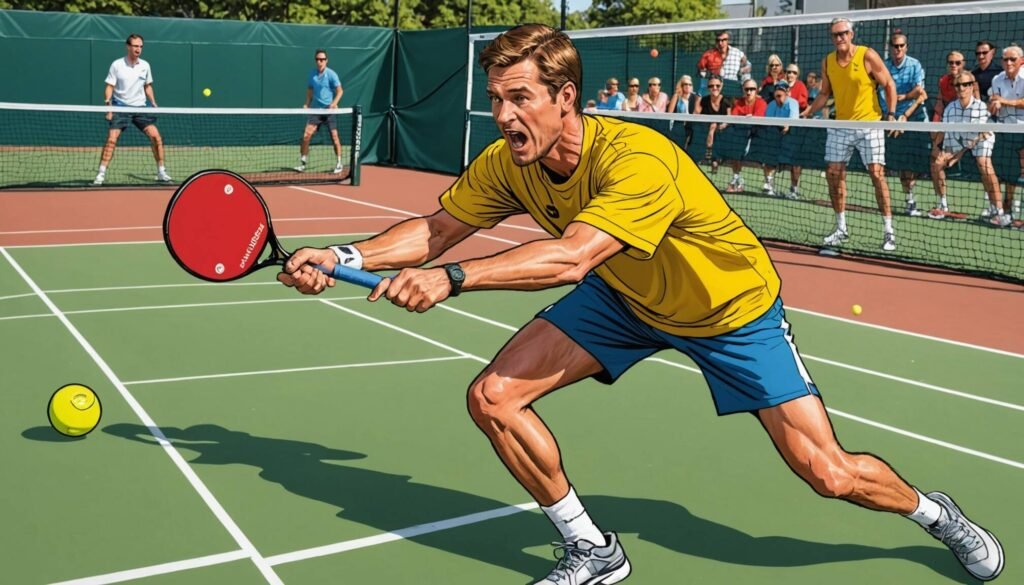
Getting pulled wide at the net is one of those moments in pickleball where everything happens fast and your instincts can work against you. Your opponent sends a dink that drags you way outside the sideline, and suddenly you’re stretched out, off-balance, and scrambling to figure out your next move. Most players make the same mistake in this situation, and it costs them points they should have won.
The wide aggressive dink isn’t just annoying. It’s a strategic weapon designed to force you into a bad decision. When you’re stretched out and uncomfortable, your brain tells you to do something aggressive. Speed the ball up. Rip it cross-court. Make your opponent pay for putting you in this position. But here’s the reality: those aggressive responses are exactly what lead to errors and lost rallies.
Understanding how to handle this situation separates players who survive tough rallies from those who collapse under pressure. The solution isn’t complicated, but it requires you to abandon your instincts and trust a different approach. When you’re pulled wide, the middle of the court becomes your lifeline, not your opponent’s weakness. This counterintuitive strategy works because it prioritizes control over aggression, and that shift in mindset can transform your net game.
Why Your Instincts Fail You When Pulled Wide
When an aggressive dink pulls you outside the sideline, your body is already compromised. You’re leaning, reaching, and trying to maintain balance while also making contact with the ball. In this position, your natural instinct is to do something that feels powerful and decisive. You want to show your opponent that their aggressive shot didn’t intimidate you. This emotional response, while understandable, is rarely the right tactical choice.
Speeding up the ball from a wide position puts you at a massive disadvantage. Your mechanics are already compromised because you’re stretched out and off-balance. Hitting a hard shot requires proper weight transfer, shoulder rotation, and paddle control. None of those elements are present when you’re lunging for a ball outside the sideline. What feels like an aggressive counterattack usually becomes an unforced error that sails long or into the net.
The cross-court shot creates similar problems, even though it seems like the logical play. When you’re already extended to the side, hitting cross-court means rotating your shoulders even more and reaching even farther around the ball. You’re making an already difficult shot even harder. Plus, even if you successfully hit it cross-court, you haven’t actually improved your position. You’re still out wide, your opponent has time to react, and the rally continues with you at a disadvantage.
These instinctive responses share a common flaw: they prioritize winning the point immediately over staying in the rally. When you understand that staying in the rally is often more valuable than going for a winner, the entire strategic picture changes. That’s where the middle shot comes in, and why it’s so effective at neutralizing the wide aggressive dink.
The Middle of the Court Is Your Escape Route
Hitting to the middle when you’re pulled wide seems too simple to work, but it’s exactly that simplicity that makes it so effective. The middle shot solves multiple problems at once, and each advantage compounds to give you a much better chance of staying in the rally and eventually winning the point.
First, the geometry of the shot works in your favor. When you’re standing outside the sideline, the middle of the court is actually closer than the far sideline. You don’t have to reach as far around the ball or rotate your shoulders as much. The angle is already there for you. This reduced physical demand means you can focus on control rather than just making contact, which dramatically improves your accuracy.
Second, the net height difference matters more than most players realize. The net is six inches lower in the middle than it is at the sidelines. When you’re already hitting from a compromised position, that extra margin for error can be the difference between clearing the net and hitting it into the tape. The lower net height means you can hit a softer, more controlled shot and still get the ball safely over.
Third, and most importantly, the middle shot gets you back to neutral. This concept is fundamental to understanding high-level pickleball strategy. You’re not trying to win every point with a single spectacular shot. You’re trying to control the rally and wait for the right opportunity to attack. When you’re pulled wide and off-balance, you don’t have that opportunity. Getting back to neutral means giving yourself and your partner a chance to reset your court position and look for a better attacking opportunity on the next shot.
The middle shot also forces your opponent to move, which changes the dynamic of the rally. They can’t just stand in their comfortable position and wait for your next ball. They have to adjust, shift their weight, and make a decision about who should take the shot. That movement and uncertainty can lead to errors or weak returns that you can capitalize on.
What Not to Do: Common Mistakes That Cost You Points
Understanding what not to do is just as important as knowing the right play. When you’re pulled wide by an aggressive dink, certain responses will consistently get you in trouble. Recognizing these mistakes helps you avoid them in the heat of competition.
The speed-up from a wide position is probably the most common error. It feels right in the moment because it’s aggressive and assertive, but it’s actually a low-percentage play. You’re trying to hit a hard shot from a bad position, and even if you make it, you’re giving your opponent a ball they can easily counter. The speed-up fails because your mechanics are compromised and you don’t have the control needed to place the ball effectively.
The hard cross-court shot is similarly tempting but equally problematic. Even if you manage to hit it, you haven’t solved your positional problem. You’re still out wide, vulnerable to another aggressive dink, and hoping your opponent makes a mistake. That’s not a winning strategy. You’re playing defense and hoping for the best rather than taking control of the rally.
Another mistake is trying to hit a winner when you should be thinking about survival. The mindset shift here is crucial. When you’re in a defensive position, your goal isn’t to end the point immediately. Your goal is to extend the rally until you can get back to an offensive position. Players who understand this concept make fewer errors and win more points over the course of a match.
The philosophy here aligns with broader pickleball strategy principles. Power doesn’t win at higher levels of play. Control, consistency, and patience win. When you’re pulled wide, trying to overpower your opponent rarely works. Playing smart and getting back to neutral almost always does.
Understanding the Mechanics of the Middle Shot
Executing the middle shot correctly requires understanding both the physical mechanics and the tactical intention behind it. This isn’t a complicated shot, but it does require proper technique to be effective consistently.
When you’re pulled wide, your first physical priority is getting your paddle in front of your body. Even though you’re stretched out, you can still use your legs to stay low and maintain some semblance of proper form. Bending your knees and getting low helps you maintain balance and control, which are both essential for hitting an accurate shot.
The paddle angle matters significantly. You want your paddle face slightly open, angled upward enough to lift the ball over the net but not so much that you pop it up for an easy put-away. The goal is a soft, controlled dink that lands in the middle of the court, ideally at your opponent’s feet or just beyond the kitchen line. This forces them to hit up on the next shot, which keeps you in a neutral or slightly advantageous position.
Your arm motion should be compact and controlled. This isn’t a big, sweeping motion. It’s a short, controlled push that uses the angle already created by your body position. Think of it as redirecting the ball rather than generating new power. The ball already has momentum from your opponent’s shot. You’re just guiding it to a different location on the court.
Weight transfer is challenging when you’re pulled wide, but it’s still important. Try to step into the shot if possible, even if it’s just a small step. This helps you maintain balance and gives you a little more control over the direction and pace of the shot. If you can’t step into it, focus on using your core and shoulder rotation to generate the minimal power needed for the shot.
The mental aspect of this shot is equally important. You need to commit to the middle shot before you hit it. If you’re still debating between the middle and cross-court as you’re making contact, you’ll likely hit a weak shot that doesn’t accomplish either goal. Decide early, commit to the middle, and execute with confidence.
How the Middle Shot Changes Rally Dynamics
The immediate tactical benefit of the middle shot is obvious: you stay in the rally. But the deeper strategic implications are what make this shot so powerful at higher levels of play. When you hit the middle after being pulled wide, you fundamentally change the dynamics of the rally in ways that favor you and your partner.
First, you force your opponents to make a decision. When the ball comes to the middle, both opponents have to quickly determine who will take it. This communication and coordination requirement creates opportunities for confusion, hesitation, and errors. Even experienced teams can have momentary lapses when the ball comes up the middle, and those lapses often lead to weak returns or mistakes.
Second, you shift the momentum of the rally. Your opponent just hit an aggressive dink that pulled you wide. They’re expecting you to either make an error or hit a weak cross-court shot that they can attack. When you calmly hit it to the middle instead, you’ve neutralized their aggressive shot and taken back some control of the rally. This psychological shift matters more than many players realize.
Third, you create opportunities for your partner. When you’re pulled wide, your partner should be covering the middle and anticipating what comes next. By hitting to the middle, you’re setting up a situation where your partner might be able to step in and take a more aggressive shot on the next ball. You’re working together as a team rather than trying to solve the problem individually.
The middle shot also allows you to recover your court position. After hitting to the middle, you have time to get back to your proper position at the kitchen line. You’re no longer stretched out wide and vulnerable. You and your partner can reset your spacing and prepare for the next exchange on more equal footing. This doubles strategy of using resets to maintain proper court position is fundamental to winning at higher levels.
The Broader Context: Dinking Strategy in Modern Pickleball
The wide aggressive dink has become more common as the sport has evolved and players have become more sophisticated in their net play. Understanding how to respond to it connects to broader themes in modern dinking technique and strategy.
The fundamental purpose of dinking is to keep the ball low, force your opponent to hit up, and wait for an opportunity to attack. The aggressive dink disrupts this pattern by adding pace and angle to pull you out of position. It’s not trying to win the point outright. It’s trying to create an error or a weak return that can be attacked on the next shot. Understanding this intention helps you formulate the right response.
When you respond with the middle shot, you’re essentially saying that you understand the game being played and you’re not going to take the bait. You’re staying disciplined, keeping the ball low, and waiting for your opportunity. This patience and discipline separate good players from great ones. Anyone can hit hard when they’re in a good position. The real skill is staying composed and making smart decisions when you’re under pressure.
The evolution of dinking strategy has also led to more emphasis on placement and control rather than pure softness. The old-school approach to dinking was to hit it as soft as possible and wait for your opponent to make a mistake. Modern dinking incorporates more variation, including aggressive dinks, held dinks, and directional changes that keep opponents guessing and off-balance.
The middle shot fits perfectly into this modern approach because it’s a tactical response rather than a passive one. You’re not just defending. You’re making a deliberate choice about where to place the ball to give yourself the best chance of staying in the rally and eventually taking control of the point. This active decision-making, even in defensive situations, is what characterizes high-level play.
Practice Makes This Shot Automatic
Understanding the theory behind the middle shot is important, but it won’t help you in a match unless you’ve practiced it enough to make it automatic. When you’re in the middle of a competitive rally, you don’t have time to think through all the reasons why the middle shot is the right choice. You just need to execute it naturally and confidently.
The best way to practice this shot is to recreate the exact scenario you’ll face in matches. Have a partner or coach hit aggressive dinks that pull you wide, and practice responding with the middle shot over and over. Start slowly and focus on technique. Make sure you’re using proper form, maintaining balance, and hitting the ball with control to the middle of the court.
As you get comfortable with the basic mechanics, increase the intensity and pace of the drill. Have your partner hit more aggressive dinks that really stretch you out. Practice from both the forehand and backhand sides, because you’ll face this situation from both angles in matches. Pay attention to how your body feels when you’re stretched out and how you can still maintain enough control to hit an accurate shot.
Incorporate this drill into your regular practice routine. Spend ten to fifteen minutes on it several times a week, and you’ll start to see improvement within a few weeks. The key is consistent repetition. You’re building muscle memory and neural pathways that will activate automatically when you face this situation in a match.
Another valuable practice approach is to play points or games where you specifically focus on this skill. Set up drills where you and your partner practice getting pulled wide and resetting to the middle. Make it competitive by keeping score or creating challenges. The more you practice in game-like situations, the more comfortable you’ll be when it happens in an actual match.
You can also use wall drills to work on the hand-eye coordination and paddle control needed for this shot. Stand at an angle to the wall, hit the ball, and practice controlling it back to specific spots. This solo practice can supplement your on-court work and help you develop the touch and feel needed for precise shot placement.
A Beginner’s Guide to Understanding This Strategy
If you’re relatively new to pickleball or haven’t thought much about strategic shot selection, the concept of hitting to the middle when pulled wide might seem counterintuitive. After all, isn’t the goal to hit the ball away from your opponents? Understanding why this strategy works requires grasping a few fundamental concepts about pickleball strategy and court positioning.
Think of a pickleball rally like a conversation. Sometimes you


