
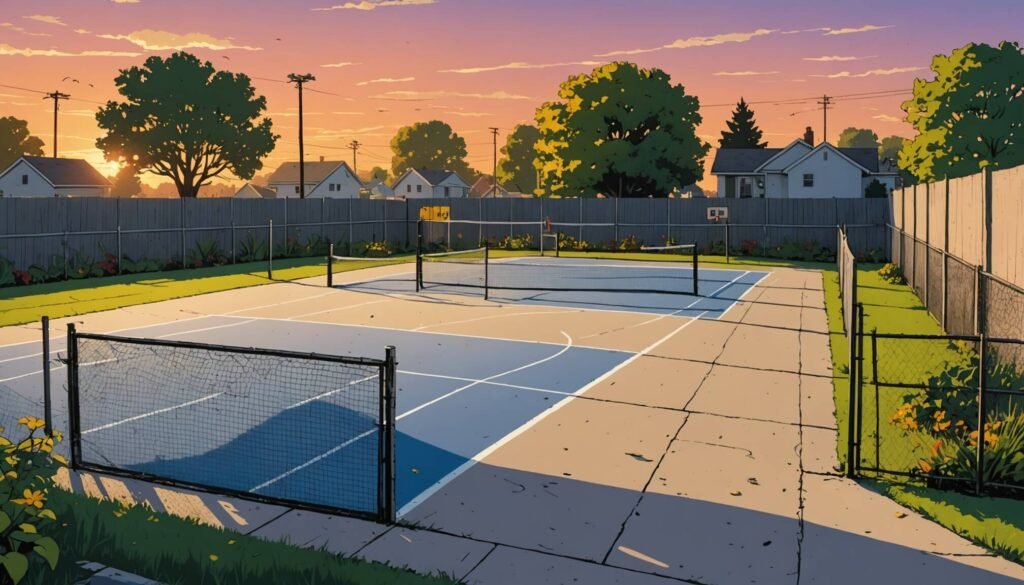
Martinez, California Permanently Closes $1.5 Million Pickleball Courts Due to Noise Complaints
In a decision that has sent shockwaves through the pickleball community, the city council of Martinez, California has voted to permanently shut down pickleball operations at Hidden Valley Sports Courts. This closure comes just over a year after the city invested approximately $1.5 million to convert eight tennis courts into dedicated pickleball facilities. The move represents one of the most dramatic examples yet of how noise concerns continue to plague the sport’s expansion across residential communities in the United States.
The Rise and Fall of Martinez’s Pickleball Courts
The Hidden Valley Sports Courts opened to much fanfare in February 2025, representing a significant investment by the city to meet the growing demand for pickleball facilities. The conversion of eight tennis courts seemed like a straightforward solution to accommodate one of America’s fastest-growing sports. However, what followed was a year of what city officials diplomatically termed “operational challenges,” which ultimately proved insurmountable.
From the moment the courts opened, noise complaints began flooding into city hall. Neighbors living adjacent to the facility reported constant disruption from the distinctive sound of paddle striking ball, amplified by dozens of players using the courts simultaneously throughout the day. The rhythmic popping sound that characterizes pickleball became a source of deep frustration for residents who had previously lived near relatively quiet tennis courts.
The city didn’t simply ignore these complaints. According to the official announcement, Martinez attempted numerous mitigation strategies over the course of the year. City officials implemented designated playing hours to limit early morning and late evening play. They encouraged players to use quieter paddles and balls, posting signage at the facility to promote noise-conscious equipment choices. Staff monitored the courts and worked with the pickleball community to find compromise solutions. Despite these good-faith efforts, the noise problem persisted at levels deemed unacceptable to neighboring residents.
The final nail in the coffin came when the city enlisted an independent acoustical engineer who specializes specifically in pickleball noise issues. This expert’s assessment was definitive and damning: given the courts’ proximity to residential areas, no feasible mitigation measures could adequately address the noise impacts. With this professional opinion in hand, the city council made the difficult decision to close the courts permanently, effective immediately.
A $1.5 Million Question: What Went Wrong?
The most troubling aspect of this situation is the sheer waste of resources. According to local news reports, the conversion project cost approximately $1.5 million in taxpayer funds. That’s a substantial investment for any municipality, particularly for a facility that operated for barely a year before permanent closure. This raises serious questions about the planning and approval process that preceded construction.
The situation suggests a fundamental disconnect somewhere in the decision-making chain. Either city planners and officials didn’t fully understand the acoustic characteristics of outdoor pickleball when they approved the project, or they underestimated just how popular and heavily used the courts would become once opened. Perhaps they assumed the noise levels would be comparable to tennis, which produces far less acoustic disturbance. Or maybe they believed that the distance between the courts and neighboring homes would provide sufficient sound buffering, only to discover that pickleball’s distinctive sharp crack carries much farther than anticipated.
It’s also possible that the city failed to conduct adequate community outreach before breaking ground. Had they held public hearings or conducted acoustic modeling that included input from nearby residents, the concerns might have surfaced before $1.5 million was committed to a doomed project. The lack of apparent due diligence is particularly puzzling given that pickleball noise disputes have made headlines across the country for several years now. This wasn’t an unknown issue or an unforeseeable problem.
Mayor Brianne Zorn acknowledged the emotional toll the decision has taken on the community, stating, “We understand that this has been a difficult and emotional issue for many in our community.” That statement, while diplomatic, barely scratches the surface of the frustration likely felt by local pickleball players who saw their new courts yanked away, and by taxpayers who watched $1.5 million of public funds essentially thrown away on a facility that couldn’t fulfill its intended purpose.
Not an Isolated Incident in California
Martinez’s predicament isn’t happening in a vacuum. California has become something of a ground zero for pickleball noise conflicts, with multiple communities grappling with similar challenges. Most notably, the coastal town of Carmel-by-the-Sea made national headlines when it became California’s first municipality to permanently ban outdoor pickleball entirely. That decision came after years of heated debate between pickleball enthusiasts and residents concerned about noise pollution.
The pattern emerging across California and other states suggests that pickleball’s explosive growth has outpaced communities’ ability to thoughtfully integrate the sport into existing recreational infrastructure. Cities are rushing to meet demand for courts without fully accounting for the acoustic realities of the game. Tennis courts seem like logical conversion candidates because they’re already the right size and have appropriate fencing and surfaces. But tennis and pickleball produce dramatically different sound profiles, and what works acoustically for one sport doesn’t necessarily work for the other.
These repeated failures point to a broader need within the pickleball community and among municipal planners for better education about acoustic impacts and proven mitigation strategies. Some communities have successfully integrated pickleball courts into residential areas by incorporating sound barriers, selecting court locations with adequate distance from homes, limiting operating hours through permit systems, or building facilities specifically designed with acoustic dampening features. Martinez’s experience demonstrates what happens when these considerations are overlooked or inadequately addressed during the planning phase.
Understanding the Pickleball Noise Problem
For those unfamiliar with pickleball or wondering why it generates so much more noise than tennis, the explanation lies in the equipment and the nature of play. Pickleball uses a hard plastic ball with holes, similar to a wiffle ball, and solid-faced paddles typically made from composite materials or wood. When the paddle strikes the ball, it produces a sharp, percussive “pop” sound that carries much farther than the relatively muffled thud of a tennis ball hitting strings.
Moreover, pickleball courts are significantly smaller than tennis courts, and the game moves faster with more frequent ball-paddle contacts. A single tennis court converted to pickleball typically becomes two or even four pickleball courts. This means you can have four times as many players in the same space, each generating that distinctive popping sound dozens of times per minute. When you multiply that across eight courts, as Martinez did, you’re creating a near-constant acoustic environment that can be overwhelming for anyone within earshot.
The frequency and pitch of pickleball’s characteristic sound also make it particularly intrusive. It’s not just about volume, though that’s certainly a factor. The sharp, repetitive nature of the sound makes it difficult for the human brain to tune out or habituate to, unlike more consistent background noises. For neighbors trying to work from home, enjoy their yards, or simply relax indoors with windows open, the constant pop-pop-pop becomes an inescapable irritant.
This isn’t to suggest that pickleball shouldn’t exist or that all outdoor courts are problematic. Rather, it highlights the importance of thoughtful site selection and acoustic planning. Courts located in industrial areas, far from residential zones, or equipped with proper sound barriers can operate without generating complaints. The problem arises when courts are situated too close to homes without adequate mitigation, as appears to have happened in Martinez.
The Broader Implications for Pickleball’s Growth
The Martinez closure carries implications that extend far beyond one California town. As pickleball continues its meteoric rise in popularity, municipalities across the United States are facing pressure to provide more courts. Many are looking at Martinez’s expensive mistake as a cautionary tale about what not to do. The closure may make other cities more hesitant to invest in pickleball infrastructure, particularly in areas where residential opposition might emerge.
This hesitation could slow the sport’s growth in certain markets or push development toward private facilities rather than public courts. While private clubs can more easily control noise through membership agreements, limited hours, and premium locations, they also create economic barriers that prevent pickleball from remaining accessible to players of all income levels. One of the sport’s great strengths has been its accessibility, with free public courts allowing anyone to participate regardless of financial means.
The situation also underscores tensions within communities between different recreational user groups and between active facility users and nearby residents. Not everyone who lives near a park wants that park to host high-intensity activities with acoustic impacts. Finding balance between providing recreational opportunities and maintaining neighborhood quality of life requires careful planning, genuine community engagement, and sometimes making difficult choices about where certain activities can and cannot be located.
Moving Forward: Lessons from a Failed Investment
What can other communities learn from Martinez’s costly experience? First and foremost, acoustic assessment should be mandatory before any pickleball court construction project near residential areas. This assessment should be conducted by qualified professionals who understand pickleball’s specific noise characteristics and can model how sound will travel from proposed court locations. The cost of this assessment, while not trivial, pales in comparison to the $1.5 million Martinez wasted on courts that couldn’t remain open.
Second, community engagement must happen early and genuinely. Residents living near proposed facilities should have meaningful opportunities to voice concerns before projects are approved, not after courts are already built. These conversations may be difficult, and they may result in projects being scaled back, relocated, or cancelled, but that’s far preferable to investing millions only to face insurmountable opposition post-construction.
Third, cities need to think creatively about court locations. Repurposing existing tennis courts near homes isn’t always the answer, even when it seems economically efficient. Sometimes the better solution is identifying new locations farther from residential areas, even if that requires more infrastructure investment. Industrial parks, commercial zones, and areas near highways where ambient noise is already elevated can all serve as viable locations that minimize conflicts with neighbors.
Fourth, when courts are built near homes, proper mitigation must be incorporated from the beginning. This might include sound barriers, strategic landscaping, directional considerations that minimize noise toward residential areas, surface materials that reduce acoustic reflection, and firm limits on operating hours. These measures cost money upfront but can prevent far more expensive problems down the road.
The Human Cost Beyond the Financial
While the $1.5 million price tag dominates headlines, the human dimensions of this story shouldn’t be overlooked. Local pickleball players who were thrilled to finally have dedicated facilities in their community now find themselves without a place to play. Many likely organized their recreation schedules, social connections, and even exercise routines around access to these courts. The closure represents a genuine loss for these community members.
At the same time, the neighbors who complained about noise weren’t being unreasonable troublemakers. They were residents who found their home environments significantly degraded by acoustic pollution they hadn’t anticipated and didn’t consent to. Many likely supported parks and recreation in principle but found the reality of living next to heavily-used pickleball courts unbearable. Their concerns were validated by an independent expert, lending credibility to complaints that might otherwise be dismissed as NIMBYism.
City officials, too, find themselves in a no-win situation. They made a decision they believed would benefit the community by providing recreational facilities for a growing sport. When that decision proved problematic, they attempted multiple solutions before ultimately accepting that the situation was untenable. The closure will likely have political ramifications, with officials facing criticism both from pickleball advocates disappointed by the shutdown and from fiscal conservatives outraged by the wasted investment.
Looking Ahead
The Hidden Valley Sports Courts will remain closed to pickleball permanently, but the facility itself may eventually find new purpose. The city has not announced plans for the courts, but possibilities might include reconverting them back to tennis, repurposing them for other lower-noise activities, or potentially even removing them entirely. Whatever happens, the facility stands as a very expensive monument to the importance of thorough planning in recreational infrastructure development.
For the pickleball community, Martinez represents another chapter in the ongoing conversation about the sport’s growth and its integration into communities. The noise issue remains pickleball’s most significant expansion challenge, and until the community develops and promotes comprehensive solutions, stories like Martinez will continue to emerge. Some manufacturers are working on quieter equipment, including foam balls and paddles designed to reduce acoustic output. Whether such equipment will gain widespread acceptance among players who prefer traditional gear remains to be seen.
The Martinez closure also raises questions about liability and accountability. Should someone be held responsible for the wasted $1.5 million? Did city officials or planners fail in their due diligence? Were there warnings that went unheeded? These questions may occupy Martinez’s civic discourse for years to come, particularly if similar projects are proposed in the future.
Ultimately, the Martinez pickleball courts closure serves as a sobering reminder that good intentions and significant investment don’t guarantee successful outcomes. It demonstrates the critical importance of comprehensive planning, professional assessment, and genuine community engagement before committing public resources to recreational projects. Other cities would do well to study Martinez’s experience carefully and ensure they don’t repeat the same expensive mistakes. The future of pickleball’s growth may depend on communities learning these lessons and finding ways to provide court access while respecting neighborhood quality of life.


