
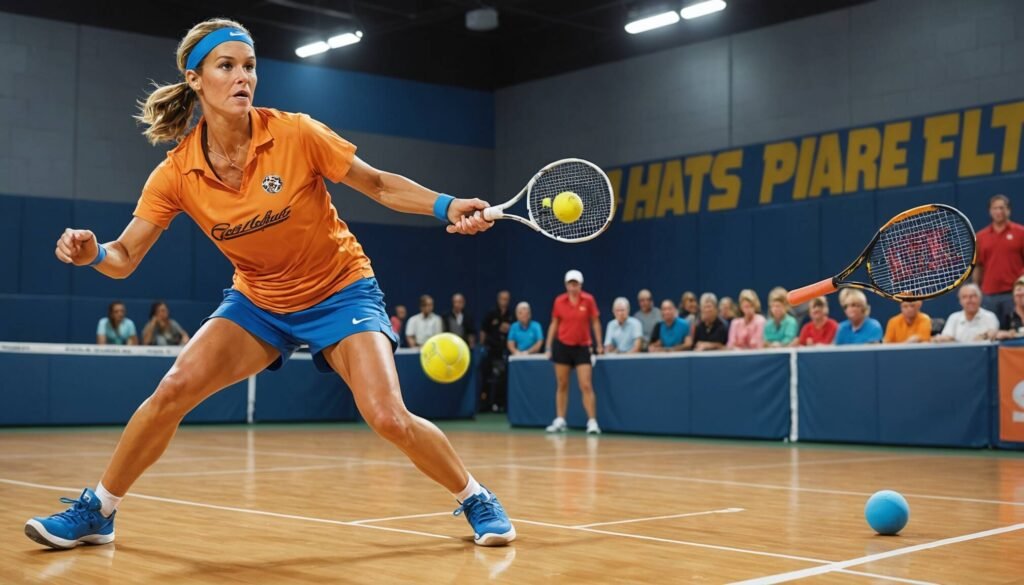
MLP Dallas Event Preview: Everything You Need to Know About the First Stop of the 2026 Season
The 2026 Major League Pickleball season is about to kick off in Dallas, and the excitement surrounding this first event is palpable throughout the pickleball community. After months of roster moves, draft drama, and anticipation, we’re finally about to see how the new format and rules changes will play out on the court. The Pickler Universe facility in Dallas will host 30 matches over four days, from Friday, May 22 through Monday, May 25, marking a significant moment not just for the teams competing but for the league’s evolution as a whole.
What makes this event particularly intriguing is that Major League Pickleball has completely revamped its approach to the regular season. After several years of tweaking and adjusting, the league believes it has finally found the right formula. The stakes are higher than ever before, with every match carrying substantial weight for regular season standings. Unlike previous years where teams could afford a slow start, this new structure means that from the very first ball struck in Dallas, championship aspirations could be made or broken.
The indoor facility setting adds another layer of complexity to the competition. Indoor pickleball plays differently than outdoor, with factors like lighting, air circulation, and court surface all contributing to unique conditions that favor certain playing styles. Teams that can adapt quickly to these conditions while executing their game plans under the pressure of this new format will have a significant advantage as the weekend unfolds.
Understanding the New MLP Format for 2026
For those who might be catching Major League Pickleball for the first time or who haven’t been following the offseason changes closely, it’s worth taking a moment to understand what makes this year fundamentally different. The league has undergone substantial changes that affect everything from how teams are structured to how champions are ultimately crowned.
First and most significantly, MLP now operates with a 20-team Premier Level, having dissolved the Challenger Level entirely. This consolidation means that every team competing is theoretically among the elite, though as we’ll discuss later, questions about parity remain. The decision to eliminate the two-tier system reflects MLP’s confidence in its growth and its desire to present a more streamlined, prestigious product to fans and broadcast partners.
The new rules for 2026 also emphasize full roster usage and have restructured how event winners are determined. Teams now must strategically deploy all their players throughout an event, preventing the previous strategy of relying heavily on a team’s top two or three players while barely using others. This change should theoretically increase the importance of roster depth and make general manager decisions during the draft and trade period even more critical.
The pool play format for Dallas divides the competing teams into two groups. Each team plays every other team in their pool once during the Friday through Sunday stretch. Then on Monday, the top four teams from each pool face their counterpart from the other pool—first place plays first place, second plays second, and so on. Teams finishing fifth or lower in pool play don’t compete on Monday at all, making every pool play match crucial. Regular season points are awarded based on final placement, with first place earning 100 points down to eleventh place earning zero points. These points accumulate across all regular season events and determine playoff seeding.
The Jorja Johnson Storyline: A Player Facing Her Former Team
One of the most compelling narratives heading into Dallas centers on Jorja Johnson and her matchup against the Dallas Flash. Johnson had been a cornerstone of the Flash for two consecutive years, helping establish the team’s identity and contributing to their competitive success. The relationship seemed stable, almost permanent in a league where roster volatility is the norm rather than the exception.
However, in a move that shocked many observers, Dallas decided not to keep Johnson on their roster heading into this season. The team’s apparent strategy was to drop her with the expectation that they could simply draft her again, perhaps at a lower salary or with more favorable contract terms. It was a calculated gamble that backfired spectacularly. Ryan Harwood and the New Jersey 5s recognized both Johnson’s talent and the opportunity, swooping in to draft her for a substantial $800,000.
Now Johnson finds herself paired with Anna Leigh Waters, one of the most dominant players in the sport, on a 5s roster that looks formidable on paper. The storyline writes itself—a spurned former star returning to face the team that let her go, now with something to prove and the backing of a franchise that clearly values her contributions. The psychological dimension of this matchup adds intrigue beyond just the technical aspects of the competition.
Making the situation even more interesting is that Dallas has significantly retooled their roster since making the decision to part ways with Johnson. They traded for Brooke Buckner and picked up Albie Huang through waivers just this past weekend, moves clearly designed to bolster their depth and address the gap Johnson’s departure created. Whether these moves prove sufficient or whether Dallas will regret their decision will begin to become clear in their pool play matchup against the New Jersey squad.
What This Means for Fans New to MLP
If you’re wondering why a single player move matters so much, it helps to understand the structure of Major League Pickleball. Unlike traditional sports where teams have large rosters, MLP teams consist of just six players—typically three women and three men who compete in various combinations throughout an event. Losing even one quality player can significantly impact a team’s competitive balance and depth. When that player is someone of Johnson’s caliber, and when she ends up on a rival team you’ll face in competition, the impact is magnified. Add in the human element of a player wanting to prove her former team wrong, and you have all the ingredients for compelling sports drama.
The Columbus Sliders: Defending Champions Without Their Star
While the Johnson-Dallas storyline captures attention for its interpersonal drama, the Columbus Sliders’ situation heading into Dallas represents a different kind of challenge—defending a championship without a key piece. The Sliders are the reigning MLP champions, having captured the title with a roster that featured Parris Todd as a crucial component. However, Todd will be watching from the sidelines in Dallas, serving a suspension that will cost the Sliders one of their most reliable players.
The suspension stems from an incident that occurred five months ago when Todd was fined $50,000 and suspended for two events after attending an unapproved event in Japan. In the fast-moving world of professional pickleball, five months feels like an eternity. The sport has evolved, players have improved, and new strategies have emerged. But regardless of how much time has passed, the rules are clear, and Todd’s absence from Dallas creates a significant void for Columbus to fill.
To address this gap, the Sliders will be deploying two newly acquired players on the women’s side: Alix Truong and Danni-Elle Townsend. Truong was acquired through a trade after the draft, while Townsend was brought in to add depth. Both are talented players in their own right, but asking them to step in and replicate the championship-level performance that Todd provided is a tall order, especially in their first event with the team chemistry still developing.
The Sliders are running back the majority of their championship core with Parris Todd (when she returns after Dallas), Andrei Daescu, and CJ Klinger, while also adding Alex Crum to complement Townsend and Truong. On paper, it’s still a formidable roster. But championship teams often rely on intangible factors like chemistry, trust, and established communication patterns—all things that take time to develop. Whether Columbus can maintain their championship form while integrating new players and compensating for Todd’s temporary absence will be one of the key questions answered in Dallas.
The Parity Problem: Will Competition Be Balanced?
A persistent criticism of Major League Pickleball in recent seasons has been the lack of competitive balance across teams. In both pools for the Dallas event, analysts and pundits have identified approximately three teams that appear capable of contending for the title, while the remaining five teams in each pool are generally viewed as middling or unlikely to compete at the highest level. This disparity raises important questions about the long-term health and entertainment value of the league.
From a pure competition standpoint, the gap between the strongest and weakest teams can lead to predictable outcomes and matches that lack drama. While upsets certainly happen and are celebrated when they do, a league where the same three or four teams consistently dominate may struggle to build broad-based fan engagement across all markets. Fans in cities with weaker teams may lose interest if their squad has little realistic chance of competing for championships.
However, there’s an alternative perspective to consider. The pundits and power rankings that project these competitive disparities are based on player track records, roster composition, and analytical assessments. They don’t account for the unpredictable nature of sports—the surprise breakout performances, the chemistry that clicks unexpectedly, the strategic innovations that catch opponents off-guard. Some of the teams currently viewed as “lesser” may prove far more competitive than anticipated once actual competition begins.
The new format for 2026 might also help address parity concerns organically. By requiring full roster usage and emphasizing depth, teams that have invested wisely in their entire six-player roster may be able to compete more effectively with squads that have elite top-end talent but less depth. Additionally, the pool play structure means that even teams not expected to win the event can still have meaningful goals—making it to Monday’s competition, finishing in the top half of their pool, or securing valuable regular season points.
Breaking Down the Pool Structure and Competition Format
The pool assignments for Dallas create two distinct competitive environments, each with its own dynamics and storylines. Pool A features the Columbus Sliders, Dallas Flash, New Jersey 5s, Orlando Squeeze, and Phoenix Flames. Pool B consists of the Bay Area Breakers, Carolina Hogs, LA Mad Drops, St. Louis Shock, Texas Ranchers, and Utah Black Diamonds. The uneven pool sizes—five teams in Pool A versus six in Pool B—mean slightly different competitive dynamics in each group.
In Pool A, the smaller size means each team plays four matches during pool play, one against each opponent. This creates a more compact schedule but also means each individual match carries slightly more weight in determining final pool standings. A single upset or unexpected result can more dramatically shift the standings. The teams in this pool include several championship contenders, most notably the defending champion Sliders and the star-powered New Jersey 5s featuring Anna Leigh Waters. The Dallas Flash playing at home adds local interest, while Orlando and Phoenix will be working to prove they belong in the conversation with the pool’s elite teams.
Pool B’s six-team structure means each squad faces five pool play opponents, creating a fuller body of work upon which to judge teams before Monday’s placement matches. This pool features the LA Mad Drops with Ben Johns leading the way, one of the most recognizable names in pickleball. The Bay Area Breakers, St. Louis Shock, and Utah Black Diamonds all bring competitive rosters, while Carolina and Texas will be looking to exceed expectations and make Monday’s final day of competition.
The Monday format is elegant in its simplicity and fairness. Rather than traditional playoffs or brackets, teams are matched based on their pool play performance. The first-place team from Pool A faces the first-place team from Pool B to determine the event winner and award the maximum 100 regular season points. Second-place teams face each other for third place overall and associated points, and so on down to fourth place. This structure means every team is playing for something meaningful—you want to win your pool to face the other pool’s winner, but even if you can’t win, finishing second is significantly better than third, which is better than fourth.
Teams finishing fifth or worse in pool play don’t compete on Monday at all, which serves as a harsh reality check and strong motivation during pool play. It’s not enough to show up and compete—you must perform well enough to finish in the top four of your pool or your event is over early, you earn minimal (or zero) regular season points, and you head home having failed to advance. This structure eliminates the possibility of “coasting” through pool play, as every match matters for final placement.
Broadcast Schedule and Accessibility
One of Major League Pickleball’s key growth strategies has been securing broadcast partnerships with established sports networks, bringing the sport to audiences who might not actively seek it out but could become fans if exposed to it. The Dallas event features an extensive broadcast schedule across multiple platforms, making it accessible to fans regardless of their preferred viewing method.
All 30 matches will be available on Pickleballtv and the Pickleballtv app, ensuring that dedicated pickleball fans who want comprehensive coverage can access every match. This is particularly valuable for fans following specific teams or wanting to track the full competitive narrative rather than just highlight matches.
Beyond the streaming coverage, major matches will air on traditional television networks. FS1 will carry exclusive broadcasts on both Saturday and Sunday evening, featuring marquee matchups including Dallas versus New Jersey on Saturday night. These prime-time slots represent significant exposure for the sport, placing pickleball in direct competition with other sporting events for viewer attention. The Tennis Channel will provide extensive coverage on Sunday and Monday, appropriate given the racquet sport connection and that network’s existing audience of fans who appreciate technical, strategic competition.
Perhaps most intriguing is the MSG Network coverage on Sunday, running from noon to 6 PM Eastern Time. MSG Network has a strong presence in the New York metropolitan area, which could provide substantial local interest given the New Jersey 5s’ participation in the event. Having regional sports networks involved in MLP coverage represents an important growth avenue, particularly if teams can build strong local followings in their home markets.
The event running Friday through Monday is unusual for MLP this season, with most events scheduled for Thursday through Sunday. The adjustment was made to accommodate the Memorial Day holiday on Monday, recognizing that many potential viewers might have holiday time available to watch. It’s a smart scheduling decision that demonstrates awareness of audience availability and maximizes the potential viewership for the crucial Monday placement matches.
Team-by-Team Analysis: Pool A
Looking at Pool A more closely, each team brings unique strengths, weaknesses, and storylines to Dallas. The Columbus Sliders, even without Parris Todd, feature a roster with championship experience and proven ability to perform under pressure. Andrei Daescu provides consistent excellence, CJ Klinger brings competitive fire, and the additions of Danni-Elle Townsend, Alex Crum, and Alix Truong give them the depth required under the new rules. The question is whether they can maintain their championship identity while integrating new players and compensating for Todd’s absence.
The Dallas Flash benefit from home court advantage and crowd support, which can provide meaningful energy in close matches. JW Johnson is an elite-level talent, and the addition of Hurricane Tyra Black gives them star power. Augie Ge brings experience and skill, while the recent acquisitions of Brooke Buckner, Ivan Jakovljevic, and Albie Huang suggest a team actively working to improve and address perceived weaknesses. Their roster moves show ambition, but whether the pieces fit together cohesively will determine their success.
The New Jersey 5s may have the highest ceiling in Pool A, if not the entire event. Anna Leigh Waters is arguably the best women’s player in the world, and pairing her with Jorja Johnson creates a formidable women’s duo. Will Howells and Noe Khlif provide solid men’s options, while Martin Emmrich and Lina Padigemaite add depth. The 5s’ willingness to spend $800,000 on Johnson demonstrates organizational commitment to winning, and their roster construction suggests they have championship aspirations.
The Orlando Squeeze feature Federico Staksrud and Lacy Schneemann as their marquee players, both of whom have shown flashes of elite-level play. Jack Sock brings name recognition from his tennis career along with legitimate pickleball skills that have developed impressively. Milan


