The Complete Guide to the Backhand Flick in Pickleball: Understanding Flick vs. Roll
Stop blending your backhand shots into one confused motion. The backhand flick and backhand roll are two fundamentally different weapons in pickleball, each with distinct purposes, mechanics, and strategic applications. Most players either muddle them together or struggle to know which shot to deploy in any given moment. Understanding the clear distinction between these two shots will transform your backhand attacks into cleaner, more controlled, and significantly more effective point-winning tools.
What’s the Real Difference Between the Backhand Flick and the Roll?
The backhand flick and backhand roll represent opposite ends of the attacking spectrum, and recognizing this distinction is fundamental to developing a complete backhand game. The backhand roll serves as your stable, controlled option. It’s a compact motion where the paddle performs most of the work rather than your arm or wrist. You’re brushing underneath the ball, creating spin and depth without explosive power. Think of the roll as your setup shot, the one that maintains rallies and positions you for the next attacking opportunity.
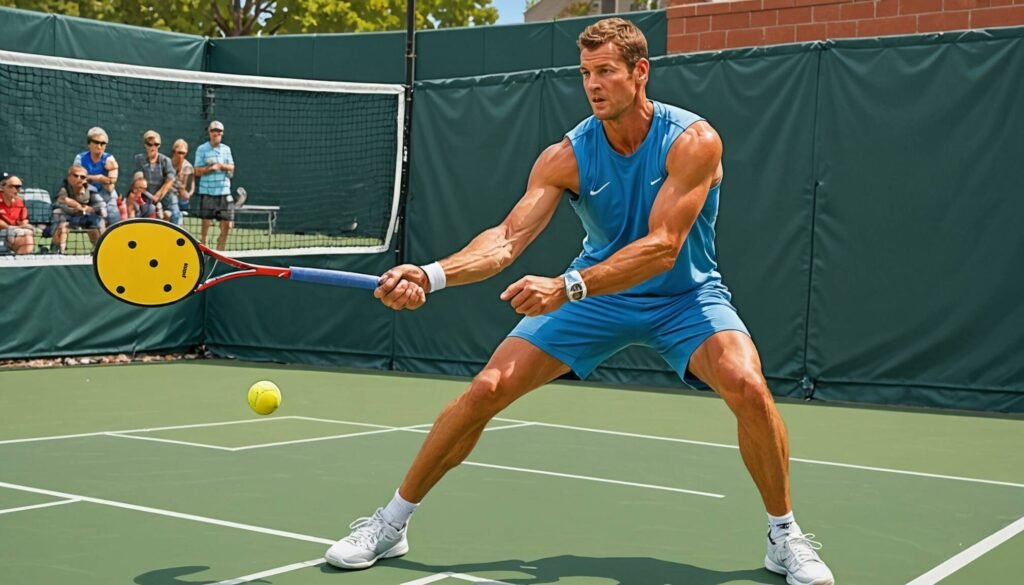
The backhand flick, by contrast, functions as your primary attacking weapon. It delivers velocity, acceleration, and clear offensive intent. You’re incorporating deliberate wrist action, similar to flicking a frisbee, to generate pace while maintaining control. The flick is specifically designed to win points outright or force your opponent into a defensive scramble.
Renowned pickleball coach Cori Elliott breaks down this distinction with exceptional clarity in her coaching series. She explains that confusion arises when players attempt to execute both mechanics simultaneously, resulting in inconsistent, uncontrollable shots. “You’re kind of like combining both of them,” she tells her student Yanni. “So the problem with that is like obviously you’re probably not controlling where the ball goes.”
This mechanical confusion isn’t just a beginner problem. Intermediate and even advanced players frequently struggle with distinguishing these shots under pressure. The roll demands patience and precision. The flick requires aggression and commitment. Attempting to split the difference produces neither outcome effectively.
Why Your Backhand Roll Feels So Inconsistent
Most players struggle with the backhand roll for three primary reasons. First, they’re not bending their knees sufficiently. Second, their paddle tip positioning is incorrect before contact. Third, they’re using excessive wrist action, which introduces instability into what should be a stable, repeatable motion.
The solution begins with your ready position. Your paddle should be held at chest height with the tip angled slightly downward. When the ball approaches, drop your paddle down at an angle and come up from underneath the ball. You’re not coming over it or hitting down on it. You’re brushing under it with a compact, controlled motion.
This approach mirrors the same compact body mechanics that separate controlled pickleball shot technique from wild, inconsistent swings. The more you allow the ball to drop into your optimal strike zone, the more effectively you can come under it without breaking your wrist. This creates the topspin and control necessary for a dependable backhand roll.
Your body positioning matters tremendously. Stay lower through the contact point. Engage your core and shoulders to generate power rather than relying on your arm. Your non-dominant hand can extend slightly to help you reach through the court and add depth. The paddle must remain in front of your body throughout the entire motion. Understanding proper body rotation is essential to generating effortless power on the roll without sacrificing control.
The backhand roll isn’t flashy, but it’s foundational. Players who master this shot develop a consistent baseline from which to launch their attacks. Without a reliable roll, your backhand becomes one-dimensional and predictable.
How to Execute a Backhand Flick That Actually Wins Points
The backhand flick requires a completely different mindset. You’re not trying to be safe or conservative. You’re trying to be aggressive and finish points. Start in the same ready position as the roll, but this time you’re going to dip the paddle down and hold it there momentarily. Then you’re going to move forward, and as you do, your paddle closes slightly.
This attacking mindset separates players who understand the dos and don’ts of attacking from those who consistently pop up easy balls for their opponents. The key technical element is stopping your paddle in front of you with velocity. You’re not following through wildly across your body. You’re controlling the finish position.
Elliott describes the motion with perfect clarity: “Chuck the deck of cards. Chuck and stop.” That’s the motion. Quick, explosive, and controlled. The wrist action on the flick is intentional and purposeful. You’re using it to create spin and pace, similar to how you’d flick a frisbee. But it’s not a wild, uncontrolled motion. It’s compact and deliberate.
The paddle stays in front of your body, and you’re aiming for a specific target on the court. Players who have already mastered their forehand flick mechanics will recognize this same “set and stop” principle applied to the backhand side.
One critical detail that players frequently overlook: keep your feet grounded. Don’t rise up on one leg or allow your body to drift upward during contact. Stay on your toes, engage your core and shoulders, and let your body do the work. Your paddle is simply the tool. Your body is the engine driving the shot.
Those who’ve studied how to develop faster hands in pickleball understand that compact, grounded footwork is absolutely non-negotiable for maintaining shot control at high speeds.
When Should You Actually Use Each Backhand Shot?
This is where genuine game sense enters the equation. The backhand roll is your default option when you’re in a neutral or defensive position. You’re working to keep the ball deep, create spin, and set up your next shot. It’s the shot you execute when you’re not yet ready to attack or when the situation doesn’t present a clear offensive opportunity.
Knowing when to remain patient versus when to pull the trigger is precisely what separates smart shot decisions in advanced pickleball from impulsive, low-percentage attacks.
The backhand flick is reserved for moments when you identify a genuine opportunity. Your opponent has delivered a soft ball, and you can take it early and aggressively. You’re attempting to win the point outright or at minimum force them into a weak, defensive response. This is your attacking option, and it aligns perfectly with how top players attack the right spots on their opponents.
Elliott articulates this distinction with precision: “The roll is a little more stagnant in terms of the motion. The flick, you’re going to actually kind of use a little bit of the wrist.” The roll prioritizes consistency and control. The flick emphasizes aggression and pace.
Understanding when to deploy each shot transforms your backhand from a liability into a strategic weapon. Players who have internalized the backhand decision tree at the kitchen rarely second-guess their shot selection because they’ve developed clear criteria for each situation.
Understanding the Backhand Flick for Beginners
If you’re relatively new to pickleball or still developing your backhand skills, the distinction between the flick and roll might seem overly technical at first. Here’s the simplified version: the backhand roll is your safe, consistent shot that keeps you in the point. The backhand flick is your aggressive attacking shot that tries to win the point.
Think of it like driving a car. The roll is like maintaining a steady speed on the highway. You’re in control, nothing dramatic is happening, and you’re getting where you need to go reliably. The flick is like accelerating to pass another vehicle. You’re making a decisive move with clear intent, and you’re committing to that action.
The reason these shots matter is that pickleball at every level rewards players who can vary their pace and shot selection. If you only have one backhand shot, opponents can predict what’s coming and position themselves accordingly. When you develop both the roll and the flick, you become unpredictable and much harder to defend against.
For beginners, the recommendation is simple: master the roll first. Get comfortable with the compact motion, the feeling of brushing under the ball, and the consistency of keeping balls deep. Once that foundation is solid, begin experimenting with the flick in practice situations. Don’t try to learn both simultaneously, as this leads to the exact mechanical confusion that Elliott identifies in her coaching.
The backhand flick works because it converts what would otherwise be a neutral ball into an offensive weapon. It’s the same mechanics behind the set and snap technique that professionals use to destroy speed-ups and initiate attacks at the kitchen line. When you can read an opponent’s soft return and respond with a quick, controlled flick, you compress their reaction time dramatically. That’s the entire point of the shot.
The Common Mistakes That Sabotage Your Backhand
Most players make the same errors repeatedly, and these mistakes become ingrained habits that are difficult to break. On the backhand roll, players typically don’t bend their knees enough, which severely limits their ability to get under the ball. They position their paddle tip too high before contact, forcing them to come over the ball instead of brushing underneath it. They use excessive wrist movement on what should be a stable, paddle-driven shot, creating inconsistency in both direction and depth.
These are the same stubborn habits that cost players matches at every competitive level. Small technical flaws compound over time, becoming significant weaknesses that opponents can exploit.
On the backhand flick, the mistake pattern often inverts. Players don’t use enough intentional wrist action, or they fail to stop the paddle with velocity. They either follow through too much, losing control of the shot’s placement, or they don’t commit fully to the aggressive motion, producing a weak attack that’s easily countered.
The solution requires deliberate, focused practice. Hit backhand rolls until the motion becomes automatic and your paddle does the work while your wrist stays relaxed. Then practice flicks with clear intention, focusing on the explosive yet controlled motion that Elliott describes.
If you’re uncertain where to begin, simple wall drills represent one of the fastest methods to groove these mechanics without requiring a practice partner. Wall work allows you to focus exclusively on your technique without the distraction of an opponent or the pressure of keeping score.
Another common error involves trying to hit these shots while moving backward or off-balance. Both the roll and the flick require stable positioning and proper weight transfer. When you’re caught moving in the wrong direction or leaning away from the shot, even perfect paddle mechanics can’t compensate for poor body position.
How to Know If Your Backhand Mechanics Are Right
When your backhand roll is functioning correctly, it feels rhythmic and compact. The ball travels deep with topspin. You’re not consciously thinking about your wrist or your arm. You’re simply allowing the paddle to do its work. Elliott describes it perfectly: “Looks real rhythmic. Looks real compact.”
When your backhand flick is properly dialed in, you’re consistently hitting your intended targets. The ball has pace and control simultaneously. You’re not surprised by where the ball lands. You meant to hit it there. You’re finishing with velocity, and the motion feels explosive yet controlled.
Players who’ve studied wrist lag in pickleball will recognize this feeling as the snap point where power and precision converge. It’s not about muscling the ball. It’s about efficient mechanics producing maximum effect.
The biggest indicator that you’ve mastered these shots? Your execution feels consistent. You’re not wondering whether the ball will clear the net or where it might land. You know what you’re doing, and your body executes the motion identically each time. That kind of shot-making consistency doesn’t happen by accident. It’s the result of understanding correct mechanics and reinforcing them through repetitive practice.
Video analysis can be incredibly helpful here. Record yourself hitting both shots and compare your mechanics to professional players or quality instructional content. Look for the key positions: paddle tip angle at setup, knee bend at contact, wrist position throughout the motion, and finish position.
Building Consistency Into Your Backhand Game
The path to backhand mastery follows a straightforward progression: understand the fundamental difference between the shots, practice each one separately with focused intention, and then develop the decision-making skills to deploy each shot appropriately during match play. Don’t attempt to combine them. Don’t try to execute both mechanics simultaneously.
Master the roll first, establishing a foundation of consistency and control. Then add the backhand flick to your arsenal as an attacking option. Elliott’s coaching approach demonstrates this progression clearly. She isolates each shot, methodically breaks down the mechanics, and has her student practice with specific intention. Only after the fundamentals are solidly established does she progress to game situations and advanced shot selection.
Pairing this kind of focused, isolated drilling with the 12 drills you need to play your best pickleball will dramatically accelerate your progress on both the roll and the flick.
Your backhand doesn’t have to remain a weakness or a source of uncertainty. With correct mechanics and the proper mindset, it transforms into one of your most reliable and effective weapons. The backhand flick and roll are two distinct tools with different applications. Learn to use them both appropriately, and your overall game transforms.
The players who advance most rapidly are those who resist the temptation to rush the learning process. They understand that building a complete backhand game requires patience, repetition, and a willingness to isolate individual skills before integrating them into match play. They embrace the deliberate practice necessary to make these shots automatic under pressure.
Frequently Asked Questions
What is the difference between a backhand flick and a backhand roll?
The backhand flick is an attacking motion that uses intentional wrist action to generate velocity and pace, designed to win points or force defensive responses. The backhand roll is a compact, controlled


