How to Attack Dead Dinks in Pickleball: Master the Strike Zone and Win More Points
Learning to attack dead dinks in pickleball effectively represents one of the most significant skill gaps between intermediate and advanced players. The ability to recognize when your opponent has served up an attackable ball and then capitalize on that opportunity with precision can transform your kitchen line game from passive to dominant.
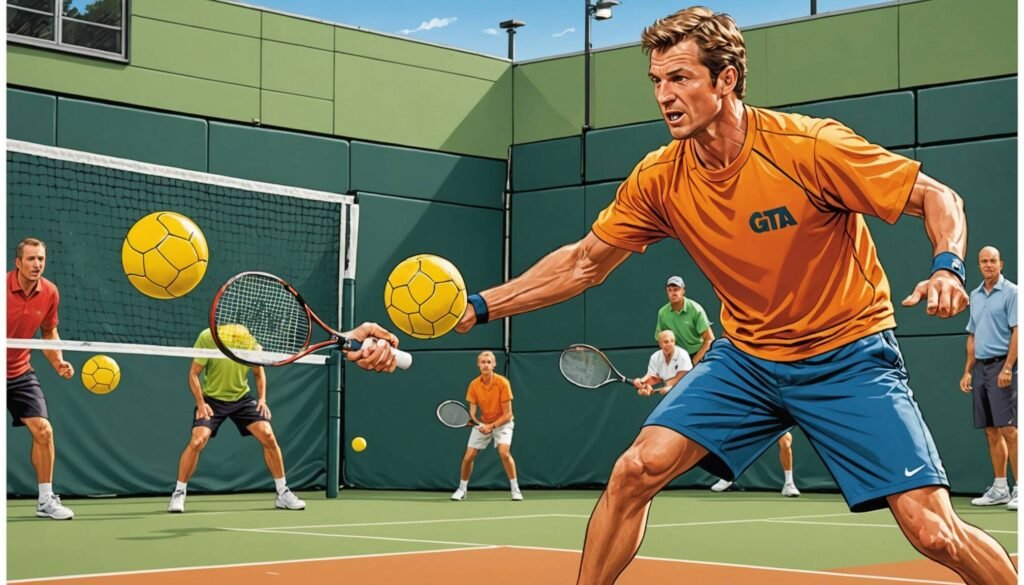
A dead dink is essentially a gift presented to you during a rally. It rises above the net, sits comfortably in your strike zone, and practically begs you to punish it with an aggressive shot. Yet despite this golden opportunity, countless players struggle to convert these moments into points. They swing too early, attack balls that should be reset, or execute without any clear tactical plan for where the ball should land.
This comprehensive guide addresses all of those issues head-on. By the time you finish reading, you will understand exactly how to identify attackable balls, which shots to deploy in different situations, where to aim for maximum effectiveness, and how to train these skills so they become automatic rather than occasional.
Understanding What Qualifies as a Dead Dink in Pickleball
A dead dink is any dink shot that rises noticeably above the net and presents itself in an attackable position, typically at or above the height of your paddle shoulder. The critical distinction here is the downward angle you can achieve when making contact with the ball.
Unlike a properly executed dink that stays low and forces you to hit upward from below the net level, a dead dink gives you the advantage of hitting downward. That downward trajectory is everything in pickleball’s kitchen exchanges because it puts tremendous pressure on your opponent to defend against a ball traveling into their court on a descending path.
The moment your opponent loses control of the ball’s trajectory, whether through poor paddle face angle, a mis-hit, or being off-balance during the exchange, you have a potential dead dink on your hands. The ball floats rather than stays low. When you see that float, your internal switch should flip from patient dinking mode to attack mode.
It is important to understand the rules governing play at the non-volley zone. According to USA Pickleball’s 2025 Official Rulebook, all volleys struck from within the non-volley zone are illegal. This means every attack you make from the kitchen line requires the ball to have bounced first, or you must be positioned behind the NVZ line at the moment of contact. Understanding this rule completely prevents you from wasting a perfect attack opportunity by committing a fault.
The contrast between a good dink and a dead dink is stark. A good dink keeps the ball low and in front of your opponent, forcing them to lift the ball back into the kitchen rather than giving them any opportunity to drive downward. Recognizing the difference between a genuinely good shot from your opponent and simply being in bad position yourself is foundational to improving your attack recognition skills.
Think of your mindset at the kitchen line as hungrily patient. You dink with purpose and control, you wait for your opponent to make an error, and then you pounce decisively when that error materializes in the form of a floating ball.
How to Identify an Attackable Ball at the Kitchen Line
The single most reliable guideline for identifying an attackable ball is this: if the ball reaches or exceeds the height of your non-paddle shoulder, it qualifies as attackable. Below that threshold, you should reset. Above it, you should attack.
This concept is often referred to as the strike zone, and drilling this decision-making framework into your muscle memory is absolutely non-negotiable if you want to progress as a player. Elite players who consistently attack dead dinks in pickleball have trained themselves to recognize the ball’s apex trajectory before it even reaches their position.
Research published in the Journal of Sports Sciences in 2023 on anticipatory decision-making in racket sports found that elite players begin their shot preparation an average of 150 to 200 milliseconds earlier than recreational players. This gap is built almost entirely through pattern recognition training rather than raw athleticism, which means it is a trainable skill rather than an inherent talent.
Here is a practical checklist to help you identify a dead dink in real time during play:
- Height: Is the ball rising noticeably above the net plane from your vantage point? Does it clear the tape by more than a few inches? If the ball reaches shoulder height or above, that is your signal to prepare for an attack.
- Pace: A floaty, slow-moving dink with minimal spin is far easier to time and attack than a fast-paced ball or one with heavy topspin. A ball that is both slow and high is definitively dead.
- Spin: Heavy backspin dinks sometimes sit up invitingly but can behave unpredictably when they contact your paddle. Recognize the spin characteristics before committing fully to an aggressive attack.
- Opponent’s position: If your opponent is caught off the line, scrambling laterally, or reaching wide to make their dink, an attackable ball creates the perfect combination for a punishing shot. Their poor positioning amplifies the effectiveness of your attack.
Your own positioning at the kitchen line determines how much time you have available to read incoming balls. A player who stays glued to the NVZ line sees everything a fraction of a second earlier, and that fraction matters more than most players realize.
Studies on visual reaction time in paddle and racket sports, including comprehensive work compiled by the National Strength and Conditioning Association, consistently show that proximity to the ball’s source compresses available response time. At the kitchen line, that compressed fraction of a second frequently represents the difference between executing a clean attack and committing an unforced error.
The Right Mindset for Attacking Dead Dinks
This point needs to be stated clearly and without ambiguity: not every fast ball constitutes an attack, and not every attack needs to be executed at maximum speed.
The banger mentality, the urge to rip every ball with maximum power, is the enemy of intelligent kitchen play. Players who try to crush every slightly elevated dink end up creating attackable opportunities for their opponents by popping balls up in return or hitting out of control.
Becoming unattackable yourself starts with understanding that discipline in the kitchen creates pressure on your opponents, and that pressure inevitably creates dead dinks for you to attack.
A better mental framework is to think of yourself as a problem-setter rather than a point-ender. Every dink you hit should be designed to create an error or weak response from your opponent. When that error arrives in the form of a floating ball, you cash it in. You are not looking to force attacks on marginal balls; you are waiting to recognize legitimate opportunities and then executing decisively.
This approach maps directly to what sports psychologists call anticipatory tactical behavior, which is the ability to read a developing situation and prepare an appropriate response before the opportunity fully materializes. A 2024 review published in the Journal of Sport and Exercise Psychology identified patient decision-making under pressure as one of the strongest predictors of performance in net-and-wall sports like pickleball.
Professional players like Ben Johns and JW Johnson demonstrate mastery at using unusual dinking techniques specifically to generate those floating, high-sitting balls from their opponents. Their patience and discipline in the dinking rally is the prerequisite that makes their attacks so devastatingly effective.
The Most Effective Shots for Attacking Dead Dinks
The Speed-Up Drive
This is the fundamental attack in pickleball’s kitchen arsenal. You make contact with the ball at shoulder height or above and drive it flat and fast directly at your opponent’s body, or you angle it wide toward their backhand hip.
The ideal target zone is the transition area between your opponent’s hip and armpit. This spot is the most difficult to defend with either a forehand or backhand paddle position because it jams the body and eliminates reaction space.
A flat speed-up gives your opponent almost no reaction time due to the ball’s velocity. Adding topspin to the attack creates dip in the ball’s trajectory, keeping it in-bounds while still driving aggressively through the contact zone. This physical effect is well-documented in sports biomechanics research on topspin ball behavior.
A study by Choppin and colleagues published in Sports Engineering in 2013 and available through ResearchGate showed that topspin dramatically increases the downward Magnus force acting on a ball in flight, causing it to drop faster than a flat shot traveling at the same speed. In practical terms for pickleball, topspin attacks land shorter and kick lower after the bounce, making them significantly harder to reset cleanly.
Both the flat and topspin versions are effective. The flat version offers maximum speed, while the topspin version provides more margin for error and control.
For comprehensive guidance on power shots, the key mechanical principle is compact swing mechanics. Avoid big backswings. Execute a short, explosive forward motion. Make contact in front of your body every single time.
The Swing Volley
The swing volley is essentially a drive executed from a volley position, and it ranks among the hardest shots you can hit in pickleball. When you attack dead dinks using a swing volley, you are taking the ball before it reaches its apex and redirecting it downward into a difficult defensive zone for your opponent.
This shot requires excellent timing. You need to catch the ball slightly in front of your lead foot, a biomechanical principle supported by contact-point research in paddle sports. Studies consistently show that forward contact point reduces wrist compensation and increases directional accuracy, as outlined in the NSCA’s position on upper extremity mechanics in overhead striking sports.
Keep your elbow in close to your body and drive through the ball rather than swinging at it. A common technical mistake is flicking the wrist during contact, which sends the ball upward rather than downward. Instead, drive through with your shoulder and forearm to maintain the downward trajectory that makes this shot effective.
The Angled Roll
Instead of driving through the ball with pace, the angled roll involves brushing over the ball with topspin and directing it crosscourt, landing it short in the opponent’s kitchen at a steep angle.
This shot is ideal when your opponent is positioned in the center of the court and you have an open corner available. The ball stays extremely low after the bounce due to the topspin, making a clean reset nearly impossible for your opponent to execute.
The angled roll pairs perfectly with deception at the kitchen line. You can set it up by looking one direction while rolling the ball in the opposite direction, exploiting your opponent’s anticipatory positioning.
The ATP Around-the-Post Shot
If a dead dink floats wide toward the sideline and sits low enough in trajectory, the ATP shot is potentially available. This shot travels around the net post rather than over the net.
The 2025 USA Pickleball Official Rulebook, specifically Rule 11.L, explicitly permits shots that travel around the net post below the height of the net, provided the ball lands in the correct court.
However, this only works when the ball is pulled sufficiently wide and your opponent is out of position. It is a low-percentage play if you attempt to force it in situations where the geometry does not favor success.
Understanding the five essential shots in pickleball helps you know exactly when the ATP makes tactical sense versus when it is simply showing off without strategic value.
Where to Aim When Attacking Dead Dinks
Direction matters as much as pace when you attack dead dinks in pickleball. Here are the three primary target zones to consider:
The Body
Jamming the ball directly into your opponent’s hip or torso eliminates their reaction space. Even a medium-pace ball jammed at the body is difficult to reset cleanly because it requires awkward paddle positioning. This targeting strategy works effectively in both singles and doubles play.
The Backhand Hip
Most players defend their backhand side less effectively than their forehand side, a pattern consistently observed in net-and-wall sport analysis. A 2022 study published in the International Journal of Racket Sports Science found that in comparable paddle sports, backhand defensive errors occurred at nearly twice the rate of forehand errors under high-pace attacking conditions.
Attacking the backhand hip forces errors or produces weak pop-ups that set up follow-up winners. This is particularly effective against opponents who have a dominant forehand and try to run around their backhand whenever possible.
The Open Court
If your opponent is caught off-center or scrambling after a wide dink, the open court becomes available as a target. A doubles strategy built around precise placement prioritizes keeping opponents moving and creating open angles that become progressively harder to defend.
A critical tactical consideration: resist the temptation to aim at your comfort zone rather than the tactically optimal target. Attacking crosscourt feels natural for many players but gives your opponent more time to react due to the longer distance the ball must travel.
The shorter the court distance your ball travels, the less reaction time your opponent has available. This principle is rooted in the physics of ball travel speed versus human neural response lag, which averages 150 to 300 milliseconds for visual stimulus processing in sport contexts according to research by Ando and colleagues published in Perceptual and Motor Skills in 2002.
Down-the-line and at-the-body attacks consistently exploit that neurological lag better than crosscourt angles in most tactical situations.
How to Reset When Your Attack Does Not Win the Point
Not every attack wins the point outright. Sometimes you attack a dead dink and get it back even faster than you sent it. That is simply part of the game at higher levels.
What separates good kitchen players from great ones is the ability to absorb a speed-up and


