
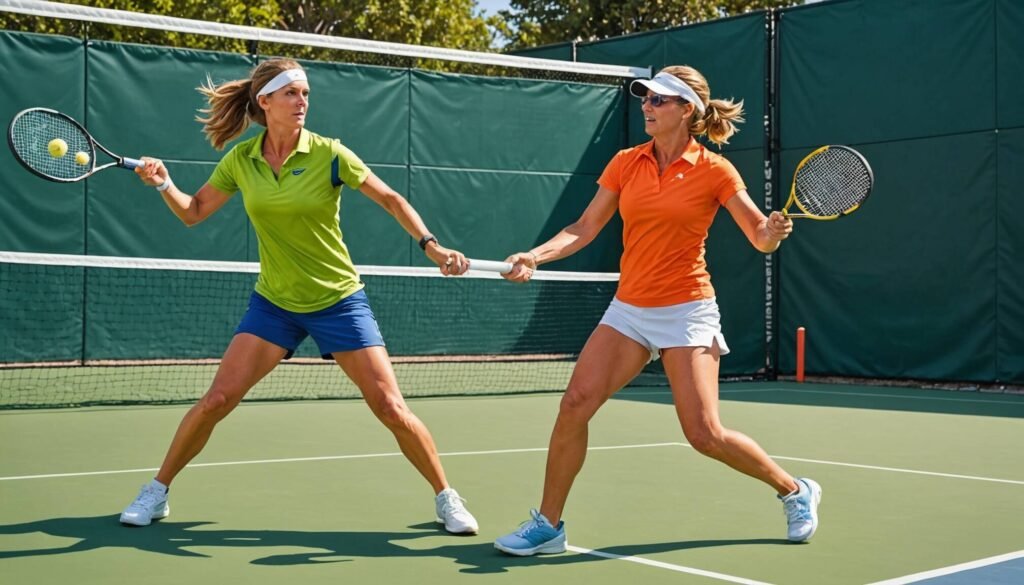
Mixed Doubles Strategy: The Pro Pattern That Works
Mixed doubles pickleball presents a unique challenge that separates strategic players from those who simply react to whatever comes across the net. The reality is straightforward: in most mixed doubles matches, one player becomes the focal point of attack. This isn’t a personal slight against anyone’s abilities. It’s simply sound competitive strategy. Opponents quickly identify vulnerabilities, whether that means targeting the player with less experience, the one positioned awkwardly on the court, or simply the individual who seems less comfortable under pressure. The question isn’t whether you’ll face this targeting—you will. The real question is whether you have a plan to turn that targeting into an advantage for your team.
What separates recreational mixed doubles players from competitive ones isn’t necessarily power or speed. It’s the presence of a deliberate strategy that transforms defensive situations into offensive opportunities. Top PPA Tour professionals Mari Humberg and Ryan Fu have developed and refined a simple three-shot pattern that immediately improves your ability to involve your partner, escape relentless targeting, and regain control of rallies that seem to be slipping away. This pattern isn’t complicated or physically demanding. It’s about recognizing patterns, thinking ahead, and executing a predetermined sequence that forces your opponents to react to you rather than the other way around.
Understanding the Problem: Why Getting Targeted Feels So Frustrating
When you find yourself on the receiving end of shot after shot, your natural instinct kicks in: survive. You focus on just getting the ball back, staying in the rally, and hoping your opponent eventually makes an error. This defensive mindset feels safe in the moment, but it’s actually a losing strategy. You’re allowing your opponents to dictate every exchange while you simply respond to their choices. The crosscourt rally becomes a comfort zone of sorts—predictable, controlled by your opponent, and ultimately passive. This is exactly where aggressive teams want you: reactive, defending, and waiting for them to make the mistake that might never come.
The mental trap of being targeted extends beyond just the shots themselves. It affects your confidence, your positioning, and your ability to think clearly about what comes next. Players stuck in this defensive pattern often feel isolated from their partner, as though they’re fighting the battle alone while their teammate watches from the other side of the court. This isolation isn’t just psychological—it’s strategic. When you’re locked in crosscourt exchanges, you’re effectively taking your partner out of the equation, giving your opponents a two-against-one advantage in terms of court coverage and tactical options. Breaking free from this trap requires more than just better shots. It requires a fundamental shift in how you approach being targeted, viewing it not as a problem to endure but as an opportunity to execute a plan that turns the tables on your opponents.
The Three-Shot Pattern That Changes Everything
The beauty of the Humberg-Fu pattern lies in its elegant simplicity. Rather than requiring exceptional athleticism or complex footwork, this mixed doubles strategy relies on three sequential shots that systematically dismantle your opponents’ targeting game plan. The pattern follows a logical progression: crosscourt, middle, behind. Each shot serves a specific purpose, building toward the third shot that creates the opening your team needs to shift from defense to offense.
The first shot—crosscourt—acknowledges your current reality. You’re under pressure, being attacked, and need to stay in the rally. Hitting crosscourt accomplishes several things simultaneously. It keeps the ball in play, giving you time to reset your positioning and prepare for the next shot. It also maintains the rally in a pattern your opponents expect, which prevents them from anticipating the shift that’s coming. This shot requires discipline because your instinct might be to do something dramatic or try to change the dynamic immediately. Resist that urge. The crosscourt shot is about buying time and setting up what comes next.
The second shot—middle—is where you begin to take control. By redirecting the ball down the center of the court, you force your opponents to make a decision: who takes this ball? This moment of decision-making, even if it only lasts a fraction of a second, disrupts their rhythm and introduces uncertainty into their positioning. The middle shot also begins to neutralize the targeting strategy. Your opponents can no longer simply pound balls to the same player in the same location. They must adjust, communicate, and potentially expose gaps in their court coverage. This shot doesn’t need to be aggressive or risky. It simply needs to find the middle third of the court and force that crucial decision.
The third shot—behind—is where the pattern pays off. After moving your opponents with the first two shots, you now exploit their positioning by hitting behind them. This forces them to turn, reach back, and reset their own positioning. The vast majority of the time, this produces either a popup that you or your partner can attack, or a weak return that allows you to take the offensive position at the net. Ryan Fu emphasizes in his teaching that patterns like this genuinely elevate your level in mixed doubles. This isn’t hyperbole or marketing speak. It’s a recognition that understanding and executing strategic patterns separates players who plateau from those who continue improving.
The Geometry and Psychology Behind the Pattern
This mixed doubles strategy works because it exploits fundamental principles of court geometry and human decision-making. When you’re hitting crosscourt, you’re working within the longest diagonal of the court, which gives you the most margin for error and the most time to recover. Your opponents settle into this rally, expecting it to continue. Their positioning reflects this expectation—they’re balanced, ready to continue the crosscourt exchange, and confident in their tactical advantage.
The middle shot disrupts this comfortable dynamic. Suddenly, the ball isn’t going to the anticipated target. Both opponents must process this change, determine who has responsibility for the shot, and adjust their court position accordingly. Even teams with excellent communication experience a micro-moment of uncertainty. That uncertainty is your window of opportunity. The middle shot doesn’t need to be a winner because its purpose is to create confusion and force movement.
The behind shot capitalizes on this forced movement and decision-making. Your opponents have committed to moving forward or laterally to handle the middle ball. Their momentum and positioning make it difficult to reverse direction quickly when the next shot goes behind them. This isn’t about hitting a perfect shot to an impossible location. It’s about understanding that once your opponents have committed to one direction, reversing that commitment requires time and creates vulnerability. Most recreational players don’t have a plan for this sequence, which means they’re constantly reacting rather than anticipating.
The psychological component is equally important. Teams that execute this pattern demonstrate control and intentionality. Instead of looking defensive and desperate, you project confidence and tactical awareness. Your opponents begin to realize that targeting you isn’t the simple strategy they thought it was. This psychological shift can be just as valuable as the tactical advantage. When opponents start second-guessing their approach, they’re no longer playing their game—they’re reacting to yours.
Making This Pattern Automatic Through Practice
Understanding a pattern intellectually and executing it under match pressure are entirely different challenges. The transition from concept to consistent execution requires deliberate, focused practice. You cannot simply read about this strategy and expect it to emerge naturally during competitive play. Your brain and body need to internalize the sequence until it becomes automatic, requiring minimal conscious thought to execute.
Start your practice in a controlled environment with cooperative partners. Have your opponents feed you balls in the crosscourt position, simulating the targeting situation you’re trying to escape. Execute the first shot crosscourt, focusing on depth and consistency rather than power. Then hit the second shot down the middle, paying attention to your positioning and preparation between shots. Finally, execute the behind shot, watching how your opponents respond and where the ball ends up. Run this sequence ten times consecutively, focusing on smooth execution rather than winning points.
Once you can execute the pattern reliably in a cooperative drill, add pressure. Have your opponents actively try to return your shots and maintain the rally. This simulates match conditions where you must execute the pattern while dealing with incoming shots that vary in pace, spin, and placement. Track your success rate. How many times can you complete the full three-shot sequence before something disrupts it? Aim for seventy percent consistency before incorporating this pattern into competitive matches. This threshold ensures the pattern is reliable enough to use under pressure without becoming a liability.
The key to mastery is repetition with intention. Humberg and Fu didn’t develop this pattern through casual play. They drilled it thousands of times, refining each element until it became second nature. You don’t need thousands of repetitions to see improvement, but you do need dozens of focused practice sessions. Pay attention to your footwork between shots. Notice how your weight transfer affects the quality of each shot. Observe where your opponents position themselves and how they respond to each stage of the pattern. This kind of detailed attention during practice translates to better execution during matches.
Recognizing When and How to Deploy This Strategy
Every tactical pattern has appropriate and inappropriate applications. Using this three-shot sequence at the wrong time can be just as problematic as not having a pattern at all. Developing the judgment to recognize optimal moments for this strategy is as important as mastering the technical execution of the shots themselves.
This mixed doubles strategy works best when you’re being actively targeted and find yourself stuck in a repetitive crosscourt rally. Your opponent has just hit an aggressive shot and expects you to continue defending. You have enough time to set up properly and execute each shot without rushing. Your partner is positioned at the net, ready to capitalize on the popup or weak return that the pattern is designed to produce. These conditions create the ideal environment for the pattern to succeed. The situation is defensive enough that your opponents won’t anticipate the shift, but controlled enough that you can execute each shot with intention.
Conversely, don’t force this pattern when you’re already at the net in an offensive position. This is a baseline rally pattern designed to help you escape defensive situations and transition forward. Using it when you already have court position wastes your advantage. Similarly, if your opponent hits a weak ball that you can attack immediately, abandon the pattern and take the offensive opportunity. The pattern exists to create opportunities, not to replace obvious attacking chances that present themselves. Finally, if you’re completely out of position and scrambling just to get the ball back in play, focus on recovery rather than trying to execute a multi-shot sequence. The pattern requires enough control and positioning to execute all three shots deliberately.
The framework is adaptable rather than rigid. Once you understand the underlying principle—crosscourt to stay alive, middle to neutralize, behind to create opportunity—you can modify the pattern based on specific court situations. If the middle shot produces an immediate weak return, you don’t need to wait for the third shot to attack. If the crosscourt exchange presents a better angle than you anticipated, you can capitalize on that instead. The pattern teaches you how to think strategically about sequences of shots rather than individual moments. This kind of sequential thinking is what separates recreational players from competitive ones.
Why Partnership Matters More Than Individual Skill
The deeper lesson embedded in this pattern extends beyond the specific shots. Humberg and Fu are teaching that mixed doubles success comes from partnership and pattern recognition rather than individual brilliance. You don’t need to be the most athletic player on the court. You don’t need the hardest serve or the fastest hands. You need to be the smartest, most prepared team that understands how to work together within strategic frameworks.
When you have a repeatable pattern that both you and your partner understand, you’re no longer relying on improvisation or hoping for lucky breaks. You’re relying on preparation and execution. Your partner knows that when you hit crosscourt, the middle shot is coming next. They can adjust their positioning accordingly, ready to handle anything that comes back. When you hit the middle shot, your partner anticipates the behind shot that follows and prepares to capitalize on the weak return it produces. This kind of coordinated execution is impossible without shared understanding and practice.
This is why top professionals spend countless hours drilling patterns that seem mundane or repetitive. It’s not glamorous content for highlight reels or social media posts. But it works. The players who dominate at the highest levels aren’t necessarily the most naturally talented. They’re the ones who have invested the time to develop reliable patterns they can execute under pressure. They’ve removed the guesswork and uncertainty that plagues less prepared teams. When you know exactly what you’re going to do in specific situations, you play with confidence that translates to better execution.
Moving Beyond Winner Mentality to Pattern Execution
Many recreational players approach mixed doubles with the wrong mindset. They’re constantly looking for opportunities to hit winners, end points quickly, and demonstrate their individual skill. This winner-hunting mentality actually limits improvement and makes you a less effective partner. The alternative approach—focusing on executing patterns and creating systematic advantages—produces better long-term results even though it feels less immediately satisfying.
Stop trying to hit winners on every shot. Start trying to execute patterns that create winning opportunities for your team. The distinction is subtle but crucial. When you’re focused on hitting winners, you take unnecessary risks, force shots that aren’t there, and often put yourself and your partner in worse positions. When you’re focused on pattern execution, you’re systematically dismantling your opponents’ strategy, creating progressively better opportunities, and making it easier for either you or your partner to finish points when the right moment arrives.
This pattern-focused approach also reduces the mental pressure that comes with feeling targeted. Instead of thinking “I need to hit a great shot to get out of this rally,” you think “I’m going to execute my pattern: crosscourt, middle, behind.” The first thought creates anxiety and tension that negatively affects your shots. The second thought creates calm focus on executing a practiced sequence. This mental shift alone can improve your performance under pressure, independent of any technical improvements in your shots.
Understanding This Strategy for Beginners
If you’re relatively new to pickleball or haven’t thought much about strategic patterns in mixed doubles, this concept might seem unnecessarily complex. Let me break it down in simpler terms that make the underlying logic clear.
Imagine you’re playing mixed doubles and your opponents keep hitting the ball to you repeatedly. You’re stuck hitting the ball back and forth with one of their players while your partner and their partner stand watching. This happens all the time in mixed doubles because teams identify which player seems like an easier target and attack that person relentlessly. The natural response is to just keep hitting the ball back, hoping your opponent makes a mistake. The problem is that this passive approach gives all the control to your opponents.
The three-shot pattern gives you back control through a simple plan. First, you hit the ball crosscourt (diagonally) to stay in the rally—nothing fancy, just keep the ball in play. Second, you hit the next ball toward the middle of the court between your two opponents. This makes them decide who’s going to hit it and starts to disrupt their comfortable rhythm. Third, you hit the ball behind them toward the back of the court, forcing them to turn around and scramble. This third shot almost always results in a weak return that you or your partner can attack.
Why does this work? Because you’re no longer just reacting to what they do—you’re forcing them to react to your plan. They’re not expecting you to suddenly change where you’re hitting the ball after establishing a crosscourt pattern. The middle shot creates confusion about who should take the ball. The


