Contact Point and Consistency: Nailing the Third Shot Drop in Pickleball
The third shot drop remains one of the most misunderstood and poorly executed shots in pickleball. Players spend countless hours practicing different variations, watching instructional videos, and experimenting with paddle angles, yet they still struggle to land their drops consistently in the kitchen. The frustration is real, and it’s costing players games they should be winning.
What if the problem isn’t your technique at all? What if you’ve been focusing on the wrong fundamental element this entire time? APP pro Richard Livornese recently revealed a game-changing insight that addresses the single biggest mistake recreational players make on the third shot drop. The solution is elegantly simple: consistency comes from hitting every ball at the same contact point, not from learning a dozen different drop variations.
This approach fundamentally changes how you think about the shot. Instead of treating each drop as a unique challenge requiring a different technique, you establish one reliable contact point that becomes your foundation for every third shot drop you hit. From this single position, you can execute multiple variations with confidence and control.
Understanding Why Contact Point Transforms Your Third Shot Drop
Most recreational players approach the third shot drop with a reactive mindset. They wait to see where the ball comes to them, then try to adjust their technique on the fly to accommodate that specific position. This creates an endless cycle of inconsistency because every ball requires a different mechanical adjustment.
When you hit your third shot drops from varying contact points throughout the match, you’re essentially learning multiple different shots. Sometimes you catch the ball high and close to your body, requiring a specific paddle angle and wrist position. Other times the ball arrives low and far out in front, demanding completely different mechanics. Your brain never develops true muscle memory because the shot is constantly changing.
The contact point dictates everything that happens after you strike the ball. When you’re catching the ball too close to your body, you lose leverage and control. Your paddle path becomes restricted, limiting your ability to generate the soft touch needed for a successful drop. You’re essentially handcuffing yourself before you even make contact with the ball.
Conversely, when you establish a consistent contact point in front of your body, you create a reliable mechanical foundation. Your body learns exactly where the ball needs to be for optimal execution. You develop genuine muscle memory because you’re repeating the same motion over and over. Your brain can focus on placement and strategy rather than constantly adjusting to accommodate different contact positions.
This consistency also gives you options. When you know exactly where you’re going to make contact with the ball, you can experiment with different spins, trajectories, and speeds without changing your fundamental positioning. The contact point becomes your anchor, allowing you to add variety to your game without sacrificing reliability.
The Revolutionary Contact Point Hack That Changes Everything
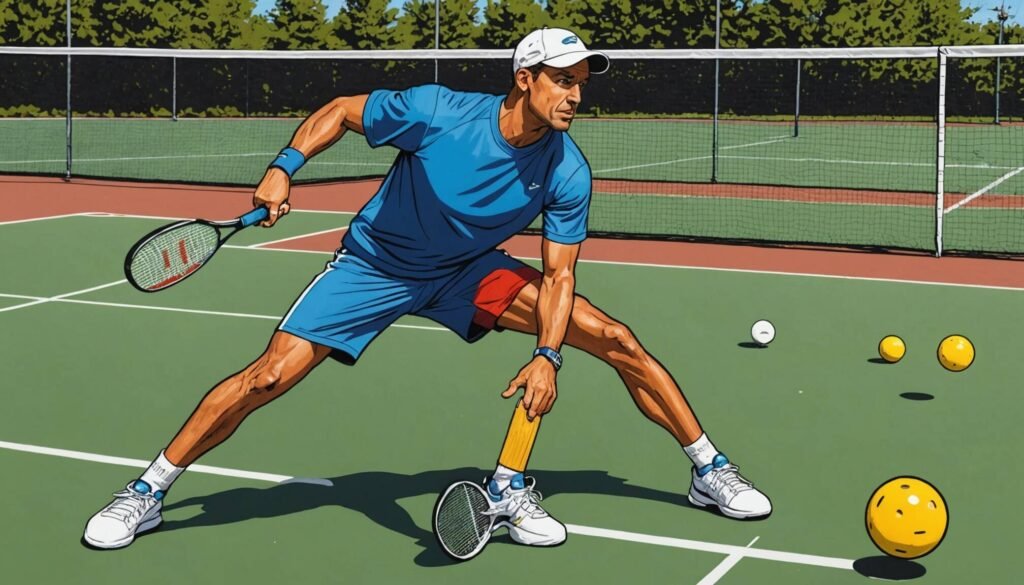
Richard Livornese’s approach is beautifully simple: position yourself so you’re hitting every third shot drop just in front of your back leg. This specific contact point becomes your reference frame, your non-negotiable standard for every drop you execute during a match.
Think about what this positioning provides. When you make contact just in front of your back leg, you’re naturally in an athletic stance with your weight properly distributed. You have room to get under the ball and lift it over the net with a soft upward trajectory. You’re not reaching awkwardly or cramping your swing. You’re in complete control of the shot.
This positioning also gives you the mechanical advantage needed to adjust the shot based on the situation. Need to clear the net with more height because you’re hitting from deep in the court? The contact point just in front of your back leg allows you to get under the ball and push upward with your legs. Need to hit a flatter trajectory because you’ve moved closer to the kitchen? The same contact point allows you to drive through the ball with a more direct path.
The beauty of this approach is that it removes the guesswork from your game. You’re no longer making split-second decisions about where to position yourself relative to the ball. You have one standard: just in front of your back leg. If the ball isn’t in that position, you move your feet to get there. This transforms you from a reactive player to a proactive one.
When you commit to this contact point, something remarkable happens. Your footwork improves dramatically because you have a clear target for where you need to be. You start reading the ball earlier because you know exactly where you need to position yourself. Your preparation becomes more efficient because you’re not wasting time deciding how to adjust your technique.
Building Unshakeable Consistency Through Deliberate Practice
The real transformation happens when you take this contact point principle into your practice sessions. Instead of mindlessly hitting drops from wherever the ball happens to arrive, you focus exclusively on positioning yourself correctly for every single repetition.
This focused practice accelerates your improvement dramatically. Your body learns one motor pattern instead of trying to master dozens of variations. Your muscle memory develops faster because you’re providing consistent input to your nervous system. Each repetition reinforces the same movement pattern, creating neural pathways that become stronger with every practice session.
Consider the alternative approach most players use. They practice hitting drops from various positions, thinking this variety will prepare them for anything they encounter in a match. But this scattered practice actually slows down their improvement. Their brain never gets enough repetitions of any single movement pattern to develop true mastery. They become mediocre at many variations instead of excellent at one reliable technique.
When you focus on hitting every ball from the same contact point, you’re following the principle of deliberate practice that elite performers use across all domains. You’re isolating a specific skill component, focusing intensely on perfecting it, and giving yourself immediate feedback on whether you achieved the desired result. This is how real expertise develops.
Your confidence grows exponentially with this approach. Instead of wondering whether your drop will work, you start trusting it. You’ve hit thousands of repetitions from the same contact point. Your body knows exactly what to do. This confidence translates directly into match performance because you’re no longer hesitant or tentative when executing the shot.
The consistency principle also applies beyond just the third shot drop. When you understand how powerful it is to establish reliable contact points for your shots, you start applying this thinking to other areas of your game. Your dinks become more consistent. Your volleys improve. Your entire game elevates because you’re building on a foundation of reliable mechanics rather than constantly improvising.
Unlocking Multiple Shot Variations From One Contact Point
Here’s where the contact point hack becomes truly sophisticated. Once you’ve mastered hitting from just in front of your back leg, you can execute multiple variations of the third shot drop without changing your positioning. This gives you tactical flexibility while maintaining mechanical consistency.
From this single contact point, you can hit a slice drop by opening your paddle face slightly and brushing across the back of the ball. The sidespin causes the ball to curve and stay low after it bounces, making it difficult for your opponents to attack. The key is that you’re still making contact in the same position relative to your body, just changing the paddle angle and swing path.
You can also hit a topspin drop from the same contact point by closing your paddle face and brushing up the back of the ball. The topspin causes the ball to dive downward after clearing the net, helping it land shorter in the kitchen. Again, the contact point remains constant while you vary the spin and trajectory.
The flat drop, where you push through the ball with a neutral paddle face and minimal spin, also comes from the same position. This shot relies on touch and feel to control the speed and height, but the contact point provides the consistent foundation that makes developing that touch possible.
This variety within consistency is what separates advanced players from intermediates. Beginners hit one type of drop from one position. Intermediate players try to hit many types of drops from many positions, creating inconsistency. Advanced players hit many types of drops from one consistent position, giving them both reliability and unpredictability.
Your opponents can’t read your intention until the last moment because all three variations start from the same setup. They see you positioned the same way, making contact in the same location, and they can’t tell whether you’re about to hit slice, topspin, or a flat drop until the ball is already off your paddle. This tactical advantage is significant in competitive play.
Why Most Players Get This Fundamentally Wrong
The mistake most recreational players make is allowing the ball to dictate their contact point. They adopt a passive, reactive approach where they simply try to hit whatever comes to them from wherever it arrives. This seems logical on the surface, but it’s actually backwards thinking that guarantees inconsistency.
When you’re reactive, you’re learning different techniques for different positions. High balls require one technique. Low balls require another. Balls far out in front need different mechanics than balls that arrive close to your body. You end up with a fragmented skill set where you’re constantly switching between different movement patterns.
This reactive approach also makes it impossible to develop reliable muscle memory. Your nervous system needs consistent repetition to build strong motor patterns. When every repetition is different, you never give your body the consistent input it needs to automate the movement. The shots remain conscious and deliberate rather than becoming automatic and fluid.
The proactive approach flips this script entirely. Instead of adjusting your technique to accommodate wherever the ball happens to arrive, you adjust your positioning to create the contact point you want. You move your feet to get the ball in the right position relative to your body. This is a fundamental shift in mindset that transforms your entire game.
Many players resist this approach because they think it’s too simple. They’ve been told that pickleball is complex and requires mastering many different techniques. The idea that focusing on one contact point could solve their consistency problems seems too straightforward to be true. But the most powerful insights in any skill domain are often elegantly simple.
Another reason players struggle with this concept is that it requires better footwork than they’re currently using. It’s easier to reach and hit the ball from wherever it arrives than to move your feet quickly to create the ideal contact point. But this laziness with footwork is precisely what’s preventing them from developing a reliable third shot drop. When you commit to moving your feet to achieve the correct contact point, your footwork improves dramatically out of necessity.
The Kitchen Line Is More Forgiving Than You Think
One misconception that causes unnecessary anxiety around the third shot drop is the belief that it needs to barely clear the net and land within inches of the kitchen line. This creates pressure to execute a perfect shot every time, which ironically makes consistency harder to achieve.
The reality is more forgiving. The kitchen extends seven feet from the net. A ball that lands two or three feet inside the kitchen is still a perfectly successful drop. Your opponents still need to hit up on the ball, which limits their offensive options. You’ve achieved your strategic objective of neutralizing their advantage and allowing yourself to advance to the kitchen line.
When you hit from the consistent contact point just in front of your back leg, you naturally produce a softer shot because you’re not overextending or reaching. The ball comes off your paddle with less pace, which means it tends to land shorter and softer in the kitchen. You don’t need to manufacture this softness through complicated wrist manipulations or paddle angle adjustments. It happens naturally as a consequence of proper positioning.
This realization removes a layer of pressure from the shot. You’re not trying to thread the needle with every drop. You’re simply positioning yourself correctly, making solid contact, and pushing the ball toward the kitchen. The margin for error is larger than most players think, which allows you to relax and execute more freely.
Getting to the kitchen line consistently is more important than hitting the perfect drop every time. A decent drop that lands mid-kitchen and allows you to advance is better than attempting a perfect drop that either goes too high and gets attacked or lands in the net. The contact point hack helps you hit that reliable, decent drop far more consistently than trying to execute the perfect one.
Practical Implementation: Taking This To The Court
Understanding the contact point principle intellectually is valuable, but the real transformation happens when you implement it during practice and matches. The transition from knowing to doing requires deliberate focus and patience as you retrain your body to move to the ball rather than simply reacting to it.
Start by dedicating entire practice sessions exclusively to contact point awareness. Don’t worry about where the ball lands. Don’t track whether it goes in the net or sails long. Focus solely on whether you made contact just in front of your back leg. This singular focus allows you to develop the footwork and positioning habits that will serve you for the rest of your pickleball career.
Have a practice partner hit balls to you from the baseline while you work on your drops. Ask them to vary the depth, speed, and placement of their shots. Your job is to move your feet quickly enough to create the same contact point regardless of how the ball arrives. This trains you to be proactive rather than reactive.
Pay attention to what your feet are doing. Are you taking small adjustment steps to fine-tune your position? Are you reading the ball early enough to get to the right spot? Are you balanced when you make contact? These details matter because they support your ability to achieve the consistent contact point that makes everything else possible.
When you transition from drills to live play, maintain your focus on contact point even when the competitive pressure increases. It’s tempting to revert to old habits when you’re trying to win points, but this is precisely when you need to trust the process. Hit every ball from just in front of your back leg, even if it means occasionally missing a shot because you’re still developing the footwork to get there consistently.
Track your progress over time. Are your drops landing in the kitchen more consistently? Are you feeling more confident when executing the shot? Are you advancing to the kitchen line more successfully? These outcomes validate that the contact point approach is working, even if the initial adjustment period feels awkward.
Understanding Third Shot Drops For Beginners: Why This Shot Matters So Much
If you’re relatively new to pickleball, you might be wondering why the third shot drop receives so much attention from instructors and advanced players. Understanding the strategic purpose of this shot helps you appreciate why mastering it through consistent contact point mechanics is so valuable.
Pickleball strategy revolves around controlling the kitchen, the seven-foot zone on each side of the net where volleying is prohibited. The team that gets to the kitchen line first gains a significant advantage because they can hit downward on balls while their opponents are forced to hit upward from the baseline. This geometric advantage is fundamental to winning points consistently.
The challenge is that after you serve, your opponents get to hit their return and immediately rush to the kitchen line while you’re stuck back at the baseline. They’ve gained the advantageous position. The third shot drop is specifically designed to neutralize this advantage by forcing them to hit upward on a ball that lands softly in their kitchen.
When executed properly, the drop accomplishes two objectives simultaneously. First, it prevents your opponents from attacking because the ball is below the level of the net when they make contact. Second, it gives you time to advance from the baseline to the kitchen line while they’re occupied with handling your soft shot. You’ve transformed a disadvantageous position into a neutral one.
The alternative to the drop is the drive, where you hit the ball hard and flat toward your opponents. This can be effective in certain situations, but it also gives them an opportunity to counter-attack if they have quick reflexes. The drive is a high-risk, high-reward shot. The drop is a high-percentage shot that consistently gets you to the kitchen line where you want to be.
Understanding this strategic context helps you appreciate why consistency matters more than perfection on the third shot drop. You don’t need to hit an unreturnable drop. You just need to hit one that lands in the kitchen and allows you to advance. The contact point approach delivers exactly this type of reliable, functional drop that accomplishes your strategic objective.
For beginners, focusing on the contact point also simplifies the learning process dramatically. Instead of being overwhelmed by all the technical details about grip, paddle angle, follow-through, and spin, you can focus on one simple principle: position


