Anna Leigh Waters Finally Won the MLP Title — Here’s the Real Reason Why
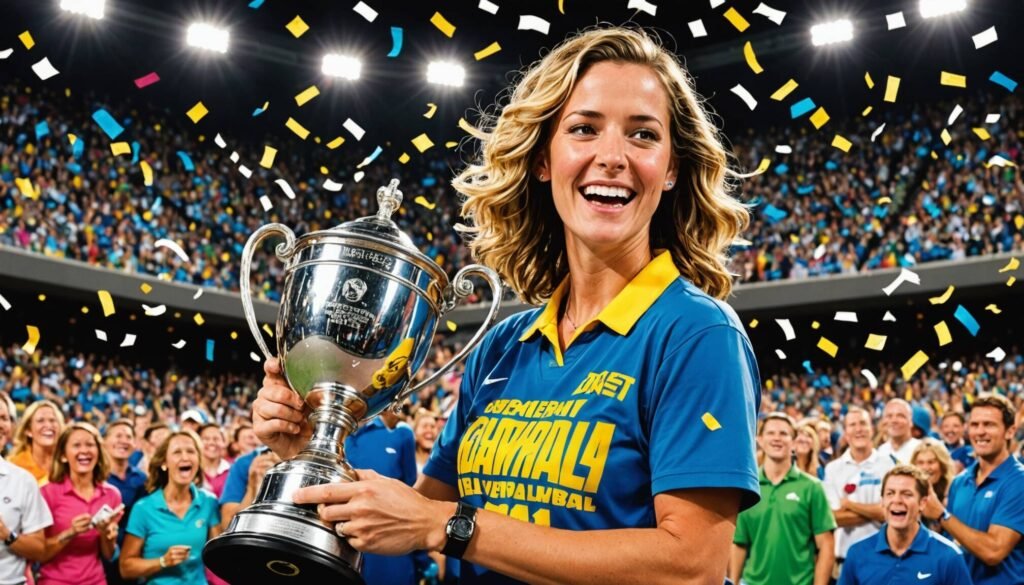
Anna Leigh Waters has been the most dominant player in professional pickleball for years. She has 193 career titles. She has won almost every format the sport has thrown at her. But until the 2026 Major League Pickleball Championship, one trophy had stayed out of reach: the MLP title.
That changed this year. And the reason why says a lot about what it actually takes to win in a team format, no matter how talented you are individually.
What follows is a detailed breakdown of how the New Jersey Fives got it done, what Anna Leigh said about it in a sit-down interview on The Dink’s PicklePod, and what any competitive pickleball player can take from this championship run and apply to their own game.
Why the MLP Title Hits Differently Than Everything Else
To understand why this championship mattered so much to Anna Leigh, you have to understand why MLP is fundamentally different from every other format she competes in. On the PPA Tour, whether she is playing singles or doubles, her result is almost entirely in her own hands. She controls the paddle, the strategy, the execution. If she plays well, she wins. That is a massive oversimplification, but the point holds.
MLP does not work that way. In a team format, you can go 3-1 personally in a Dreambreaker and still lose the whole event if your teammates do not perform alongside you. The championship is distributed across a roster, not concentrated in one person. That dependency is precisely what makes it so hard to collect. Anna Leigh herself placed this MLP title in her personal top 10 wins out of 193 career titles, and that ranking makes complete sense when you think about how little individual control the format offers compared to everything else she competes in.
If you want more context on how the MLP Finals played out and what the format demands at the highest level, these five lessons from the championship weekend are worth reading in full.
For casual fans or newer pickleball players who are not totally familiar with MLP, here is the simple version. Major League Pickleball is a team-based league where four players on each roster compete across different match formats including men’s doubles, women’s doubles, mixed doubles, and singles. When a match is tied, it goes to something called the Dreambreaker, which is a singles tiebreaker where players rotate through points one at a time. The team that gets to the target score first wins the whole thing. It is intense, it is fast, and it puts enormous pressure on every individual on the roster, not just the stars.
What Actually Got the Fives Over the Hump
The New Jersey Fives had been in this exact position before. They reached the MLP Finals in 2024 and lost. They were in the same spot in 2025 and lost again. The Columbus Sliders took the 2025 MLP title instead. So when the Fives found themselves heading into a Dreambreaker in the 2026 Finals against the St. Louis Shock, the question was not whether they had the talent. It was whether they could break the pattern.
Anna Leigh described the mental weight of that moment honestly. She said the thought crept in: “Is this happening again?” That is a real and human response when you have been in the same spot twice before and come up short both times. The difference this year was that the team got tighter instead of looser when things got difficult. They did not scatter under pressure. They pulled together.
The mental shift heading into the Dreambreaker came down to four specific things Anna Leigh described as the team’s mindset going in:
First, stop waiting for the St. Louis Shock to fall apart on their own. A team in a championship Dreambreaker is not going to implode by itself. You have to take it from them. Second, do not play nervous or passive. A tentative performance in that format gives away points before the rally even starts. Third, reframe the moment entirely. If you knew going in that you would be in a Dreambreaker for the title, you would be excited about that. So be excited. That is a luxury most players never get. Fourth, forget the scoreboard and focus only on the next point in front of you. Score awareness in tight moments creates hesitation. Point awareness creates action.
That mental reset is something every competitive player needs, and it applies just as directly at the recreational level as it does in a professional championship. A six-second mental reset can genuinely change how you play through mistakes, and the principles behind it are essentially the same ones Anna Leigh described here.
Did the Federico Staksrud Trade Actually Win the Championship?
Roughly six weeks before the Finals, the Fives made a move that generated significant controversy. They traded for Federico Staksrud, replacing Zane Navratil in the lineup. Pundits pushed back. Fans had opinions. The move felt like a gamble at the time.
Anna Leigh was direct about it in the interview. She does not know if the Fives win the title without Federico. She ranked him top three in the world in singles, and winning Dreambreakers without a weapon of that caliber at the singles position is a significantly harder task. Singles in MLP is not just one piece of the puzzle. When it goes to a Dreambreaker, it becomes the whole puzzle.
But the trade did more than add a player. It restructured how the entire roster was deployed. Will and NoWay shifted into roles where they competed only in their strongest events rather than being stretched across the full lineup. That sounds like a simple tactical adjustment. It is not. Telling an elite player to compete in fewer matches than they are capable of competing in requires a level of buy-in that most rosters cannot manufacture.
To understand the full picture of how that roster move came together and what it meant strategically, read the complete breakdown of what the Staksrud trade meant for the Fives.
How Do You Ask Elite Players to Accept a Reduced Role?
This is the real leadership question buried inside the championship story. You have players who are fully capable of competing across multiple events. You tell them they are only playing one. That conversation is uncomfortable in any competitive environment, and it is especially complicated when the players involved have the talent to argue back.
Anna Leigh’s answer broke down into four specific pieces that are worth understanding individually.
The first piece was framing the addition of Federico as a team upgrade, not a commentary on anyone else’s ability. Adding a top-three singles player to the roster was not a statement that Will or NoWay could not handle the full load. It was a decision to make the team better at the position where the championship is most likely to be decided.
The second piece was pointing to track record. The Fives reached the Finals the year before without Federico. Those players were clearly capable at the highest level. Nobody was being doubted. The roster change was not a demotion in disguise.
The third piece was framing the reduced role as a strength assignment. Each player was being placed in the event where they were most confident, which actually gave them a better individual opportunity to succeed rather than spreading their focus and energy across multiple formats.
The fourth piece was asking for something difficult: team-first thinking. Setting ego aside when you know you are capable of more is genuinely hard. But the players did it, and the Fives won the championship without even needing a third match in the Finals.
What Drives Anna Leigh Waters When She Already Has Everything?
This is the section of the interview that is most useful for anyone who is serious about their own development, regardless of what level they play at.
After winning the title, Anna Leigh was not celebrating the way you might expect. She was sitting with frustration about losing her mixed doubles match earlier in the event. She had been up two games to zero and did not close it out. That loss was bothering her even while she was holding the team trophy. That is not a performance she was willing to accept even in the context of a championship weekend.
She described her process this way: any match that was close, any point that should have gone differently, she is replaying it and looking for the fix. Not as a temporary phase. Constantly. She used the word “obsessive” to describe it, and she connected that obsession directly to improvement rather than to results. She is not asking herself how to win more titles. She is asking what she needs to add to her game to deserve more titles.
That distinction matters more than it might look at first. A results-focused mindset can create a player who protects leads and avoids risk. A process-focused mindset creates a player who keeps looking for edges even when the scoreboard says they are already winning. Pro analysis on what makes Anna Leigh’s game so difficult to attack traces a significant portion of her dominance back to exactly this mindset. And if you want to understand just how historic her run has been, her undefeated singles streak by the numbers makes a compelling case that it belongs in the conversation with the most dominant runs in any sport.
What Is She Actually Working On Right Now?
Anna Leigh identified two specific technical areas she wants to sharpen. Neither of them is an obvious weakness. That is the point.
The first is being more aggressive out of the air at the kitchen line. She wants to step up and flick after a strong backhand roll, and right now she does not hit that shot consistently enough to rely on it. She knows where it could fit into her game. She knows what it would add to her attack options. The gap between where the shot is and where it could be is what frustrates her. For players working on the same thing, this tip position fix for adding snap to the pickleball flick covers the mechanics directly.
The second area is movement and anticipation. She talked specifically about reading where a return is likely to go based on what she just hit. If she can get to that position before the ball arrives rather than reacting to it, she creates better opportunities out of every exchange. That is a court awareness skill that most recreational players never develop consciously, and it is one of the separating factors between good players and great ones.
She also mentioned that her serve lacks consistent depth. The pace is there, but the ball is not landing as deep as she wants it to, and she has been working through technique adjustments trying to solve it. If you are dealing with the same issue at your level, these three serve mistakes that kill power and depth are a solid starting point.
Can You Be the Greatest Without an MLP Title?
Before this win, Anna Leigh might have said yes with some justification. Now she says no, though she acknowledged the question is genuinely complicated.
MLP has enough variables outside any individual player’s control that judging greatness purely on championship count is not straightforward. Roster construction, team ownership spending, format rules, and the Dreambreaker all create scenarios where the best individual player does not necessarily win. She compared it directly to basketball, pointing out that even LeBron James is one of five players on the court. In MLP, a player might be involved in fewer than half the total points played in a given match.
The Messi analogy came up in the interview. For years, the argument was that Messi could not be called the greatest without a World Cup. He eventually won it. The parallel is obvious. Team format results should not automatically define individual greatness when so much of the outcome depends on what surrounds you. But they do add something that individual titles cannot. They prove you can operate inside a system, adjust to others, put collective goals ahead of personal ones, and win anyway.
For the full picture of how the Finals matchup came together, the Fives vs. Shock championship preview covers the setup heading in.
The Question Mark Paddle: What Is Coming From Franklin?
One detail that caught a lot of attention was the paddle Anna Leigh has been playing with during the championship run. It features a question mark design, which is not decorative. She confirmed that she and Franklin have been working on a new paddle since partnering in January, and she plans to debut it at the North Carolina event on the MLP schedule. She showed up to the interview with a question mark on her nails. The message is intentional. Her long-term deal with Franklin set this collaboration in motion, and based on how she talked about the new equipment, it sounds like something that has been genuinely built around her game rather than just rebranded.
What the Fives Win Teaches Every Competitive Player
The clearest takeaway from everything Anna Leigh described in this interview is that winning at the highest level is not just about your own game. It is about reading the situation clearly, adjusting your mindset under pressure, asking teammates to accept something uncomfortable for the sake of the group, and staying locked onto what you can actually control when everything around you feels uncertain.
The Dreambreaker mindset she described, specifically reframing pressure as opportunity rather than threat, is not something reserved for professional players competing in championship finals. It is applicable in your next tournament match or your next rec game when the score gets tight and the nerves start to creep in. The mechanism is the same at every level. The player who can reframe that moment fastest usually wins it.
For more on how the Fives built toward this moment across the entire season, the full recap of the New Jersey Fives’ 2026 MLP Championship covers everything. And if you want to borrow from the same mental framework Anna Leigh used going into the Dreambreaker, these eight pickleball mindset shifts are built around the same core principles and are written for players at every level.
Frequently Asked Questions
How many career titles does Anna Leigh Waters have?
Anna Leigh Waters has 193 career titles as of the 2026 MLP Championship. She placed this MLP title in her personal top 10 most meaningful wins because of how difficult the team format is to control as an individual.


