How to Hit the Erne in Pickleball: What Jack Sock’s Breakdown Actually Teaches You
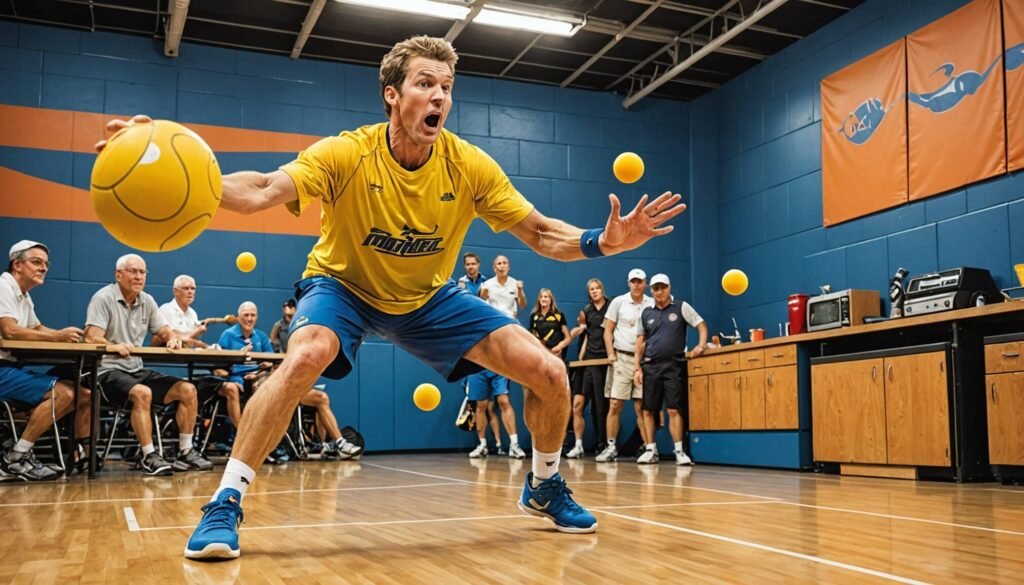
The erne is one of those shots that looks like pure athleticism from the sideline. You watch someone launch themselves around the kitchen corner, intercept a ball that had no business being intercepted, and land cleanly outside the court while their opponent stands there confused. It looks like a trick. It looks like something reserved for former ATP pros and D1 athletes.
It is not. But most players are approaching it completely wrong, and that is exactly why they either never try it or embarrass themselves when they do.
This breakdown draws directly from a detailed walkthrough that former ATP professional and current PPA standout Jack Sock provided through Selkirk TV on YouTube. Sock has built the erne into one of his most reliable weapons at the kitchen line, and the way he explains it strips away all the mystique and gets down to what actually matters: pattern recognition, footwork mechanics, and landing position.
If you have ever wanted to add this shot to your game but did not know where to start, this is your guide.
What Is the Erne and Why Does It Work So Well?
Before getting into mechanics, it helps to understand what the erne actually is and why it is so disruptive when executed correctly. The erne in pickleball is a shot where you jump around or over the corner of the non-volley zone, also called the kitchen, and make contact with the ball while your feet are outside the kitchen boundary. The key legal requirement is that your feet must fully clear the kitchen line before you touch the ball. If any part of your body grazes the line or the kitchen surface during contact, the point goes to your opponents immediately.
According to USA Pickleball rules, the shot is completely legal as long as that condition is met. You are not jumping over the net. You are not reaching into the kitchen. You are simply repositioning yourself outside the kitchen boundary faster than your opponent expects, and volleying a ball from a position they assumed was safe.
That is the core of why it works. Your opponent is dinking toward the sideline with confidence because that angle looks open. They have done it before in this rally and gotten away with it. Then suddenly you are already there, positioned at the corner before the ball even arrives, and they have nowhere to redirect. The point ends. The erne is effective not because it is powerful in isolation, but because it exploits the assumption that the sideline dink is a safe shot. Once you establish that you are willing and able to jump the corner, that shot becomes dangerous for your opponent to attempt at all, even when you do not actually go for the erne.
Jack Sock is direct about the stakes: when you attempt an erne, the point is usually going to end on that shot, one way or the other. That is not hyperbole. That is a reminder about the level of commitment this shot demands. You either go fully or you do not go at all.
Breaking It Down for Players New to This Concept
If you are newer to pickleball or have not heard of the erne before, here is the simplest way to picture it. Imagine you are standing at the kitchen line, which is the line closest to the net that you cannot volley from. Now imagine the corner of that kitchen, right where the sideline meets the kitchen line. The erne is what happens when you jump around that corner, landing outside the court entirely, so that you can hit the ball from a spot your opponent never expected you to be.
Think of it like cutting someone off in a hallway. They think the path is clear. You take a shortcut around the corner and you are suddenly right in front of them before they can adjust. In pickleball, that means your opponent hits what they think is a safe dink down the sideline, and instead of bouncing harmlessly past you, it lands directly on your paddle because you already jumped to where it was going.
It sounds complicated, but the secret is that most of the work happens before the ball is even hit. You read where the ball is going based on your opponent’s body position and dinking patterns, and you start moving before they strike the shot. By the time the ball leaves their paddle, you are already clearing the corner.
The Two Situations Where the Erne Actually Becomes Available
Sock identifies two specific patterns that create the erne opportunity. Understanding these is more important than any footwork drill, because if you cannot recognize when the shot is on, you will never be in position to hit it.
The first situation involves your partner controlling a cross-court dink exchange. When your partner is dinking consistently to the player directly across from them, that player will eventually want to redirect toward the sideline to break the pattern. The moment they show signs of changing direction, that redirect is your signal. You do not wait for the ball. You start moving toward the corner as soon as you read the body language that suggests a line shot is coming.
The second situation comes off a high dink from the middle of the court. When a dink lands in the middle and sits up, the opponent on the left side will often step toward the sideline to take an aggressive angle on it. You can intercept that as a poach by jumping the corner at the same moment they are setting up to swing. You are not reacting to the ball they hit. You are anticipating where they are going to direct it based on their positioning.
Both situations share the same underlying requirement: you have to be reading the game ahead of the ball, not reacting to it. By the time you visually see a ball heading toward the sideline, you are already too late to start moving. The players who hit clean ernes are the ones who have trained themselves to see what higher-level players see before the ball is struck, interpreting body angles, paddle face direction, and dinking tendencies to predict the shot before it happens.
The Footwork Mechanics That Most Players Skip Entirely
Here is where the technical side of the erne lives, and it is also where most players fall apart. The jump itself is not complicated, but the specific foot mechanics matter more than people realize.
Sock is explicit about this: he pushes off his left foot and aims to land outside the court on his right side. That takeoff foot is not arbitrary. Pushing off the left foot when moving toward the right corner generates proper lateral momentum that keeps your body controlled through the jump and through contact. If you push off the wrong foot, you end up lunging awkwardly rather than jumping cleanly around the corner, and your paddle position suffers as a result.
The sequence for a clean erne attempt looks like this when laid out step by step. First, read the opponent’s body language and dink direction early enough to give yourself time to move. Second, begin moving toward the corner before the ball is struck, not after. Third, push off your left foot to generate the lateral momentum you need. Fourth, clear the kitchen sideline completely before making any contact with the ball. Fifth, contact the ball with a flick or compact punch volley as you pass the corner. Sixth, land outside the court in a controlled and balanced position. Seventh, recover back to your spot at the kitchen line if the rally continues.
Step four is the one that has legal consequences. If any part of your body touches the kitchen or the sideline before you hit the ball, you lose the point with no debate. Sock jokes about needing to clear the line so the on-court official does not call you, and while that is lighthearted, the rule is real. It is worth reviewing the USAP rules for 2026 before you start jumping corners in any sanctioned format, because the non-volley zone language governs everything about this shot.
The landing position deserves more attention than it usually gets. Most players think about the jump and the contact and completely forget that they need to land somewhere functional. Sock specifically emphasizes landing in a position that allows you to recover back into the rally if your erne does not finish the point cleanly. You are not trying to fly six feet past the sideline. You want to land just outside the court boundary with your weight balanced enough that your first step back toward the kitchen is already loaded and ready.
What Shot Are You Actually Hitting When You Get There?
Once you have cleared the corner and you are in the air, you need to do something with the ball. The default contact for the erne is a flick volley, a quick wrist snap that redirects the ball without requiring any setup or wind-up. You are not in a position to generate power with a full swing. You are passing through the air at the corner of the kitchen, and a compact, snappy flick is what finishes the shot cleanly across the widest range of ball heights and speeds.
That said, Sock identifies two other options that come into play depending on how the ball presents itself. If the dink is sitting high and your timing allows it, you can take the erne like an overhead as you jump. This requires the ball to be both elevated and slow enough to give you time to position your paddle above your shoulder, which is not always available. The second option is a compact forehand volley for balls that are elevated but not quite overhead-level. You want to stay controlled here rather than swinging aggressively, because an overpowered erne contact is more likely to go wide or long than to finish the point.
The flick is your primary tool because it works across more situations, demands less setup, and gives you the best chance of maintaining body control through the shot and into your landing. Getting comfortable with a quick wrist snap at contact, rather than trying to muscle the ball, is the difference between a clean erne and one that flies out of bounds.
Does Athleticism Determine Whether You Can Hit This Shot?
Sock addresses this directly, and his answer is more nuanced than you might expect. He acknowledges that longer legs and a strong jump make the erne easier, particularly from the left side of the court. That is just physics. More reach means you can clear the corner with less precise timing, and a stronger jump means you cover the distance faster.
But Sock also says something more important: he hits the erne more now than he used to, not because he is jumping higher, but because he is reading patterns better. That framing changes the entire conversation about who this shot is for. The erne is primarily a pickleball IQ shot. Athleticism helps at the margins. Pattern recognition is what makes it consistently available.
When the setup is right, meaning a high slow dink, a predictable opponent, and a dink exchange that has been running long enough to establish clear tendencies, the erne becomes accessible for players of varying athletic levels. You start moving earlier when you read the game better, and starting earlier removes the need for an explosive jump to compensate for late timing. The better your court awareness, the less raw athleticism the shot demands.
Why the Left Side of the Court Is Prime Erne Territory
Sock specifically identifies the left side as his primary erne position, and the reason is straightforward for right-handed players. Standing on the left side means your forehand is naturally facing toward the sideline, which is exactly the direction the erne contact happens. You are not reaching across your body or adjusting an awkward backhand position. The geometry of the shot aligns with your dominant stroke.
The tactical setup for a left-side erne typically involves your partner dinking cross-court from the right side, drawing the opponent toward the left sideline. That movement opens the opportunity for you to jump the left corner and intercept. Understanding the offensive dynamics of left-side play helps you see how the erne fits into a broader kitchen strategy rather than existing as a standalone trick shot.
There is also a psychological dimension that Sock points out. After you successfully hit one erne, the opposing team will often shift their positioning toward the middle to protect the corner you just exploited. That shift leaves the sideline more open on subsequent rallies, even when you are not attempting the erne. The threat of the shot becomes almost as valuable as the shot itself once your opponents know you are willing to go for it.
What Happens After the Erne Lands — And Why Most Players Ignore This
Almost every erne tutorial focuses entirely on the jump, the contact, and maybe the legal landing requirement. Almost none of them address what you are supposed to do immediately after the shot, and that gap is costing players points they do not realize they are giving away.
Sock is clear on this. Your landing position should give you the option to recover back to the kitchen line if the rally continues. Yes, the majority of erne attempts end the point right there. But majority is not all of them, and if you land completely outside the court with no realistic path back to your position, you have handed your opponents a wide-open middle that they can exploit with the very next shot.
The practical instruction here is to focus on a controlled landing just outside the sideline, with your weight balanced enough that your first recovery step is already primed. This is the same principle that applies to managing the pickleball transition zone: stay low, stay ready, and never assume the point is over until it actually is. The erne is an aggressive shot, but aggression does not mean carelessness. You are still playing pickleball after you land.
A Practical Drill Sequence to Build the Erne Without Live Match Pressure
You do not need competitive games to start ingraining this shot. The mechanics need to become automatic before you can focus your attention on reading opponents in real time, and that automaticity comes from deliberate repetition in a lower-stakes setting.
Start with footwork only. Set up at the kitchen line and practice the movement pattern without any ball involved at all. Push off the left foot, clear the corner, land outside the court in a balanced position. Repeat until the sequence feels natural and your body does not have to think about it.
Once the footwork feels consistent, add a stationary flick volley practice at contact height. Stand outside the court and work on the wrist snap motion without combining it with the jump yet. Feel what a clean, controlled flick volley at erne height actually requires from your wrist and forearm.
Then combine the two elements at slow speed with no live feed. Jump the corner and flick through contact without your partner feeding balls yet. You are just building the combined movement pattern.
From there, have your partner feed predictable dinks toward the sideline while you read and go. The feeds should be consistent and telegraphed so you are not reacting to surprises. You are training your pattern recognition to trigger the movement, not your reaction time.
Finally, graduate to rally situations where the erne is specifically your response to an agreed-upon pattern. Your partner dinks cross-court, the opponent redirects toward the line, and you go. Introducing live game context is the last step, not the first.
The quality of your partner’s dinking consistency matters here. An erne opportunity in a real game requires a controlled dink exchange that creates predictable patterns. If your partner is spraying dinks all over the court, the erne setup never materializes. Building rally quality and kitchen consistency with your partner is part of building this shot into your game, not a separate skill.
The Honest Summary of What Makes the Erne Actually Work
Jack Sock puts it cleanly: the jump is the fun part. The reading is the skill.
Everything about the erne


