
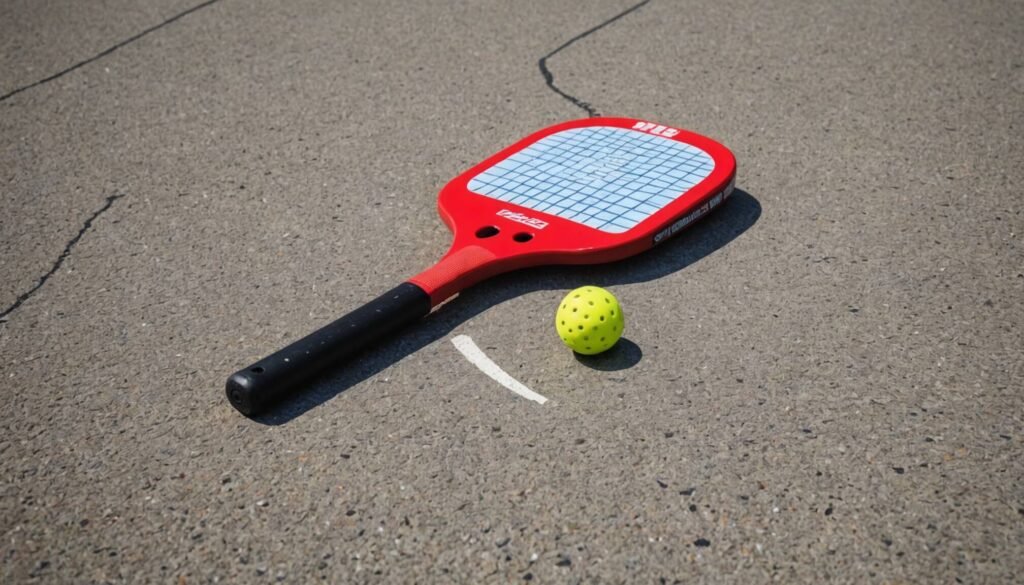
Selkirk Boomstik ST: First Look at the New Power Paddle Dropping November 10
Fourteen months ago, Selkirk released a paddle that genuinely changed the conversation around power in pickleball. The original Boomstik landed in August 2025 and almost immediately became one of the most talked-about paddles in the sport. Now, Selkirk is getting ready to follow it up with the Boomstik ST, set to launch on November 10. We’ve got your first look right here.
Before the Boomstik: What the Power Paddle Market Actually Looked Like
It’s worth taking a step back for a second, because it’s genuinely easy to forget how different things were just over a year ago. The pickleball paddle market in mid-2025 was not the arms race it is today. Full-foam cores were still fairly new technology. Durable surface textures — the kind engineered to last through hundreds of hours of play and still grip the ball the way they did on day one — weren’t really on anyone’s radar in any meaningful way. Edgeless paddle designs were still considered a legitimate option. The space was evolving, sure, but nobody had quite figured out how to put all the right pieces together in one package that could deliver elite power without sacrificing too much in terms of control or durability.
Then Selkirk dropped the Boomstik, and the whole conversation shifted almost overnight.
What made the original Boomstik so significant wasn’t just that it was powerful — plenty of paddles can be powerful. What made it remarkable was the combination of proprietary technologies working together in a way that felt genuinely purposeful and engineered rather than just thrown together to chase a trend. Selkirk came to that launch with a stack of patents and a clear vision of what they were building. Here’s what was under the hood:
- BoomCore™ foam — the engine of the paddle, specifically designed to drive power generation in a way that polymer honeycomb cores simply couldn’t match
- PureFoam™ — a secondary foam layer designed to address one of the most persistent problems with foam-core paddles: core crushing, which is when the core compresses over time and the paddle loses its pop and liveliness
- EVA PowerRing™ — a structural ring around the perimeter of the paddle that tied the whole system together and contributed to both power and stability
- InfiniGrit™ — a brand-new surface texture that Selkirk developed specifically to be durable, maintaining spin-generation capability far longer than conventional grit surfaces
- MOI Tuning System™ — perhaps the most visually striking element of the Boomstik, with those distinctive fire-red weighted inserts positioned on the sides of the paddle. MOI stands for Moment of Inertia, and these inserts were engineered to expand the effective sweet spot, making the paddle more forgiving on off-center hits
None of these were gimmicks. Players across all skill levels picked up the Selkirk Boomstik and felt the difference immediately. It became one of the best-selling paddles of 2025 and has held onto that popularity in a market that moves extremely fast. The fact that it’s still being talked about and still being purchased 14 months after its release says a lot about how well it was built and how well it was received.
What Is the Boomstik ST and Why Does It Matter?
The Boomstik ST is Selkirk’s follow-up to that original paddle, and it’s launching on November 10. Full specs and complete details aren’t available yet — Selkirk is keeping some of the finer points under wraps until launch day — but the first look photos give us a pretty solid idea of the direction they’ve taken with this release.
In paddle years, 14 months is a long time. The market has moved significantly since August 2025. Competitors have released their own foam-core paddles. Surface textures have become a major battleground. The bar for what qualifies as a true power paddle has been raised across the board, in large part because the Boomstik itself helped raise it. So the question heading into the ST launch is this: what does Selkirk do to top themselves?
Based on the photos, the Boomstik ST maintains the core identity of the original while clearly evolving the design. The silhouette is refined. The colorway is distinct. And while we’re not ready to break down the full tech stack just yet, the visual clues in these images suggest Selkirk has iterated on the original rather than completely overhauling it — which, given how well the first Boomstik performed, is probably the right call.
The MOI Tuning System appears to have been carried over in some form, which makes sense given how central it was to what made the original paddle so playable for a wide range of players. The surface treatment also looks updated, which could point to a new generation of InfiniGrit or an entirely new texture approach. We’ll have a full breakdown once the paddle is officially in hand.
What’s clear from a market positioning standpoint is that Selkirk sees the ST as a step forward — not a side step, not a budget version, but a genuine successor to one of the most successful paddles they’ve ever released. That’s a high bar to clear, and the November 10 launch will tell us a lot about how well they’ve done it.
For Those New to Pickleball: Why This Paddle Release Is Worth Paying Attention To
If you’re newer to pickleball or haven’t spent much time thinking about equipment, it might seem odd that a paddle release generates this kind of anticipation. Let us explain why this one matters even if you’re just getting into the sport.
Pickleball paddles are not all the same. If you’ve been playing with whatever paddle came in a starter kit, you already know that some paddles feel better than others — maybe they’re easier to control, or they give your shots a little more pop, or they feel more comfortable in your hand after an hour of play. What you might not know is just how much paddle technology has advanced in the last few years, and how dramatically the right paddle can change your game.
The original Boomstik was notable because it brought foam-core technology into the mainstream in a way that made power accessible to players who weren’t necessarily playing at an elite level. You didn’t need a 4.5 or 5.0 rating to feel the difference. Recreational players, club players, tournament beginners — everyone who picked it up noticed something.
Here’s a simple breakdown of what makes a power paddle different from a standard paddle:
A standard pickleball paddle typically uses a polymer honeycomb core — think of it like a hollow waffle structure inside the paddle face. It’s lightweight and responsive, but there’s a ceiling on how much power it can generate, and over time the core can soften from repeated impact. Foam-core paddles, like what Selkirk uses in the Boomstik line, replace that honeycomb with a denser foam material that stores and releases energy more efficiently when it contacts the ball. The result is more power with less physical effort required from the player.
The surface texture is the other major variable. A grittier surface creates more friction between the paddle and the ball at the moment of contact, which allows the player to impart more spin. More spin means your shots move in more unpredictable ways after they bounce, which makes them harder to return. The challenge with grit is that it tends to wear down quickly, especially if you’re playing multiple times a week. Selkirk’s InfiniGrit technology was specifically designed to address that durability problem.
So when we say the Boomstik changed the power paddle market, what we mean in plain terms is: it made high-performance paddle technology more reliable, more accessible, and more complete than anything else available at the time. The ST is the next chapter of that story, and if Selkirk has built on the original’s foundation the way it looks like they have, it could be an equally significant release.
The Boomstik Effect: One Paddle, a Whole Industry Shift
It’s hard to overstate the ripple effect the original Boomstik had on the broader paddle market. Within months of its release, virtually every major brand was either accelerating their own foam-core development or scrambling to explain why their polymer honeycomb designs were still relevant. The conversation around surface texture durability — which had barely existed before — became one of the central topics at every paddle review and gear discussion in the community.
There’s a reason The Dink has covered the Boomstik extensively since its release. It’s the kind of product that doesn’t just succeed in the market — it reshapes the market around it. Competitors began advertising foam cores. Brands started making durability claims about their surface textures that they never would have thought to make before August 2025. The entire vocabulary of how we talk about power paddles shifted.
At $333, the Boomstik was never a cheap option. But it also never pretended to be. Selkirk positioned it as a premium, performance-first paddle backed by genuine engineering, and the market responded. The fact that it held its value and its popularity for over a year in a category that typically sees rapid turnover is one of the more remarkable things about its run.
Now the ST arrives into a market that the original Boomstik helped build. The competition is stiffer. Player expectations are higher. And Selkirk is walking into the November 10 launch knowing that they have a lot to live up to — and a strong enough foundation to do it.
What to Expect on November 10
Selkirk hasn’t revealed pricing or the full tech specs for the Boomstik ST yet, and the complete picture will come together closer to and on launch day. What we do know is that this paddle has been in development with the same attention to detail that defined the original, and the first look images show a product that looks ready to compete at the top of the market.
There’s also a giveaway happening in connection with the launch — The Dink has teamed up with Selkirk to offer an exclusive Boomstik ST giveaway for one lucky player to get their hands on the paddle before almost anyone else. Details on that are coming through social channels, so keep an eye out if you want in on that.
If you’re in the market for a new paddle and you’ve been waiting for the right moment to upgrade, November 10 is shaping up to be a date worth circling. And if you’re currently playing with the original Boomstik and wondering whether the ST is worth the upgrade, we’ll have a full hands-on review as soon as possible after launch to help you make that call.
In the meantime, the photos speak for themselves. Selkirk built something big the first time around. They appear to be going even bigger with the second.
Stay tuned to The Dink for the full Boomstik ST review, specs, and everything you need to know once November 10 arrives.


