
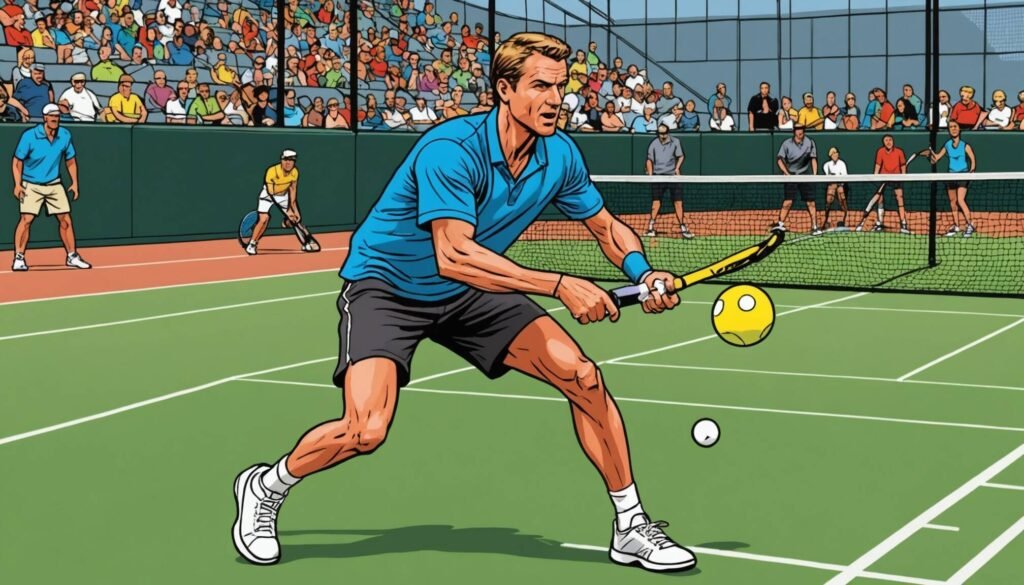
Master the Drip Shot in Pickleball: A Complete Guide
The drip shot has emerged as one of the most valuable weapons in modern pickleball, bridging the gap between soft finesse and controlled aggression. If you’ve ever found yourself at the baseline weighing whether to hit a drive or a drop, the drip shot presents a third option that combines the strengths of both while minimizing their weaknesses. This hybrid shot has become increasingly prominent at competitive levels, and understanding how to execute it properly can transform your third shot strategy and keep opponents constantly guessing.
As pickleball continues evolving, shot variety has become essential for players looking to compete at higher levels. The drip shot represents exactly this kind of tactical evolution, offering a solution to situations where neither a full drive nor a soft drop feels quite right. It’s particularly effective against opponents caught in transition, creating opportunities to apply pressure while maintaining enough control to avoid unforced errors.
Understanding the Drip Shot: What Makes It Different
The drip shot isn’t an entirely new invention requiring complex mechanics you’ve never seen before. Instead, it intelligently combines elements from two shots you already know: the drop and the drive. The genius lies in how it borrows specific components from each to create something uniquely effective in particular game situations.
A traditional drop shot aims to land softly near the kitchen line with minimal pace, forcing opponents to hit upward and giving you time to advance to the net. A drive, conversely, uses a full swing and significant power to push opponents back or force errors through sheer pace. The drip shot occupies the middle ground: it carries more pace than a drop but maintains better control than a full drive.
This positioning between two extremes creates tactical advantages that neither pure shot can offer. The extra pace compared to a drop reduces your opponent’s reaction time, while the control compared to a drive keeps the ball from sailing long or setting up an easy counterattack. When executed properly, the drip shot puts opponents in uncomfortable positions where they’re forced to make difficult decisions quickly, often while still moving into position.
The evolution of professional play, including why players have shifted away from certain shot patterns, demonstrates how important versatility has become. The drip shot fits perfectly into this modern approach, offering unpredictability that keeps opponents from settling into comfortable patterns.
The Mechanical Foundation: How to Execute the Drip Shot
The mechanics of the drip shot might sound counterintuitive at first, but they make perfect sense once you understand what you’re trying to accomplish. The technique centers on three fundamental elements that work together to produce the desired ball flight and pace.
Shortening Your Backswing
Unlike a full drive where you load up with a substantial backswing to generate maximum power, the drip shot requires a much more compact preparation. Think about the minimal backswing you use when hitting a dink at the kitchen line. This shortened motion serves multiple purposes: it gives you better control over the ball, allows quicker preparation when you have less time, and prevents you from generating too much pace that could send the ball long or high.
Many players struggle with this component because the natural instinct when seeing a ball at the baseline is to load up for a big shot. Resisting that urge and keeping your backswing compact requires conscious effort initially, but it becomes natural with practice. The shortened backswing also makes it harder for opponents to read your intentions, since the preparation looks similar to a drop shot.
Extending Your Follow-Through
Here’s where the “drive” element enters the equation. While your backswing stays short, your follow-through should be long and accelerated. You’re pushing through the ball with clear intent, not just guiding it over the net like you would with a soft touch shot. This extended follow-through generates the pace that distinguishes a drip from a standard drop.
The feeling should be one of smooth acceleration through the contact point. Your paddle speed increases as you make contact and continues accelerating through the follow-through. This creates topspin and drives the ball forward with controlled pace. Players who consistently pop balls up often need to work on paddle positioning before adding the extended follow-through, since poor paddle angle combined with acceleration will magnify errors.
Timing Your Contact Point
Perhaps the most critical element, and the one players most frequently get wrong, involves when you initiate your swing and where you make contact with the ball. The biggest mistake is starting your swing too early when the ball is still far in front of you. Instead, patience is essential. Let the ball travel to you, waiting until it’s approaching your ideal contact point before you begin accelerating your paddle.
This timing creates maximum control and consistency. When you let the ball come to you rather than reaching for it, you can use your body rotation and weight transfer more effectively. The sensation should be controlled aggression: you’re not swinging tentatively, but you’re also not throwing everything into the shot. Your paddle accelerates through contact decisively without excessive force.
Making smart decisions about when and how to strike the ball often matters more than raw power, and the drip shot exemplifies this principle perfectly.
Recognizing the Right Moments for a Drip Shot
Technical execution means nothing without tactical understanding. The drip shot becomes truly effective when you recognize the specific situations where it provides advantages over other options. Developing this court awareness separates players who occasionally stumble into good shots from those who consistently create opportunities.
When Opponents Are Switching Sides
One of the most effective scenarios for the drip shot occurs when your opponent is moving laterally across the court to cover their position. During this lateral movement, they’re vulnerable to balls hit down the line because their momentum is carrying them in the wrong direction. A drip shot placed down the line during this switch catches them mid-transition, forcing them to change direction quickly and often resulting in them having to scoop the ball up awkwardly on the rise.
This situation happens frequently in doubles play, particularly after returns that pull one player out of position. When you see your opponent sliding across the court, that’s your cue to consider the drip shot down the line.
When Opponents Are Late Getting Forward
If your opponent is still at or near the baseline when you’re hitting your third shot, or if they’re caught in the no-man’s land between the baseline and kitchen line, the drip shot becomes especially valuable. It’s not soft enough that they can comfortably attack it while moving forward, but it’s not so hard that it flies past them harmlessly. You’re essentially catching them in the worst possible position on the court.
Understanding the transition zone and when opponents are vulnerable there turns the drip shot from a random choice into a calculated attack. When players are caught between moving forward and being set, they have to make split-second decisions that often result in weak returns or errors.
When You Want to Take Time Away
The drip shot travels faster than a drop shot, which means it reaches your opponent more quickly. This compressed timeline reduces their reaction time and forces faster decision-making than they’d prefer. When you take the ball early, hitting it on the rise immediately after the bounce rather than waiting for it to drop to your preferred height, you amplify this time-pressure effect even further.
Taking time away from opponents disrupts their rhythm and prevents them from settling into comfortable patterns. This becomes particularly effective against players who like to dictate pace and timing.
When NOT to Use the Drip Shot
Understanding when not to use the drip shot is equally important. If your opponent is already positioned at the kitchen line and ready, a traditional drop shot usually works better because it keeps the ball lower and forces them to hit upward. The extra pace of the drip shot actually works against you in this scenario because it gives them a ball they can attack more easily.
Recognizing your court position and reading your opponent’s position before selecting your shot transforms the drip shot from a gamble into a tactical weapon. If you frequently struggle during transitions, learning tactics for escaping difficult positions complements what the drip shot helps you accomplish when you’re the one applying pressure.
Three Essential Drills to Build Drip Shot Mastery
Knowing the theory behind the drip shot only takes you so far. Converting that knowledge into reliable execution requires deliberate practice through specific drills designed to build the exact skills you need. These three progressions move from fundamental mechanics to game-realistic decision-making, creating a comprehensive development path. If you’re looking for a broader training framework, these drills provide additional context for year-round improvement.
Drill One: Fundamental Mechanics
This foundational drill focuses purely on developing consistent technique. Start at the baseline with a partner positioned to feed you balls. Your goal is straightforward but demanding: hit 10 balls down the line and 10 balls crosscourt on both your forehand and backhand sides, maintaining proper drip shot mechanics throughout.
During this drill, concentrate intensely on the three key elements: short backswing, extended follow-through, and proper contact timing. You’re building muscle memory for the feeling of controlled power. The ball should feel noticeably different off your paddle than either a pure drop or a pure drive. If it feels too much like a dink, you need to extend your follow-through more aggressively. If it feels too much like a full drive, you’re probably taking too large a backswing.
Pay attention to the sound and sensation at contact. You should hear a clean, solid contact rather than a soft push or a hard crack. The paddle should feel like it’s accelerating through the ball smoothly. If you’re having trouble isolating the follow-through feeling, wall drills can help you develop the motion without worrying about a partner or ball consistency.
Developing the ability to hit with topspin while maintaining control builds on similar mechanics you might already use for a topspin drive, just with the modified backswing that distinguishes the drip shot.
Drill Two: Situational Awareness
This second drill introduces game-realistic scenarios where the drip shot excels. One player serves, the other returns. After hitting the return, the returner switches to the opposite side of the court and begins moving forward, simulating the side switch scenario that creates vulnerability. The server then executes a drip shot down the line, aiming to catch the returner mid-transition.
The critical learning point here involves taking the ball early, hitting it on the rise rather than waiting for it to drop into your preferred strike zone. This early timing gets the ball to your opponent faster, reducing their reaction time and often forcing them to hit from their feet while still moving. When executed correctly, your opponent should be caught mid-movement, having to adjust their path and scoop the ball up awkwardly.
An additional tactical layer: if your opponents are stacking with both players starting on the same side of the court, use your serve strategically to pull them out wide first. This forces them to unwind the stack, which naturally creates the side-switching movement that makes them vulnerable to the drip shot down the line. Your serve is the one shot you control entirely, so use it deliberately to set up your third shot opportunities.
Understanding how to connect your serve to your third shot represents crucial strategic development. This connection is part of mastering the five shots that separate intermediate from advanced players, showing how individual techniques combine into coherent game patterns.
Drill Three: Decision-Making Under Pressure
The third drill is the most game-realistic and teaches you when to use the drip shot versus when other options work better. Both players start at the baseline. One player feeds, the other drives. The feeder then hits another drive back, but here’s the constraint that creates the learning opportunity: the feeder cannot move forward until their ball bounces on the opposite side.
This rule creates a situation where the feeder is naturally late getting into the net, which is exactly when the drip shot becomes effective. However, the drill also teaches an important lesson: if your opponent isn’t moving forward at all and is simply staying back, you should drive the ball back to the baseline instead. The goal is always getting the ball down to the feet, and if your opponent isn’t advancing, a drive accomplishes that more effectively than a drip.
This drill develops your ability to read your opponent’s positioning and movement in real time, making the appropriate shot selection based on what you observe. Sometimes the drip shot is the perfect answer. Sometimes it’s not. Developing this awareness and decision-making ability separates players who know how to hit shots from players who know when to hit them.
Learning when to attack and understanding how to beat bangers provides the complementary tactical framework you need to run this drill with full awareness, recognizing not just how to execute the drip shot but when it provides actual advantages.
Why the Drip Shot Changes Third Shot Strategy
The strategic value of the drip shot extends beyond just being another shot you can hit. It fundamentally changes how opponents have to defend against you and creates uncertainty that works in your favor throughout the match.
Traditional third shot strategy has typically presented a binary choice: drop soft or drive hard. A drop shot is inherently passive, designed to neutralize the point and allow you to advance to the net safely. A drive is aggressive, aiming to force errors or create weak returns through pace. Each approach has clear strengths but also predictable weaknesses that savvy opponents can exploit.
The drip shot adds a third dimension that sits perfectly between these extremes. You might call it aggressively passive or passively aggressive, depending on your perspective. What matters is that it keeps opponents guessing about your intentions. If you only hit drops, opponents creep forward confidently, knowing they can take balls early. If you only hit drives, they back up and prepare to defend with solid blocks. But when you mix in drips, they can’t commit fully to either defensive posture. They have to stay honest, which means they’re always slightly off-balance and uncertain.
This uncertainty manifests


