The Pickleball Shot You’re Not Using Enough: The Poach
The pickleball poach is one of the most misunderstood shots in the sport. Most players think it’s random aggression—a reckless dash across the court that leaves your partner exposed and your team vulnerable. But the best poachers in pickleball aren’t gambling. They’re reading patterns, positioning correctly, and taking over at the perfect moment. This calculated interception at the net can completely transform your doubles game and give you a decisive advantage over opponents who don’t know how to defend against it.
According to APP pro Richard Livornese, a leading voice in pickleball strategy, the difference between an effective poach and a costly mistake comes down to three core elements: identifying the right ball, understanding court positioning, and executing with precision. The positioning and movement behind great poaches can completely change a match, shifting momentum in your favor and forcing your opponents into uncomfortable defensive positions they’d rather avoid.
What Exactly Is a Pickleball Poach?
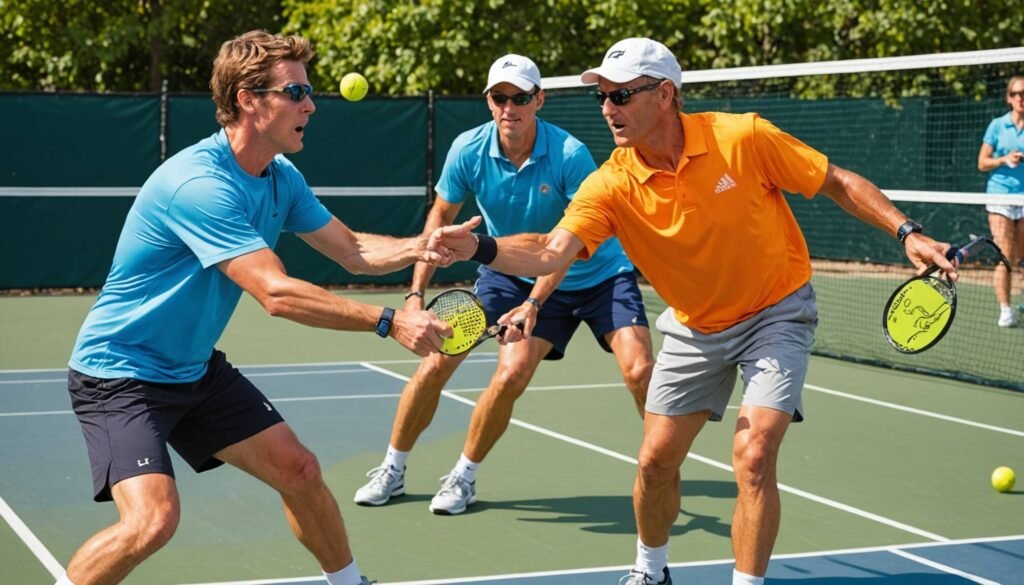
A pickleball poach happens when the non-hitting player—the one whose partner is dinking—steps in aggressively to intercept the ball before it reaches their partner. It’s an offensive move designed to take control of the net and force your opponents into weak, defensive returns. The key distinction here is crucial: a poach isn’t just moving forward or being active at the net. It’s a calculated interception that puts your team in a position to win the point outright or set up an easy putaway.
When executed correctly, a poach creates chaos on the other side of the net and shifts momentum in your favor. Your opponents suddenly have to deal with an unexpected angle, a ball coming from a player they weren’t expecting, and the pressure of knowing that the middle of the court is no longer safe. This mental pressure is just as valuable as the physical execution of the shot itself. Once opponents know you’re willing and able to poach effectively, they start second-guessing their shot selection, which opens up even more opportunities for your team.
The poach is fundamentally about anticipation and aggression working together. You’re not reacting to where the ball is—you’re predicting where it’s going to be and positioning yourself to take advantage. This requires excellent court awareness, communication with your partner, and the confidence to commit fully to the shot once you’ve identified the right opportunity.
Why Most Players Get the Pickleball Poach Wrong
Most recreational players poach at the wrong time, from the wrong position, and without proper technique. They see an opening and sprint across the court, only to collide with their partner or leave the sideline wide open for a passing shot. These failed poach attempts are frustrating for everyone involved and can quickly erode the trust between doubles partners that’s essential for effective team play.
The biggest mistake is poaching when your partner is dinking from the middle of the court. If your partner is already positioned centrally, they can reach the ball themselves without any difficulty. When you crowd that space, you’re not helping—you’re getting in the way and creating confusion about who should take the shot. This confusion often leads to both players freezing or both going for the ball, resulting in an unforced error that hands your opponents an easy point.
Another common error is poaching balls that are too far outside the court. Richard Livornese emphasizes that you should only poach balls landing roughly twelve to eighteen inches from the midline. Anything further out, and you’re overextended, vulnerable to a down-the-line pass, and likely to make an error. Players who chase balls outside this zone often find themselves stretched out awkwardly, unable to generate any power or control, and leaving their entire side of the court completely exposed.
There’s also a timing issue that many players struggle with. They wait too long to commit to the poach, which means they’re late getting to the ball and end up making a desperate lunge rather than a controlled, aggressive shot. Or they commit too early, telegraphing their intention and allowing smart opponents to adjust their shot at the last second. Finding that sweet spot of commitment—early enough to get into position but not so early that you tip your hand—is one of the more subtle skills that separates effective poachers from those who get burned.
Understanding the Poach for Beginners
If you’re relatively new to pickleball or haven’t spent much time thinking about advanced doubles strategy, the concept of poaching might seem intimidating or unnecessarily aggressive. But understanding the basic principle is actually quite simple: in doubles, you and your partner are responsible for covering the entire width of the court. When your partner hits a dink from one side, they’re naturally positioned to handle balls that come back to that side. But what about balls that come back toward the middle or slightly to your side? That’s where the poach comes in.
Think of it like this: imagine you and your partner are standing at the net, and your partner dinks from the right sideline. The opponent returns the dink toward the middle of the court. Your partner, who’s over on the right, would have to stretch across to get that ball. But you’re already positioned closer to the middle. By stepping in and taking that ball—poaching it—you’re simply being efficient with court coverage and taking advantage of your better positioning.
The poach becomes even more valuable when you realize that hitting through the middle of the court is often the highest-percentage shot in pickleball. When you poach a ball that’s coming to the middle and redirect it back through the middle, you’re hitting into the biggest gap between your two opponents. They’re spread out, each covering their respective sides, and suddenly there’s a ball coming through the space between them. Most of the time, neither player can get to it, or they collide trying.
For beginners, the most important thing to understand is that poaching isn’t about being selfish or trying to hit every ball. It’s about smart court positioning and teamwork. When you poach effectively, you’re actually making your partner’s job easier by covering balls they’d have to stretch for. And when you choose not to poach—staying disciplined and letting your partner handle balls they’re positioned for—you’re demonstrating the same good judgment that makes you a reliable doubles partner.
The Three Elements of a Perfect Pickleball Poach
1. Identifying the Right Ball
Before you even think about moving, you need to spot a poachable ball. Look for three things: height, pace, and position. A slower ball is far more poachable than a fast one. If the dink is high and soft, you have time to react and execute. If it’s a hard, low dink, your window closes fast and the risk of making an error increases dramatically.
The position of the ball matters most: you’re hunting for balls landing near the middle of the court, roughly between the center line and eighteen inches toward your sideline. Balls in this zone are far enough from your partner that they’d have to stretch to reach them, but close enough to the middle that you can intercept without overextending yourself. This is your sweet spot for poaching.
Richard Livornese notes that the quicker you identify the right ball, the better you’ll be at poaching. This means staying in an athletic stance, keeping your paddle up, and watching the ball’s trajectory as it travels across the net. Don’t wait until the last second to commit. The best poachers start reading the ball as soon as it leaves their opponent’s paddle, tracking its arc and speed to determine whether it’s entering their poaching zone.
Height is particularly important because it affects both the time you have to react and the type of shot you can hit. A high, floating dink gives you plenty of time to move into position and allows you to be more aggressive with your poach, potentially going for an outright winner. A lower dink requires quicker reactions and often demands more conservative shot selection—you might be looking to simply keep the pressure on rather than end the point immediately.
2. Positioning and Movement
Once you’ve identified a poachable ball, your movement needs to be explosive and decisive. Start in an athletic stance with your weight on the balls of your feet. When you see the ball path, take one hard step off your inside leg and push toward the net. The step should be quick and powerful, not tentative. You’re not tiptoeing into the poach—you’re attacking it with conviction.
Load your weight on your outside leg as you prepare to hit, keeping your paddle still and ready. This loading is crucial because it gives you a stable base from which to execute your shot. Many players make the mistake of continuing to move as they hit, which results in off-balance shots that lack power and accuracy. By loading your weight and establishing a solid base, even if only for a split second, you give yourself a much better chance of executing a quality shot.
The movement pattern itself should be efficient and direct. You’re not taking three or four small steps—you’re taking one powerful step that gets you into position. This explosive movement is what allows you to intercept balls that your partner couldn’t reach and what makes the poach such an effective offensive weapon. If you’re taking multiple steps to get into position, you’re either starting from the wrong place or trying to poach balls that are outside your zone.
Your starting position before the poach is just as important as your movement during it. You should be standing slightly inside your normal position, a few inches closer to the middle than you might otherwise be. This gives you a head start on any balls coming to the middle and makes your explosive step even more effective. However, you can’t cheat too far toward the middle or you’ll leave your line wide open and smart opponents will punish you with passing shots down your sideline.
3. Execution: The Snap and Follow-Through
Here’s where most players go wrong: they try to take a full backswing while moving. That’s a recipe for errors and inconsistent contact. Instead, use a snap motion with your arm and wrist, not a traditional swing. Keep your paddle still, then snap through the ball with minimal backswing. This gives you control and consistency even though your body is in motion.
The snap is quick, compact, and effective. Think of it like flicking your wrist rather than swinging your entire arm. Your paddle stays relatively quiet until the moment of contact, then you snap through the ball with a short, controlled motion. This technique allows you to generate surprising power from what looks like a compact swing, and it dramatically reduces the margin for error when you’re hitting on the move.
The follow-through on a poach should be abbreviated compared to a normal groundstroke. You’re not following through across your entire body—you’re stopping your paddle shortly after contact, with the paddle face pointing toward your target. This controlled finish helps with accuracy and also gets you ready more quickly for the next shot, which is important because a good poach often leads to a quick exchange at the net.
One key detail that separates effective poachers from struggling ones is paddle angle at contact. Your paddle face should be slightly open, with the top edge tilted back just a few degrees. This helps you get the ball over the net even when you’re hitting from a low position, and it also adds a bit of topspin that helps the ball dip down into your opponent’s feet or into the kitchen for a winner.
Where Should You Hit the Pickleball Poach?
The primary target is straight through the middle of the court. Why? Because your opponents are spread out. If your partner is dinking from the wide side, the opponent on that side has a long way to go to cover the middle. Their partner, meanwhile, is also out of position, likely expecting a ball to come back to their side rather than through the middle.
When you hit through the middle, you’re hitting into the biggest gap on the court. Most of the time, it’s a clean winner. If your opponent does manage to get a two-handed backhand on it, the ball typically comes back to your backhand side, setting up an easy follow-up putaway. This is one of the beautiful things about the poach: even when it doesn’t win the point outright, it often sets up such an advantageous position that the next shot does.
If your opponent adjusts and starts covering the middle aggressively, you have two backup options: hit behind them or go at them directly. Richard Livornese demonstrates that going behind a player who’s overcommitting to the middle is highly effective, especially against players who like to hang off the sideline. When they see you poaching and start cheating toward the middle, they create a huge opening behind them that you can exploit.
The third option—hitting directly at your opponent—is particularly effective in certain situations. If the opponent is standing upright or has their paddle down, a ball hit firmly at their body gives them very little time to react. Most players struggle to handle balls hit directly at their midsection because they don’t know whether to take it with a forehand or backhand, and they often freeze or make an awkward defensive swing that pops the ball up for an easy putaway.
Target selection should also depend on your position when you make contact. If you’re slightly off-balance or reaching, going through the middle is almost always your safest choice. If you have time and are well-balanced, you can consider the more aggressive options of going behind your opponent or at them. The key is to have a plan before you commit to the poach—don’t wait until you’re hitting the ball to decide where you want it to go.
The Backhand Side Poach: A Different Beast
Poaching on the backhand side is trickier than poaching on the forehand side. You have less reach, which means you have to commit more to the shot. That extra commitment leaves you more exposed on the line and increases the risk of getting passed if you misread the situation or if your opponent makes a great shot.
The key difference: on the backhand side, you should only poach off a slice. When your opponent puts a two-handed backhand on the ball, hold your ground. The risk of getting passed down the line is too high, and the pace on a two-handed backhand makes it difficult to execute the compact snap motion that makes poaching effective. But when they slice, that’s your signal to attack. A slice is slower, higher, and more predictable—exactly the kind of ball you can intercept and redirect effectively.
When you do poach off the backhand side, the target changes slightly. Instead of hitting straight through the middle, you want to fade the ball away from your opponent, landing it just on the crosscourt side. This works especially well against right-handed players using a two-hander, who have a long way to travel to cover that shot. The angle you create by fading the ball away is often impossible to defend, even if your opponent reads the poach and starts moving.
The footwork on a backhand poach is also slightly different. Instead of pushing off your inside leg and stepping across, you’re often pivoting and rotating your body to generate power. This rotation is what allows you to hit an effective shot despite the limitations of the backhand side. Practice this movement pattern separately, without the ball, until it feels natural and explosive.
Reading Your Opponent’s Patterns
The best poachers don’t just react to the ball—they anticipate it. They watch for patterns in how their opponents dink. Are they always going crosscourt? Do they favor one side? Do they slice when they’re in trouble? Do they hit higher balls when they’re stretched out? All of these patterns are valuable intelligence that you can use to time your poaches more effectively.
Pattern recognition is what separates good poachers from great ones. If you notice your opponent always dinks crosscourt when your partner is on the left side, you can position yourself to hunt that ball. If they slice when they’re pushed back, you know when to be aggressive. If they tend to go down the line when they’re under pressure


