3 Pickleball Overhead Shots That Cover Every Situation
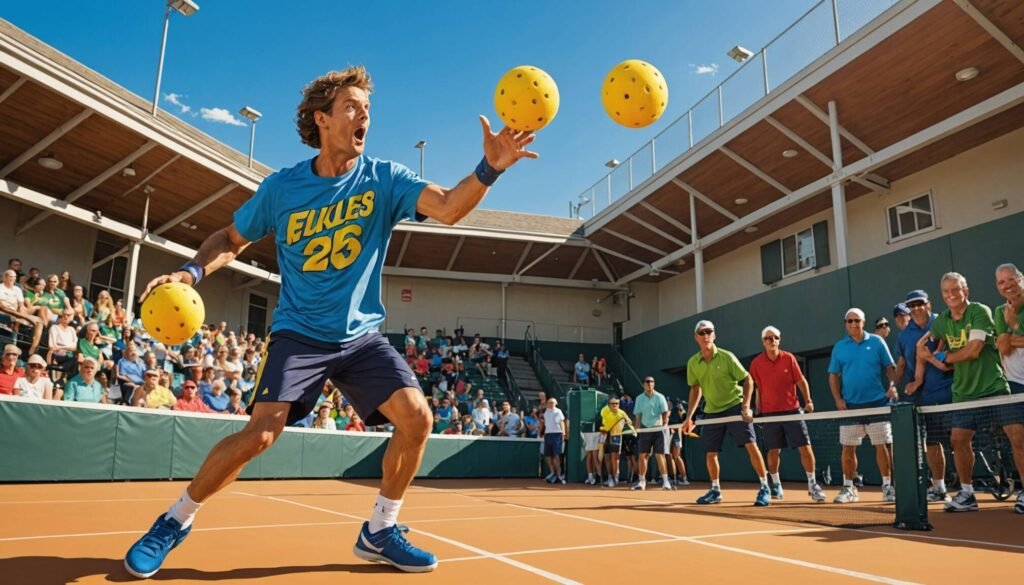
Most players approach every pickleball overhead the same way: wind up and swing as hard as possible. And honestly, that works sometimes. But it also leaves a lot of points on the table and creates a lot of unforced errors when your court position isn’t ideal. The smarter approach is matching the type of overhead you use to where you actually are on the court at the moment the ball is coming down.
There are three specific overhead variations that cover nearly every situation you’ll face in a match. Once you understand them and start practicing each one deliberately, your overhead game becomes a genuine weapon rather than a coin flip. This breakdown draws from tanner.pickleball on YouTube, who laid out these three shots in a way that’s worth expanding on in detail.
Why Your Overhead Isn’t Working
Here’s the honest truth about why so many players struggle with overheads: they’re trying to hit one shot from every position on the court. They’re standing at the kitchen line trying to slice. They’re caught deep and still trying to smash angled winners. Neither shot works well out of position, and the result is a pattern of errors that feels random but actually has a very clear cause.
The pickleball overhead is not one-size-fits-all. Your court position, your timing, and the trajectory of the lob all change what the right shot actually is in that moment. When you start treating overheads as a category with distinct options rather than a single motion you apply universally, you’ll make fewer errors, create more consistent pressure, and stop gifting opponents free points on lobs that should be easy putaways.
The three shots are the angled overhead at the kitchen line, the slice overhead when you’re caught deep, and the hook overhead when you’re late to the ball. Each one matches a specific situation, and together they cover almost everything you’ll encounter in a real match.
Shot 1: The Angled Overhead at the Kitchen Line
When you’re set at the kitchen line and the ball is sitting up, the angled overhead is your weapon of choice. This is the shot that ends rallies. You have time, you have position, and the ball is exactly where you want it. The goal is to direct the ball sharply to one side of the court, pulling your opponent wide and completely off balance. You’re not just trying to hit it hard — you’re hitting it at an angle that makes the ball nearly impossible to retrieve.
Think about targeting the sideline opposite where your opponent is standing. The angle itself does most of the work. A ball that lands near the sideline corner off a kitchen line overhead gives your opponent almost no chance, even if the pace isn’t extreme.
What separates the angled overhead from a basic smash comes down to a few technical details. Your contact point should be slightly in front of your body rather than directly above your head. You’re redirecting the ball at an angle rather than just swinging straight back through it. A wrist snap at the moment of contact is what drives the sharp angle and adds pace simultaneously. And your target should be the sideline or your opponent’s hip, not just “the open court” in a vague sense.
A lot of players comfortable at the kitchen line skip the angle in favor of a straight-ahead blast. That’s a real missed opportunity. Angles beat raw power on almost every putaway situation in pickleball. A sharp angled overhead from the kitchen line is genuinely difficult to retrieve, even for fast and athletic opponents. If you want to go deeper on how shot selection changes based on position and ball height, this piece on shot selection is worth reading alongside this one.
Shot 2: The Slice Overhead When You’re Caught Deep
The slice overhead is the most underused shot in recreational pickleball. It is also the most valuable when you’ve been pushed back and don’t have time to set up a full swing. When a lob carries you past the transition zone, you’re dealing with two problems at once: you don’t have enough time to set your feet and load up a full overhead swing, and a hard smash from deep tends to float and sit up, giving your opponent a clean drive. The slice solves both problems in one motion.
A slice overhead uses a brushing motion across the ball rather than through it. Instead of making full contact through the center, you’re brushing across the surface at an angle, generating sidespin and keeping the ball lower and faster through the court. That sidespin makes the bounce genuinely unpredictable for your opponent, which is a form of pressure that doesn’t require you to be at full strength or perfect position. Critically, it allows you to make solid, controlled contact even when you’re off-balance or still moving backward. And because the slice takes less wind-up time, it buys you a fraction of a second to start recovering your court position while the ball is still in the air.
Think of it like a slice return of serve but from above your head. The mechanics are similar: paddle moving across the ball rather than through it, with deliberate brushing contact rather than full-face impact.
The common mistake when players find themselves deep in the court is trying to go for the same big angled smash they’d hit from the kitchen. That shot from deep usually floats, lands short, and becomes a setup ball for your opponent. The slice removes that risk entirely by trading raw pace for control, spin, and recovery time. Being deep also means you need to be thinking about your path back to the kitchen the moment you make contact. Mastering the transition zone is directly connected to how well you handle lobs, because your recovery starts the second the ball leaves your paddle.
Shot 3: The Hook Overhead When You’re Late to the Ball
The hook overhead is the shot most players have never been taught, and it solves a very specific and frustrating problem: what do you do when the ball has dropped lower than ideal and a standard overhead swing would produce an awkward pop-up? The hook is the answer. And yes, it is completely legal under USA Pickleball rules.
Being late to the ball means it has dropped to shoulder height or below before you can make contact. A traditional overhead swing at that height is biomechanically awkward. Most players trying to force a standard smash at that contact point end up hitting a weak pop-up that sits right in the opponent’s wheelhouse. The hook gives you a way to still generate a sharp, downward shot even from a late arrival position.
Instead of a straight overhead motion, you loop your paddle around the outside of the ball with a curved, hooking swing. The ball comes off at a sharp angle that dips toward the sideline corner. The key mechanical difference is that you’re not swinging through the ball — you’re wrapping around it and using the curve of the swing path to generate the angle and downward trajectory. The critical reason to use it when you’re late is that it allows you to intercept the ball before it bounces. Once a lob bounces deep in the court, you’ve surrendered control of the rally. The hook lets you catch it before that happens and keep the point moving in your favor rather than scrambling to reset from the baseline.
Players who skip this shot when they’re late typically make one of two errors: they let the ball bounce and hit a weak drive that sets up their opponent, or they sky a forced standard overhead out of bounds. Neither outcome is acceptable when there’s a third option available. If your timing is consistently off on overheads in general, it’s worth checking whether a broader overswing problem is affecting your contact point across all your overhead attempts.
For Players Who Are New to This: What’s Actually Going On Here
If you’re relatively new to pickleball or haven’t thought much about overhead strategy before, here’s the plain-English version of what all of this means. In pickleball, when your opponent hits a high, arcing shot called a lob, you usually have a chance to hit the ball from above your head — that’s the overhead. Most beginners and even intermediate players just try to smash it as hard as they can every single time. That approach works when everything is perfect, but it falls apart quickly when you’re not in an ideal position.
The three-shot system described here is really just about matching the tool to the situation. If you’re close to the net and have plenty of time, hit it at a sharp angle — that’s the angled overhead. If you got pushed back and you’re still moving, use a slicing motion that keeps the ball low and buys you time to get back into position — that’s the slice overhead. And if the ball has already dropped lower than you’d like and you’re scrambling, use a curved, looping swing that hooks around the ball and still sends it at a useful angle — that’s the hook overhead.
The big idea is that variety and position-awareness beat raw power in almost every overhead situation. When opponents know you only have one overhead, they can anticipate where it’s going and position accordingly. When you mix angled smashes with slices and the occasional hook, they genuinely can’t predict what’s coming. That unpredictability is a weapon in itself, and it doesn’t require you to be faster, stronger, or more athletic than your opponents. It just requires you to think one step ahead about which shot fits the moment.
How to Know Which Overhead to Hit in the Moment
The decision-making process is simpler than it might sound once you’ve drilled all three shots. Your position on the court tells you almost everything you need to know. If you’re set at the kitchen line and the ball is sitting up with time to spare, go for the angled overhead and try to end the rally outright. If you’re caught deep or still moving backward when the lob peaks, go to the slice — add variety and recover your position while the ball is in flight. If you’re late to the ball and can’t let it bounce, use the hook to intercept it and keep the point in your control.
The other key variable is timing. When you have time to set your feet and get fully positioned, you can lean toward the angled smash from almost anywhere on the court. It’s the situations where timing gets taken away from you that make the slice and hook necessary. The players who seem to always have clean, comfortable overheads aren’t necessarily more athletic. They’re simply moving to the ball earlier, which gives them more time and more options for every overhead they hit. Deliberate footwork is genuinely the foundation underneath all three of these shots.
How to Drill These Shots Properly
You cannot learn the hook overhead in a live game and expect it to hold up under pressure. The same goes for the slice when you’re scrambling backward. These shots need dedicated drilling before they’ll show up reliably in match situations. The good news is that setting up effective overhead practice is straightforward if you have a partner willing to feed lobs from different positions on the court.
Start at the kitchen line for angled smash repetitions. Your partner feeds a lob that sits up comfortably, and you practice redirecting it sharply to the sideline with a wrist snap. Get that motion automatic before you move on. Then have your partner throw a deeper lob that pushes you back, and practice transitioning into the slice motion — brushing across the ball, staying controlled, and immediately beginning your recovery movement toward the kitchen. Finally, drill late arrivals specifically. Your partner throws lobs that are designed to drop below your ideal contact height, and you practice the hook motion to intercept them before they bounce.
For a broader practice structure that incorporates overhead work alongside other court skills, the 12 drills resource at The Dink is a solid reference for prioritizing where overhead practice fits into your overall routine. Most players also benefit from slowing their mechanics way down before trying to add pace. Deliberate contact practice at half speed builds the muscle memory that actually holds up when you’re under pressure in a real match and the ball is coming faster than you’d like.
The Mistake That Kills Your Putaways
One error shows up constantly in recreational play: trying to hit the same maximum-power shot from every position on the court. It creates inconsistency because the mechanics of a full overhead smash change significantly depending on where you are when you make contact. Overswinging from the wrong position doesn’t just produce weak shots — it produces shots that go wide or long and hand your opponent a free point on a ball that should have been a winner for you.
Variety creates a different kind of pressure than pure power does. When opponents know you only have one overhead, they can read it early and position for it. When you mix angled smashes with slices and occasional hooks, they have to guess every single time. That guessing creates hesitation, and hesitation creates errors on their end. It’s also worth understanding how opponents typically defend the overhead smash, because knowing their defensive tendencies helps you aim your overheads more effectively in real match situations.
Your overhead is one of the few shots in pickleball where you have a genuine opportunity to end the rally outright. Learn all three versions, match the shot to your court position and timing, and you’ll put away lobs with a consistency that actually holds up in competitive games rather than just in warm-ups.
Frequently Asked Questions
What is the best pickleball overhead shot for beginners?
The angled overhead from the kitchen line is the best starting point because it gives you the most time, the clearest setup, and the most margin for error. Focus on hitting it with a wrist snap toward the sideline rather than just swinging straight down through the ball. Once that feels reliable in practice, add the slice overhead for situations where you’re pushed back.
When should I use a slice overhead in pickleball?
Use the slice overhead when you’re deep in the court and don’t have a clean setup for a full overhead smash. It keeps the ball low and adds spin that makes the bounce difficult for your opponent to read cleanly. It also allows you to make solid contact even when you’re still moving backward, which is the biggest practical advantage it offers over trying to force a full smash from a compromised position.


