
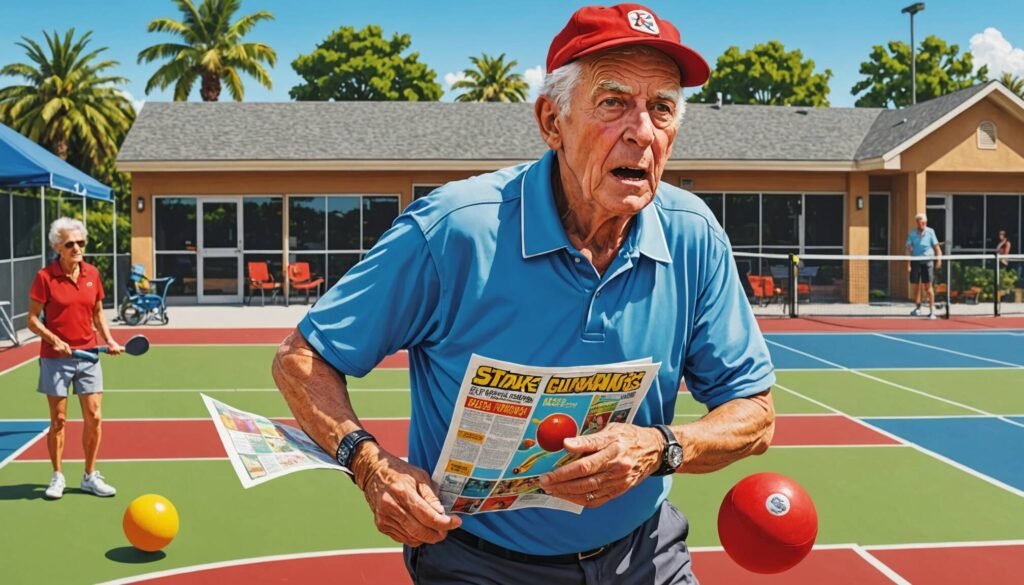
Florida Man, 73, Arrested After Pickleball Dispute Involving a Slow Cooker
Pickleball is supposed to be fun. It’s a sport that’s grown into a full-blown cultural phenomenon across the United States, drawing in retirees, competitive athletes, and casual weekend players alike. But every now and then, a story comes out of the pickleball world that makes you pause and wonder just how heated things can get on and off the court. This is one of those stories.
A 73-year-old man in Florida was arrested following an altercation at a pickleball facility in Ave Maria, Collier County. The confrontation allegedly involved a shove, a dispute over tournament paperwork, and — in perhaps the most unexpected twist — a slow cooker. Yes, you read that right. A slow cooker became part of a pickleball argument, and now the whole country is talking about it.
What Happened at the Del Webb Naples Pickleball Facility?
According to Gulf Coast News, the incident took place on October 3rd at the Del Webb Naples pickleball facility in Collier County, Florida. The man at the center of the story is Steven DeMaio, a 73-year-old resident who was charged with battery following the confrontation. He was not arrested immediately — law enforcement took action on October 21st, more than two weeks after the incident occurred. He was released on bond the following day.
From what’s been reported, DeMaio arrived at the facility with paperwork in hand. The documents apparently outlined proposed changes to an upcoming pickleball tournament format. Now, tournament formats in recreational and competitive pickleball communities can be a surprisingly contentious topic. Players have strong opinions about how games should be structured, who plays who, and how brackets are organized. It might sound minor to an outsider, but within tight-knit pickleball communities — especially in retirement communities where the sport is a major social activity — these decisions matter a lot to people.
According to DeMaio’s account, a woman at the facility grabbed the papers he had brought and ran off with them. He followed her. During that interaction, a police report alleged that DeMaio shoved the woman. DeMaio disputed that characterization. He acknowledged that there was physical contact but maintained that it was not an intentional shove.
What followed is the part of the story that has captured the internet’s attention. DeMaio admitted to picking up a slow cooker during the altercation. His explanation? It was meant as a joke. He says he eventually threw the tournament paperwork back on the ground and that the emotion of the moment simply got the better of him. “The emotion was overwhelming,” DeMaio told Gulf Coast News in a phone conversation.
The woman involved and other witnesses present at the scene had not publicly commented at the time the story was first reported. The battery charge against DeMaio remains unresolved, and his version of events — particularly regarding whether the shove was intentional — continues to be disputed.
Breaking It Down: What This Means for Someone New to Pickleball
If you’re not deep into the pickleball world, you might be scratching your head wondering how a sport ends up with a slow cooker involved in a dispute. Let’s take a step back and paint a clearer picture of what’s going on here and why it matters.
Pickleball is the fastest-growing sport in America. It’s played on a smaller court than tennis, with a paddle and a lightweight plastic ball with holes in it. The game is incredibly popular among older adults, particularly in retirement communities in states like Florida, Arizona, and California. It’s social, it’s accessible, and for many people, it becomes a central part of their daily routine and social life.
In retirement communities especially, pickleball isn’t just exercise — it’s community. People form friendships, rivalries, and strong opinions around it. When you combine that level of personal investment with something as charged as how a tournament is run, you’ve got a recipe for conflict. Tournament formats determine who plays who and how fairly the competition is organized. For someone who is deeply invested in their local pickleball scene, a proposed change to that format can feel like a direct challenge to something they care deeply about.
Del Webb Naples, where this incident occurred, is a well-known active adult community in Collier County, Florida. These communities often have robust recreational programs, and pickleball courts are frequently one of the most popular amenities. A neighbor interviewed by Gulf Coast News described the community as normally quiet and friendly and acknowledged that while pickleball can get competitive, incidents like this are unusual.
And yet, they happen. This incident is a striking example, but it’s not entirely isolated. There’s a growing pattern of confrontations tied to the sport as its popularity has exploded and more people with high competitive drive and strong opinions have joined the pickleball community.
The Slow Cooker Moment: Funny or Alarming?
Let’s address the detail that most people can’t stop talking about: the slow cooker. DeMaio acknowledged picking it up during the confrontation but said it was meant as a lighthearted gesture, a joke in a moment of high emotion. Whether or not that’s how it was perceived by the woman involved or the witnesses present is another matter entirely.
The image of a 73-year-old man picking up a slow cooker in the middle of a pickleball argument is inherently absurd, and it’s understandable why this story has gone viral. But underneath the humor is something worth reflecting on seriously. When disputes escalate to the point where someone is picking up objects — even jokingly — and someone else is alleging a physical shove, things have gone too far regardless of the sport involved or the age of the people involved.
DeMaio’s own words are telling. “The emotion was overwhelming,” he said. That sentiment is genuine and human. We’ve all been in situations where frustration or passion got the better of us. But it also highlights how important it is for recreational sports communities to have proper channels for resolving disputes before they reach a boiling point — pun intended.
This is not the first time Florida’s pickleball scene has seen things get out of hand. There have been other reported incidents of physical altercations connected to pickleball disputes in the state. Competitive sports bring out strong emotions, and pickleball is no exception, even when the participants are senior citizens arguing about tournament brackets rather than professional athletes competing for prize money.
A Reflection on Pickleball Culture and Conflict
It would be easy to laugh off this story as just another weird Florida news item. And in some ways, it is that. But it also says something real about the culture that has developed around pickleball, particularly in tight-knit communities where the sport has become a cornerstone of daily social life.
Pickleball communities are passionate. That passion is largely what makes the sport so special and so infectious. When you find a group of people who love something as much as pickleball players love their game, you get a vibrant and dedicated community. But passion can curdle into conflict when there aren’t enough courts, when tournament spots are limited, or when someone feels their voice isn’t being heard in decisions that affect the group.
The dispute here reportedly started over tournament format changes. DeMaio came prepared with paperwork — a formal, documented proposal. That suggests this wasn’t just an impulsive outburst but rather the culmination of a longer-running frustration. When the woman allegedly grabbed his papers and walked away, something snapped. The slow cooker entered the story. And now there’s a battery charge being worked through the legal system.
It raises a genuine question worth considering: How do pickleball communities, especially those operating within larger residential or retirement communities, handle internal disputes effectively? How do they create systems where players feel heard, where changes are discussed democratically, and where disagreements don’t boil over into physical confrontations?
Many clubs and communities have committees, club officers, and formal processes for exactly these kinds of decisions. When those systems break down or when people feel those systems are ignoring them, frustration builds. This situation seems like a case study in what can happen when someone feels unheard and the social pressure around a beloved activity reaches a tipping point.
What Happens Next
As of the time of this writing, the battery charge against Steven DeMaio remains unresolved. He has disputed the claim that he intentionally shoved the woman, and his version of the slow cooker moment frames it as a joke rather than a threatening gesture. The legal process will determine what, if any, consequences follow.
For the Del Webb Naples pickleball community, things will presumably return to normal relatively quickly. Courts will fill up again. Games will be played. Tournaments will happen. But this incident will likely linger in the community’s memory as a cautionary tale about how quickly things can escalate when emotions run high and there’s no outlet for constructive disagreement.
For the broader pickleball world, it’s another reminder that the sport’s rapid growth has brought growing pains. More players means more competition for resources, more opinions about how things should be run, and inevitably more conflict. The communities that handle this best will be the ones that build strong social infrastructures alongside their physical courts — places where players not only feel welcomed but also feel genuinely heard.
And maybe, just maybe, someone will remind us all to keep the kitchen appliances out of it. In pickleball, “the kitchen” is the name for the non-volley zone near the net. Violations of the kitchen rules are a common source of in-game disputes. It’s a little ironic, then, that an actual kitchen item — the slow cooker — ended up at the center of one of the sport’s strangest off-court controversies.
Pickleball is a great game. It brings people together, keeps people active, and creates genuine community. Stories like this one are outliers, not the norm. But they’re worth paying attention to, because they reflect real tensions that exist within any community that people care deeply about. The sport is only going to keep growing. How communities manage that growth — and the disagreements that come with it — will define what pickleball culture looks like for years to come.


